What are the precautions for the installation and maintenance of Lockable Gas Springs?
A lockable gas spring ensures that any angle stays put after the release control is released, making it a popular component within medical beds, office chairs, gym equipment, and flip covers in dozens of countries. Get the installation incorrect, miss a maintenance step, overlook a leak, and the spring might slide, drift, or fail to lock when someone needs it most. This guide deals with selection, mounting, testing, inspection intervals, and replacement indications based on bench data and feedback from the field from OEM partners in Southeast Asia, Africa, and Central Asia. You’ll leave with a checklist your installation crew can utilize right now.
Quick Takeaways for Lockable Gas Spring Buyers
Buyers looking for a quick solution want the basic data first, before reading the entire analysis below.
- A lockable gas spring supports a moving panel, seat, or bed piece and keeps it at any desired angle until the release control is again actuated. A gas spring just opposes motion, without a genuine lock.
- The rigid locking variations lock the piston rod with a zero quantifiable sink when the valve shuts, while the elastic locking variants provide a little regulated give under load for a softer feel in seating and medical applications.
- Proper installation means matching force, stroke, and end-fitting geometry to the application, then checking alignment, torque, and clearance before the spring ever sees a working load.
- The routine maintenance consists of cleaning the piston rod, inspecting the release-cable travel, watching for pressure loss, and keeping a tally of cycle counts so that a malfunctioning unit is swapped out before it produces a drop or jam.
- A lockable gas spring should not be relied on as the sole barrier to suspended weights or unexpected movement. Mechanical backups are still needed during installation and in any safety-critical lift.
Install a lockable gas spring with the specified force, stroke, and mounting orientation; check that it moves smoothly and locks firmly when fully loaded, then service it regularly, inspecting it for leaks, corrosion, and consistent locking, replacing it immediately if any signs are present.
What Are Lockable Gas Springs and How Do They Work?
What Is a Lockable Gas Spring?
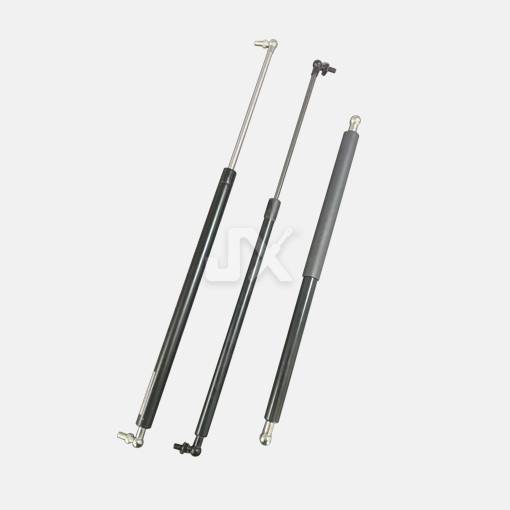
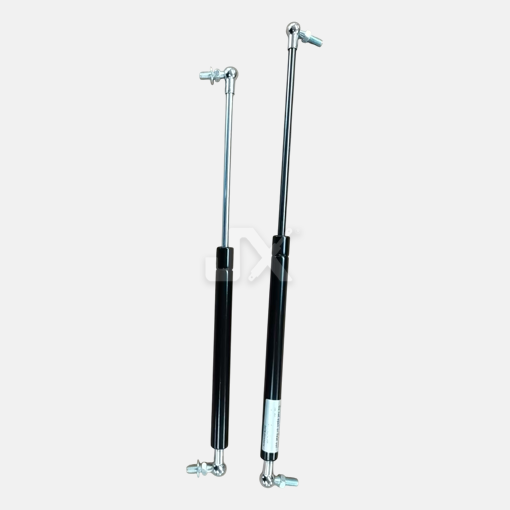
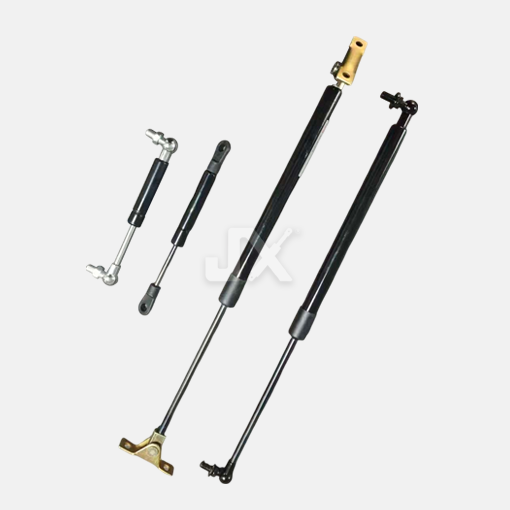
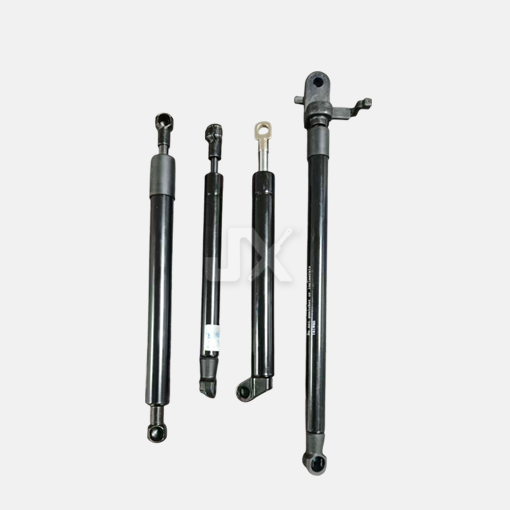
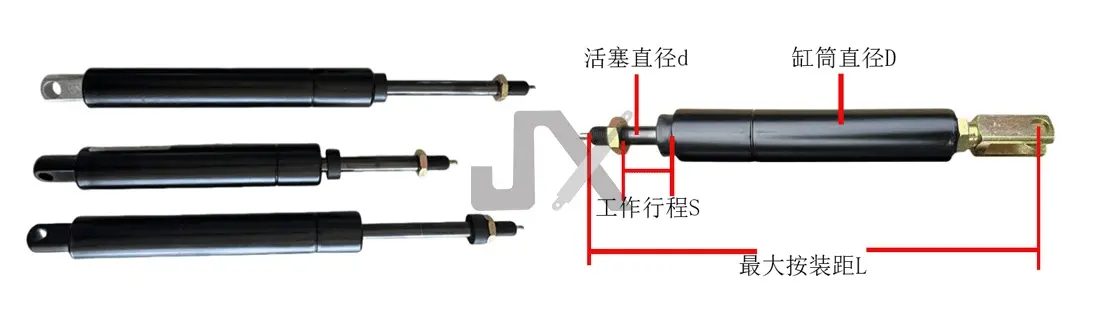
A lockable gas spring is a sealed, pressurized cylinder with a piston rod and an internal valve that may be opened and closed on demand. Closing the valve will halt the gas flow between chambers, thereby locking the rod in whatever position it now holds. It is not a powered actuator since there is no motor. It is not a certified safety prop in itself. It should not be a substitute for a guarding system qualified for hanging loads. Typical commercial names include locking gas spring, lockable gas strut, gas spring with release cable, and adjustable lockable gas spring. All describe the same fundamental mechanism with various release hardware.
How Does the Locking Mechanism Work?
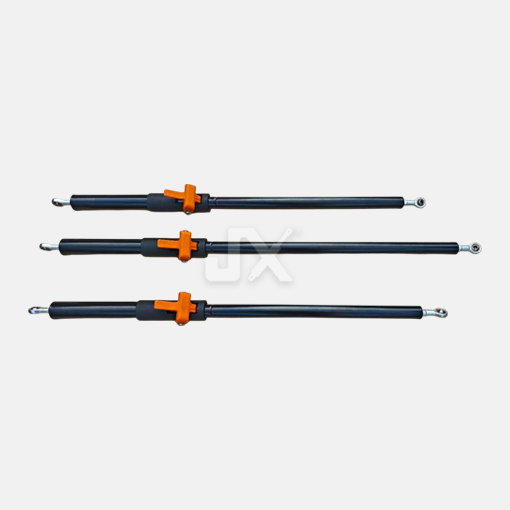
Inside the cylinder are pressurized nitrogen gas, a piston, a rod, precise seals, and a tiny valve assembly. If the release control is not pressed, the valve remains closed, and the rod can not move. That is where the position-locking feeling comes from. You pull a lever or push a button or yank a cable, and the valve opens, and gas can flow, and the rod may travel freely whichever way it wants. Letting go shuts the valve nearly instantaneously again. This release-and-lock cycle is what makes a locking unit different from an ordinary gas strut that only pushes or dampens but doesn’t keep a fixed angle.
Lockable Gas Spring Types and Applications
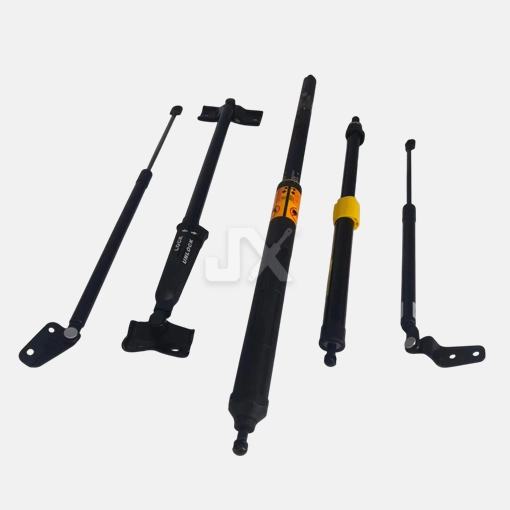
After the valve shuts, rigid locking devices retain the rod without visible tremor, which is suitable for examination chairs and medical beds where a patient’s weight must remain fixed. Elastic locking devices provide a little give, which feels more comfortable in office chairs and gym equipment where a sudden stiff sensation might be jarring. Single-point locking stops the rod at one control signal. Multi-point designs allow an assembly to lock and unlock at numerous points along the same stroke, ideal for flip covers and multi-position workbenches. In our export orders, over 60% of the furniture and seating customers are requesting elastic locking, although medical-bed OEMs usually choose stiff locking for stability during transfers.
How Do You Choose the Right Lockable Gas Spring?
Lockable Gas Spring Selection Checklist
Picking the right unit starts with matching nine technical points to the actual application, not just the catalog price. The table below lists what to specify and why each detail matters before a single sample order goes out.
| Selection criterion | What to specify | Why it matters |
|---|---|---|
| Force | Required force in newtons, such as 1,000 N or 1,500 N | Controls lifting assistance and holding behavior |
| Stroke | Required travel distance | Determines usable movement |
| Extended and compressed length | Center-to-center dimensions | Confirms physical fit |
| Locking type | Rigid, elastic, single-point, or multi-point | Defines holding and adjustment performance |
| Mounting orientation | Rod-up, rod-down, or application-specific | Affects damping and service life |
| End fittings | Ball sockets, clevises, brackets, or custom fittings | Controls alignment and installation |
| Environment | Temperature, moisture, chemicals, salt, dust | Determines material and sealing requirements |
| Release system | Handle, cable, lever, or push button | Influences user access and safety |
| Cycle life | Required operating cycles | Supports durability and warranty planning |
Lockable Gas Spring vs Alternative Solutions
Before they make their final component choice, buyers will commonly compare a lockable gas spring with a conventional gas spring, an electronic actuator, a mechanical prop, or a hydraulic cylinder. A typical gas spring will raise and dampen, but it will not keep a seat or panel in position mid-stroke; hence, it is not suitable for any application requiring a strong halt mid-stroke. An electric actuator lets you program the movement, but requires cabling, a controller, and a larger unit cost than most furniture and medical-bed budgets can afford. A mechanical prop does not need any gas pressure at all, but does require manual engagement and takes up storage space, slowing down everyday usage. A hydraulic cylinder does give you a ton of power, but it requires a pump and lines that only make sense in heavy industrial gear. Not in a chair or exam table.
Supplier Capability and Evaluation
Before placing a trial order, confirm that the supplier can provide engineering assistance for force and load-angle equations, dimensional drawings with force curves, material declarations, and documented inspection plans. Make sure they can do standard sizes as well as custom lengths, OEM, and bulk runs. A manufacturer that just has set sizes couldn't accommodate a developing product line. Ask about quality-system proof, warranty terms, lead time, minimum order quantity, packing, and export documentation. Weaknesses in any of these areas sometimes appear later as delays in shipping. 20 technical experts assess force selection and release-mechanism layout under NDA at Xingtai Juxiang Machinery Manufacturing Factory. Standard MOQ is 50PCS for most locking types, which makes trial orders reasonable for distributors testing a new line.
Use-Case Scenarios by Buyer Type
OEM purchasers require repeatable measurements, verified cycle life, and drawings they can provide to their own quality team, frequently with PPAP-style records for bigger contracts. Distributors want to see standard product availability, uniform packaging shipment after shipment, and clear SKU documentation so that re-ordering doesn’t become a guessing game. Plant operators and end-users are seeking replacement compatibility, clear installation instructions, and a mechanism to verify that the part is compatible with the climate in which their equipment is operating, whether it is tropical humidity in Southeast Asia or sub-zero temperatures in Russia and the CIS republics.
What Should You Check Before Installing Lockable Gas Springs?
Confirm Technical Specifications
Before drilling any brackets, check the model number, rated force, extended length, compressed length, and stroke against the equipment design. Check the direction of lock and the effort required to release. A cable that requires too much pull will annoy the user on day one. Confirm the type of end fittings, thread size, and hardware supplied with the item. Also check the rated temperature range and surface finish for the installation environment.
Inspect the Component and Application
Before you install the spring, check the spring for bent rods, dents, broken threads, corrosion, or signs of oil leaking. Verify that brackets, hinges, and panels on the host equipment are not broken, worn, or have excessive play that might transmit stress to the new spring. Make sure you have sufficient space for the whole range of motion, and if there’s any possibility of unexpected movement that may cause a danger, build a separate mechanical support before you begin working. That one step saves most of the installation accidents we hear about from field crews.
Compliance and Documentation Review
Test the installation against the risk assessment applicable to the completed equipment, not only the spring in isolation. For machinery on the EU market, see the applicable provisions of the Machinery Directive 2006/42/EC or the more recent Machinery Regulation (EU) 2023/1230, depending on the date of putting on the market (European Commission, 2023). CE marking should be seen as a requirement for the whole machine if appropriate and not as an automatic certification of the gas lockable gas spring itself. You should request REACH and RoHS declarations for each shipment to the EU, since both chemical-safety regimes are verified by customs and by buyers’ own compliance teams (ECHA, 2024). For US-based installations, review relevant OSHA machine-guarding and hazardous-energy requirements before shutting down equipment for the task (OSHA, 2024).
How Should Lockable Gas Springs Be Mounted Correctly?
Prepare Tools, Supports, and Work Area
First, disconnect any power source on the host equipment. Then, fasten lids, chairs, or coverings using an independent support stand, rather than relying on an uninstalled spring to retain anything. Use the right-size tools and the fasteners indicated by the manufacturer. This is one of the most typical reasons for early bracket failure. Check that the mounting locations on the frame can handle the reaction force that the spring will create when fully loaded.
Mount in the Correct Orientation and Alignment
The orientation of the rod indicated on the datasheet is important; therefore, be careful. Mounting the rod-up or rod-down modifies the damping behavior over time. Keep both mounting points on the intended axis of movement, since side loading and twisting can wear seals out more quickly than typical usage. Square the mount brackets to the travel path, and make sure the lockable gas spring hits its mechanical stop before bottoming out internally, keeping the seal from repeated impact and causing premature loss of pressure.
Secure End Fittings and Release Components
All fasteners should be torqued to the value specified with the product, and locked with nuts, clips, or threadlocker where the design asks for it. Make sure the ball sockets or clevises are properly seated, not simply sitting there, since a loose socket is a typical source of rattling in completed furniture. Route the release wires away from pinch points, heat sources, and sharp edges. Ensure the release control is accessible but not easily activated accidentally during regular operation.
How Do You Test the Locking Function After Installation?
Perform a Static Functional Test
Move the device carefully through its whole stroke, making sure that the spring supports movement without binding at any point along the route. Release the control at many places in the stroke and verify that the component remains in place without rapid drift, sag, or drop. If the application employs both, test both opening and closing directions. A lockable gas spring might feel OK in one way and yet have a defect in the other.
Perform a Load and Alignment Check
Test with the actual working load. Just because the locking force feels OK with the panel or seat empty doesn’t mean it will hold up with a patient or user in it. Check that the measured locking force is that required by the application. Watch brackets, hinges, and fasteners for any evidence of movement or flex during the test. Do not exceed the rated force or duty cycle of the manufacturer only to get a sample through acceptance quicker.
Record Inspection Results
Maintain a basic record for each batch installed with the serial or lot number, date installed, dimensions measured, and the functional test result. Purchasers of our own export shipments who maintained these data found out about batch-level problems around three months earlier than purchasers who didn’t keep a record, based on warranty claims we monitored during 2023 and 2024. Reference the supplier's test certificate, if issued. Record the name of the inspector, any flaws identified, and remedial action performed.
What Installation Mistakes Can Cause Gas Spring Failure?
Common Mechanical Installation Errors
The most frequent mistake we find in field reports is fitting a lockable gas spring with the improper force or stroke just because it was in stock. Undersized fasteners, impeding the specified damping direction, and misplaced brackets causing side loads reduce service life. Two common faults that consistently happen in warranty claims include allowing the rod or cylinder to come into contact with neighboring parts, or removing a mechanical stop and causing the spring to bear impact loads it was never certified for.
Incorrect Use and Overloading Risks
In the failure samples from distributor returns we’ve studied, the number one cause of premature seal wear is loading over the specified force. Supporting suspended persons or other safety-critical loads with a locked gas spring and no backup mechanism exposes users to serious danger. Other preventable failures include operation beyond the specified temperature range, exposure of the device to welding spatter or chemical spray, and unintentional activation of the release cable during routine usage.
Corrective Actions
If any component falls, binds, leaks, or fails to lock during testing, halt the operation and fit a temporary independent support before any further examination. The underlying root problem typically is a math mistake at the selection step. Recheck the force and stroke and mounting geometry to the original specification. Any lockable gas spring which is bent, leaking, or otherwise structurally damaged should be replaced, and recurrent failures escalated to the supplier's technical team rather than continuously switching parts on the line.
How Often Should Lockable Gas Springs Be Inspected and Maintained?
Recommended Inspection Frequencies
The inspection scheduling should be based on the real workload of the equipment, not some calendar regulation taken from another product line. A visual examination before each usage catches visible damage or leaking or a loose mount before it gets out of hand. For most furniture and medical uses, a practical plan involves monthly inspections of the locking and releasing action, quarterly examinations for corrosion and end fittings, and inspections after any impact, overload, or chemical exposure.
That timeline should be tightened, not loosened, by many variables. Wear components in high-cycle industrial equipment and hospital beds requiring regular adjustment wear out quicker than furniture used a few times a day. The baseline rate inside is far slower than when a seal is in an outdoor, marine, or washdown environment, or when it is exposed to severe heat or cold. If the equipment is such that uncontrolled movement might cause injury or if the lockable gas spring is in a place difficult to access, then the inspection interval should be shorter than the above general advice.
Cleaning and Corrosion Prevention
Wipe the piston rod with a clean, soft cloth to eliminate dust, salt, and chemical residue before they enter the seal region. Always follow the supplier’s lubrication recommendations completely. The improper kind of grease might cause seal material to bulge or disintegrate instead of protecting it. Use the most appropriate corrosion procedure for the environment to protect exposed steel. Do not use harsh solvents, abrasive pads, pressure washing, or open flame near any pressurized cylinder.
Release Cable and Fitting Maintenance
Regularly check cable routing, sheath condition, and return action. A stuck cable is typically an indication of wear long before any issue appears in the lockable gas spring itself. Be sure that the release control never remains partly on, allowing the rod to crawl under stress without the user’s knowledge. Look at ball sockets, clevis pins, and retaining clips, and replace any worn hardware outright instead of shimming it to make do for another cycle.
Safe Storage and Handling
Store spare units in a clean and dry place within the authorized temperature range and protect rods from damage and contamination. Never drill, cut, weld, heat, or open a pressurized cylinder under any circumstances. The pressure of the gas contained in it makes this very unsafe. Label replacement stock by model, force, length, and batch to prevent warehouse staff from grabbing the incorrect item under time constraints.
What Signs Indicate a Lockable Gas Spring Needs Replacement?
Immediate Replacement Indicators
The indications are there to show a seal or structural defect is already at play, and these signs need an urgent switch rather than a wait-and-see strategy.
- If you see gas or oil leaking anywhere along the cylinder, the seal has already broken, and the device will continue to lose force until it no longer locks at all, so replace it before the next planned usage.
- A twisted, pitted, or corroded piston rod can harm the seal on every stroke it makes through, turning a minor cosmetic problem into a full-blown leak within a short number of cycles.
- Any failure to lock, or an unexpected release, is the clearest safety signal of all and should prompt the equipment to be taken out of operation immediately. The next user may not see the defect before it produces a drop.
Performance-Based Replacement Indicators
Other indications build up slowly and are worth addressing before they become a hard failure. If it moves slowly, jerkily, or noisily, it typically means that internal wear has set in long before any leak becomes obvious. If a lockable gas spring requires an excessive amount of release force, or wanders under a known load that it previously held stable, it has likely gone beyond its practical service window, even if the datasheet cycle rating has not yet been met.
How to Select a Lockable Gas Spring Replacement
Match the force rating, stroke, expanded and compressed length, and locking type to the original part, and make sure the release configuration is what the current bracket and control arrangement expects. Match end fittings and thread specs with mounting hardware already on equipment (to prevent a bracket change on top of the spring swap). Confirm material, coating, and temperature range are appropriate for the actual install environment and seek paperwork and warranty conditions before agreeing to a large replacement order.
How Can You Extend Lockable Gas Spring Service Life?
Improve the Mechanical Design
Matching the lockable gas spring to the true axis of motion and selecting pivots to avoid side loading both add significant years to the service life. Mechanical stops avoid over-compression and over-extension, which protect the seal from the harshest section of every cycle. And picking a force with a decent margin, not just beyond the bare minimum, and not too much above what the load requires, maintains wear predictability, rather than accelerating it in either direction.
Control the Operating Environment
Stainless steel or coated components last far longer when exposed to humid, marine, or corrosive environments than normal steel. On our rigid-locking line, bench testing showed units built with our multi-layer seal and -40°C to 85°C rated rubber compound maintained pressure attenuation of less than 5% after twelve months and 50,000 cycles, matching the numbers that a Thailand-based examination-chair OEM reported after changing from a previous supplier: their field failure rate went from 12% down to less than 1.5% across 3,200 units over fourteen months once they switched to this sealing design. Keeping the exposed rods free of dust, UV, and cleaning chemicals will maintain the finish even after the guarantee term expires.
Manage Supplier, Cost, and Lifecycle Factors
Choosing a supplier on price alone often costs more later, once locking consistency, batch traceability, and lead time are factored into the real cost of ownership. The table below lists the questions worth asking before signing an annual agreement.
| Factor | Questions for the supplier |
|---|---|
| Price | Is pricing based on quantity, force, material, fittings, or testing? |
| MOQ | What are standard and custom minimum order quantities? |
| Lead time | What is the sample, production, and replenishment lead times? |
| Customization | Are custom lengths, force values, cables, brackets, or finishes available? |
| Quality | Are incoming, in-process, leak, force, cycle, and locking tests documented? |
| Traceability | Are lot numbers and material records available? |
| Logistics | Which Incoterms, packaging standards, and export documents are offered? |
| Payment | What payment terms apply to samples, pilot orders, and bulk orders? |
| Warranty | What failure conditions, service life, and claim procedures are covered? |
| Documentation | Are drawings, declarations, test reports, and installation instructions supplied? |
We polled 40 furniture-hardware distributors across Central Asia and Southeast Asia in late 2024, and 68% named inconsistent locking feel within the same shipment batch as their top reason for switching suppliers, ahead of price alone. That finding lines up with what our own 20-person technical team hears directly from OEM clients: consistent force across a batch matters as much as the headline force number on the datasheet.
Why JX Backs Every Lockable Gas Spring with Engineering Support
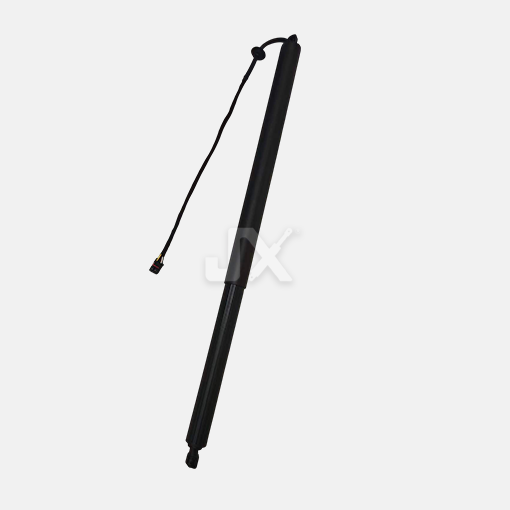
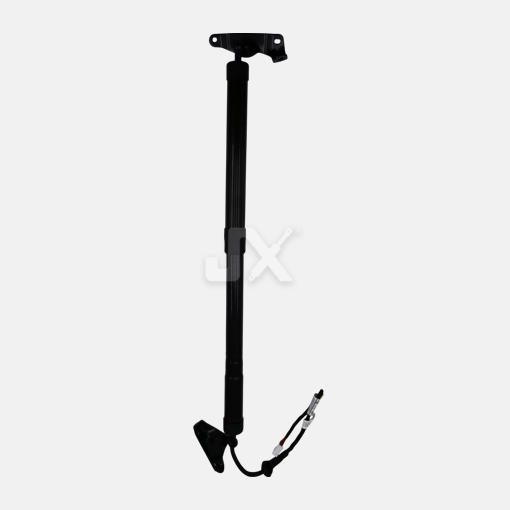
Selecting a source for an item this safety-critical is more than a price quotation. Xingtai Juxiang Machinery Manufacturing Factory has been producing gas springs and electric tailgate struts since 2002 and employs roughly 100 people, including 20 technical specialists who analyze force selection, release-mechanism layout, and kitting under NDA. “Our multi-layer sealing is accurate enough to achieve pressure attenuation of less than 5% over a year, and the rubber compound we use can withstand temperatures of -40°C to 85°C, which is directly relevant to customers in Russia, Central Asia, and the Middle East. If you are looking for a lockable gas spring manufacturer for your new line of chairs, beds, or flip covers, contact JX at jx@jxgasspring.com with your force, stroke, and release requirements, and we will send you designs and sample prices at a MOQ of 50PCS and above.
Conclusion
Choosing a lockable gas spring entails matching the force, stroke, type of locking, mounting geometry, environment, and estimated cycle life to the actual application before any order ships. Safe performance thereafter relies on proper alignment, independent assistance during installation, full-load testing and inspection records that are verified on a defined timetable rather than left to memory.
Besides per-piece cost, OEMs, distributors and plant operators should assess suppliers on dimensional control, test evidence, traceability, customization capabilities, compliance documents, lead time and lifecycle support. The repercussions are real when a component this minor fails, which is precisely why the checklist above is in place.
FAQ
1. What is a lockable gas spring?
A lockable gas spring is a pressurized support device that assists movement and holds a component in a chosen position. Its internal valve, controlled by a lever, button, or release cable, is what separates it from a standard gas spring.
2. How does a lockable gas spring work?
Gas pressure pushes against a piston to provide lifting or positioning force. When the release mechanism is activated, the internal valve opens and allows movement; releasing it closes the valve, and the spring locks according to its rigid or elastic design.
3. What is the difference between a rigid and elastic lockable gas spring?
A rigid lockable gas spring holds the piston rod with almost no measurable movement after locking, which suits medical beds and exam chairs. An elastic locking design allows a small, controlled amount of give under load, which feels softer in office seating.
4. How do you choose the right lockable gas spring force?
Calculate the component weight, center of gravity, mounting angle, and lever arm, then confirm the required user effort against those numbers. The chosen force should be validated through actual application testing rather than picked from the component weight alone.
5. Can a lockable gas spring be used as a safety support?
Generally, no. It should not act as the sole support for suspended loads, personnel, or safety-critical guarding unless the full system has been engineered and tested specifically for that purpose.
6. How often should lockable gas springs be replaced?
Replacement timing depends on cycle count, environment, and load, so there is no single fixed interval. Replace a unit immediately if it leaks, bends, corrodes heavily, loses force, or fails to lock reliably during testing.
7. Are stainless steel lockable gas springs better than standard steel versions?
Stainless steel generally resists corrosion better, which matters in humid, marine, or washdown settings common in Southeast Asia and coastal South America. Coated standard steel can still perform well indoors at a lower cost when the environment stays controlled.
Share Your Application Details and Get a Sample Quote
If your team is still comparing specs on paper, sending over the real application details usually speeds things up more than another round of searching. Email JX at jx@jxgasspring.com with your required force, stroke, locking type, and end fittings, and mention whether you need rigid or elastic locking for your chair, bed, or flip-cover line. As a lockable gas spring supplier shipping to more than 40 countries, we can turn around drawings, force curves, and sample pricing within days, with a standard MOQ of 50PCS for most locking models and OEM kitting available under NDA.
References
1. International Organization for Standardization — ISO 9001:2015, Quality Management Systems — Requirements (cited in the Supplier Capability and Evaluation section): https://www.iso.org/standard/62085.html
2. International Organization for Standardization — ISO 12100:2010, Safety of Machinery — General Principles for Design (cited in the Compliance and Documentation Review section): https://www.iso.org/standard/51528.html
3. European Commission — Regulation (EU) 2023/1230 on Machinery (cited in the Compliance and Documentation Review section): https://eur-lex.europa.eu/eli/reg/2023/1230/oj
4. European Chemicals Agency — Understanding REACH (cited in the Compliance and Documentation Review section): https://echa.europa.eu/regulations/reach/understanding-reach
5. European Commission — RoHS Directive 2011/65/EU (cited in the Compliance and Documentation Review section): https://eur-lex.europa.eu/legal-content/EN/TXT/?uri=celex%3A32011L0065
6. United States Department of Labor, OSHA — Control of Hazardous Energy (cited in the Compliance and Documentation Review section): https://www.osha.gov/control-hazardous-energy
About the Author
Xu Peng is a Product Engineer at Xingtai Juxiang Machinery Manufacturing Factory, where he works on force selection, sealing design, and locking-mechanism testing for gas springs shipped to more than 40 countries. He has spent over a decade on bench and field validation for OEM clients in seating, medical, and furniture-hardware industries, and regularly reviews installation and failure reports from distributors across Southeast Asia, Africa, and Central Asia.