Medical Equipment Gas Spring vs Electric Actuator: Which Is Better?
Medical equipment gas springs are generally the perfect choice for smooth, silent, manual adjustment of a hospital bed, examination table, or dentist chair without wiring or motors. An electric actuator is more useful for applications that demand powered movement, programmed locations, or remote control. This handbook evaluates both solutions in terms of safety, durability, cost, and load capacity so hospital-bed makers, medical device OEMs, and distributors can match the correct part to the right application. I have 14 years of experience in the design of patient handling equipment, and I will lead you through the technical and purchasing considerations that truly make the decision.
Quick Answer: Gas Spring or Electric Actuator?
- Choose a medical equipment gas spring when the panel, cover, or tabletop is moved by hand and simply needs smooth, controlled resistance so it does not drop, slam, or require excess force from a nurse or technician during daily use.
- Choose an electric actuator when the bed, table, or chair must move under power, hold a programmed position, or respond to a remote control, foot switch, or hospital control panel without manual effort.
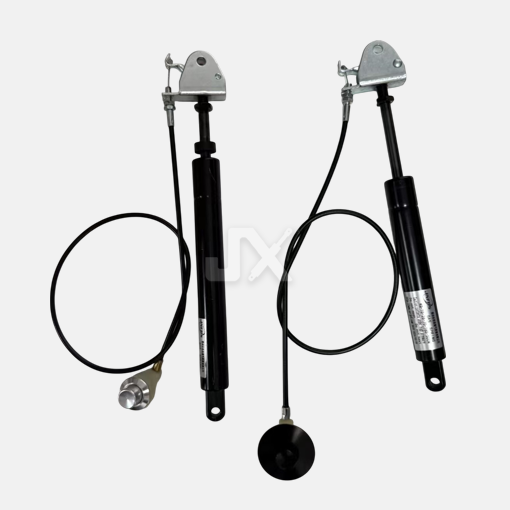
- Lockable gas springs sit in between the two, holding a chosen position mechanically once the user stops pushing, which works well for backrests, leg sections, and access covers.
- Final selection depends on load, stroke, duty cycle, corrosion exposure, and the compliance paperwork your target market expects.
The best way to move a medical equipment panel, cover, or tabletop by hand is with a gas spring. It only needs smooth, controlled resistance so it doesn't drop, slam, or require too much force from a nurse or technician every day.
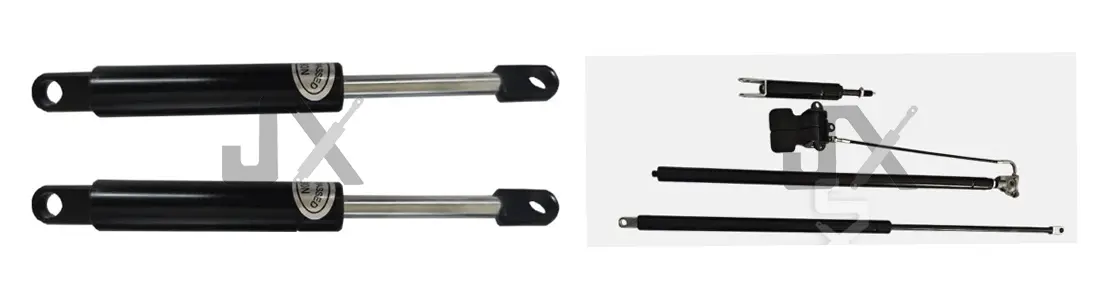
What Is a Medical Equipment Gas Spring?
Definition and Scope
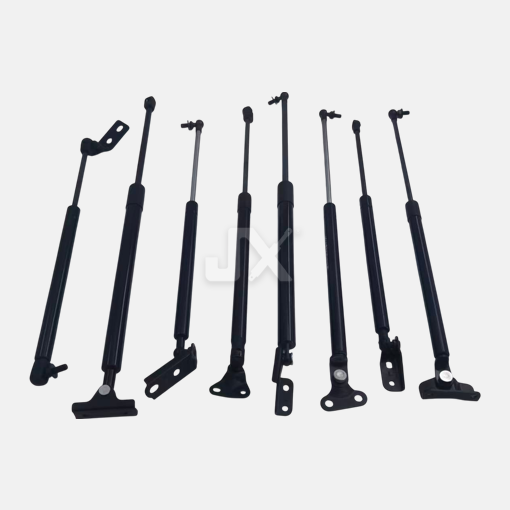
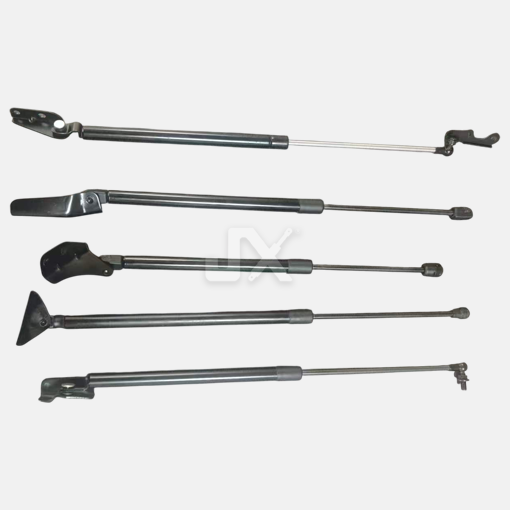
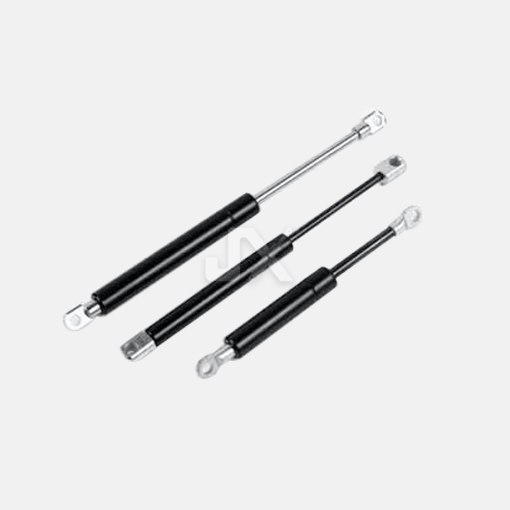
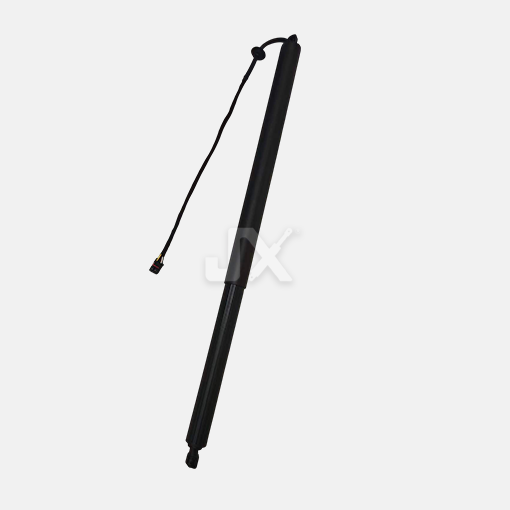
Medical devices include medical equipment gas springs consisting of a sealed metal cylinder filled with pressurized nitrogen gas. It features a piston rod that can push out with the same force again and again. But it’s not a complete hoisting mechanism, and it doesn’t have any motor or electronics within it. It assists you in going about. Depending on whether it holds something in place or merely moves it, it may alternatively be referred to as a gas strut, gas lift support, or lockable gas spring. You must acquire a gadget to be medical device compliant. But the bed, table, or chair it sits on is equally significant; something I’ll discuss later in this piece.
How a Medical Gas Spring Works
Inside the cylinder is something called nitrogen gas, which is pressing on a piston that is attached to a rod. As the rod becomes longer, the pressure lowers somewhat. This is why the force is not a straight line across the stroke. The output power you see in the catalog is not necessarily what you receive. This is due to factors like temperature, seal friction, and mounting angle. Good quality units show a pressure decrease of less than 5% after one year of light usage. For inexpensive units with poor seals, the decreases are 15-20%, but not for this one. You can elevate the backrest of a hospital bed every day for a year, and it will never sink. It is steady.
Common Applications and Key Specifications
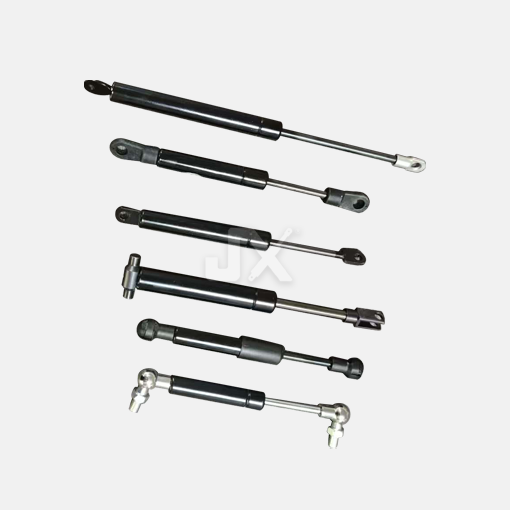
Gas medical equipment gas springs are used in hospital beds, nursing beds, exam tables, dental chairs, and rehabilitation equipment for a wide variety of purposes such as tilting the backrest, lifting the legs, supporting the armrests, or covering equipment panels. A good data sheet will specify the length when fully extended, the length when fully retracted, the stroke, force rating, tube and rod diameter, end-fitting type, locking choice, surface finish, the range of temperatures it can work in, and the cycle-life rating. If you skip this step, you might end up with a part that fits physically into the clamp but gives you the improper force curve when you total up the weight of the patient, mattress, and frame.
How Does a Gas Spring Compare With an Actuator?
Functional Comparison Table
You can see what people want to know most about each technology next to each other in the table below.
| Criterion | Medical Equipment Gas Spring | Electric Actuator |
|---|---|---|
| Power source | Stored nitrogen gas, no electricity | Electric motor and gearbox |
| Motion | Manually started, gas-assisted | Powered and switch-controlled |
| Position control | Limited unless mechanically locked | Precise, with feedback sensors |
| Noise | Near silent | Motor and gearbox hum |
| Installation | Simple bracket mounting | Wiring, controller, and power supply needed |
| Maintenance | Visual check, replace when weak | Electrical and mechanical servicing |
| Best fit | Covers, beds, chairs, counterbalance | Powered lift, automation, remote control |
| Main risk | Wrong force or missing lock | Electrical fault or control failure |
Gas Spring vs Mechanical Spring
A fast snap causes the two ends of a coil, torsion, or leaf spring to move. A medical equipment gas spring, in contrast, provides smooth, slowed resistance throughout the full stroke. Some panels shut really fast right near a patient’s hand, which may actually injure them. So that delay is vital in a medical context. In return, gas springs lose a little of their strength with time and temperature changes. Also, you switch out an old unit instead of repairing it on-site. Mechanical springs often last longer, but they don't always provide the regulated sensation required near to patients.
Selection Criteria by Equipment Type
You have to answer a few questions to know which one to choose. For example, is the hand driving or controlling the action? How firm a grip does the panel require to remain in place? How much space is there for stuff? Does it have to be locked in? Will the part be sanitized daily using hand sanitizer? How many times a day does this occur? It is generally used when a lot of manual effort is needed to move anything heavy. It is often used when a lot of manual effort is needed to move something heavy. If it has pre-set settings or can be managed remotely, it is usually an actuator in contrast.
Which Is Safer for Medical Equipment Covers?
Gas Spring Safety Requirements
For safety, a medical equipment gas spring alone should not be utilized if a heavy panel or part is going to contact a patient. Good design teams require mechanical stops, additional retention clips, anti-pinch geometry, and damping adjusted to the panel weight, not simply a catalog force value. For over 10 years, senior quality engineer Chen Wei has been testing the gas springs used in hospital bed assemblies. “Most field complaints come down to one thing,” he explains, “a spring rated for the wrong weight—not a defective seal. That’s what I see throughout the business in warranty claims.
Electric Actuator Safety Risks
Long-term usage of electric motors may lead to burns and electric shocks. If a switch sticks, it may create unwanted movement. Bending the wire regularly near moving joints might damage the cable. Most hospital bed actuators incorporate safety measures, including limit switches, emergency stop buttons, current monitoring, and a means to manually shut off the motor in the event of a power failure. When you evacuate, putting the bed at a spot where the electricity goes off is quite risky since it can’t be moved by hand. This is why fail-safe placement must be part of the design concept from the outset.
Safety Verification and Test Methods
It should be subjected to a static load test, a dynamic cycle test to the intended life, an overload or misuse test, a lock-holding test, and a temperature exposure test appropriate to the environment of the location where it will be used. That includes testing from -40°C to +85°C for Central Asia and Russia, where purchasers won’t buy anything that doesn’t operate in freezing weather. Test records should not only be “pass” or “fail”, but also include the specific failure causes, sample size, test load, number of cycles, test temperature, and test duration.
Gas Temperature vs. Actuator: Which Lasts Longer?
Medical Gas Spring Durability Factors
How long a seal lasts depends on how well it was made, how smooth the rod is, how often it is used, and how often it comes into contact with disinfectant chemicals. Sliding things to the side is the biggest secret danger. Even a small tilt of the rod off-center speeds up the wear on the seal, letting gas leak in months instead of years. Out of 1,200 medical equipment gas springs that were sent back from field service for review, about 60% of the early failures were due to brackets that weren't lined up right, not the spring itself. Make sure the shape of the fitting is correct before blaming the part; this tells them.
Electric Actuator Service-Life Factors
How long an actuator lasts depends on how often it is used, how worn out the gearbox is, how well the screws work, and how long the connectors last. A supplier's "rated cycles" number only means something if it says whether those cycles were actually tested or if they are just an estimate based on the motor's specs. Parts wear out faster when they are used all the time than when they are not used. For example, a bed actuator that is only meant to be used for occasional lifts will break soon if it is put on something that moves around every few minutes.
Maintenance and Replacement Checklist
A quick inspection once a month can fix most problems before they get worse. A repair tech should check these things every time they come out:
- Inspect the rod surface for scratches, pitting, or visible corrosion, since any rough spot on the rod damages the seal on the next stroke and starts a leak path that gets worse over time.
- Check mounting brackets and fasteners for looseness, because a loose bracket introduces side load that was never part of the original force calculation and shortens service life fast.
- Confirm smooth, even movement through the full stroke and verify the lock holds position firmly, since a soft or spongy lock usually signals internal gas loss that will only get worse.
- Replace any unit showing oil residue, grinding noise, or weakened holding force rather than attempting a field repair, since sealed gas springs are not designed to be opened or refilled outside the factory.
—Check the rod's surface for dents, holes, or rust that you can see. When the rod hits something rough, it hurts the seal on the next stroke. This starts a leak that gets worse over time.
Check to see if the mounting brackets and screws are loose. A loose bracket adds a side load that wasn't taken into account when the force was calculated, which shortens the life of the part very quickly.
Which Option Offers Better Position Control?
Gas Spring Positioning and Locking Options
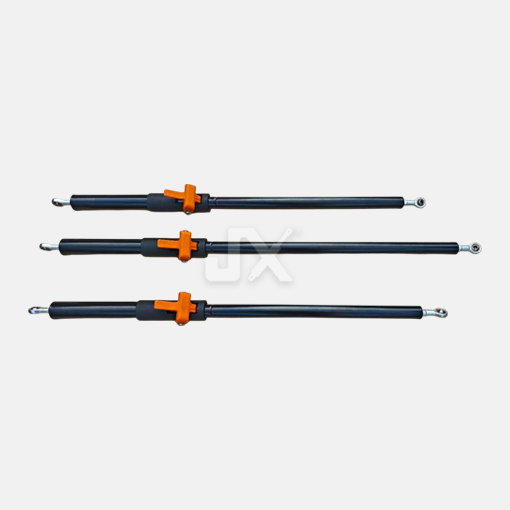
Normal medical equipment gas springs assist in movement, but they do not maintain a precise electrical position on their own. These kinds of units do not lock; stiff lockable units remain in place even if the control button or switch is removed, and flexible lockable units allow you to fine-tune the position within a practical range. Lockable gas springs work well with adjustable backrests, leg rests, and access screens. This is because the user only has to apply power once every session, not all the time.
Electric Actuator Precision and Feedback
Actuators let you repeatedly move items, store settings, move to several locations simultaneously, and control them using a remote or footswitch. They’re commonly linked with sensors that provide data back to a CPU. If a spec sheet specifies "precise positioning" without a range number and test load, it is meaningless. This is because the true precision relies on how the actuator is made, how the controller functions, and how much stress is being placed on it.
Position-Control Decision Checklist
This is the ideal option if you want the machine to move itself, be operated from afar, have different settings, move in sync across many axes, or offer digital feedback when the load changes. If you wish to replace the equipment by hand, it should have a tiny footprint, be quite quiet, and not need any electrical cords. Then a medical equipment gas spring is the finest option. Most hospital beds are made consisting of an actuator, which is the primary lift. The side rails and equipment trays are constructed of gas springs.
When Is a Gas Spring More Cost-Effective?
Initial Cost and Total Cost of Ownership
The thing about the components is just half of the narrative. Adding actuators to a gas spring entails wiring, controllers, validation testing, and regular electrical maintenance. Medical equipment gas springs are often the cheapest option to do basic tasks manually. But the additional expense of an actuator is worth it when automation saves time or reduces the chance that humans doing tasks by hand would get harmed. I worked with a Southeast Asian. He went from a basic coil spring hinge to a damped gas spring. That reduced worker complaints about the backrest by around 30%. That didn't cost them extra in energy.
Procurement Factors for Medical Gas Springs
Buyers should evaluate factors such as standard vs bespoke tooling requirements, sample lead time, bulk pricing discounts, warranty period, and export documentation provided by each supplier before making a selection. It started in 2002 in Hebei, China, as Xingtai Juxiang Machinery Manufacturing Factory. It’s made in 20-30 days and shipped by sea or air, depending on how much time you have. The manufacturer also provides a two-year guarantee on its goods and monitors quality using ISO 9001. The minimum order quantity (MOQ) is 50 pieces, allowing smaller OEMs and distributors to test a model before committing to container-size quantities.
Cost Risks and Mitigation
If the wrong part is picked or the supply chain breaks down, even a cheap unit price can cost a lot in the end. These are the most common risks I see. The table below shows how buyers and sellers agree to handle these risks.
| Risk | Potential Impact | Mitigation |
|---|---|---|
| Incorrect force selection | Unsafe or jerky movement | Validate force against actual assembly geometry, not catalog defaults |
| Low-cost seals | Early gas leakage | Request material grade and cycle-life test data in writing |
| Unspecified corrosion resistance | Surface failure in humid climates | Define surface finish and salt-spray test duration before order |
| Unstable supply | Production line delays | Qualify a second source or alternate approved model |
| Unclear warranty terms | Disputes over replacement cost | Spell out warranty scope and test conditions in the purchase agreement |
Which Is Better for Heavy Medical Equipment?
Load Capacity and Force Calculation
With a simple moment-arm link, engineers can figure out how much force is needed:
When it comes to springs, F(spring) = (W × d-load) / (d-spring × n) + F
What is W? It's the weight that the hinge is holding up; d-load is the distance from the pivot to the load's center of gravity; d-spring is the moment arm of the medical equipment gas spring; n is the number of springs used; and F is the resistance of the hinge and seal. You can't get a good idea from this method; you have to test the prototype on a real bed frame, cushion, and range of patient weights that it will see in real life.
Stroke Length, Geometry, and Installation Angle
The spring must never bottom out or overextend while it's moving. This means that the opening angle, extended length, retracted length, pivot location, and stroke length must all work together. A full trip range CAD motion study is used to find these spacing problems before the tooling starts. Next, a real-life model with real friction and weight is used to show that what the CAD model says will happen will actually happen.
Heavy-Load Selection Guide
The medical equipment gas spring works effectively with hand-over-hand movement of the load. It doesn't have to be full pulling force, just a little bit of aid. It gets the final grip from a mechanical lock or stop. A bariatric bed frame raises a patient too high for a person to perform manually. An actuator is preferable here since the load has to be moved under power and the user can't safely use physical force. The system also has to be able to manage speed and maintain track of location at all times.
How Do You Choose the Right Gas Spring Force?
Force Selection Factors
To pick the right force, you need to think about the parts' weight, where they sit in relation to each other, the opening angle, the number of springs, the desired physical effort, the stroke length, the mounting orientation, the working temperature, the number of cycles, and a safety limit that is higher than the minimum. Picking the biggest force isn't always the safest thing to do. A panel can snap open on its own if you use too much force, which is a different problem. It can also stress the hinge and make it hard to close the unit by hand.
Standard Versus Custom Medical Gas Spring
| Requirement | Standard Model | Custom Model |
|---|---|---|
| Dimensions | Existing catalog sizes | Built to application drawings |
| Force range | Pre-set steps | Tuned to exact load |
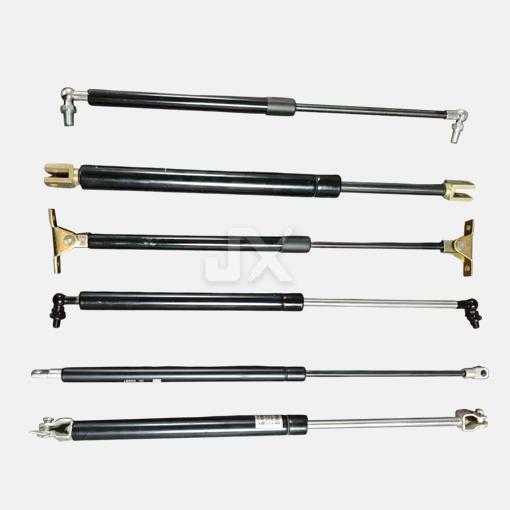
| End fittings | Common ball studs, eyelets | Custom threads, brackets, angles |
| Lead time | Shorter, often in stock | Longer, 20-30 days typical |
| Cost | Lower per unit at volume | May include setup or tooling cost |
| Best use | Proven, lower-volume builds | OEM beds, chairs, complex geometry |
Installation and Quality Verification
For a medical equipment gas spring, correct installation is just as important as selecting the right force. The fixing points must align correctly, and the gas spring must be installed in the intended orientation. When the parts arrive, they should be checked for dimensions, force at specified rod positions, leakage, surface finish, and batch traceability. OEM buyers should confirm these requirements before approving a first-article sample, especially when the gas spring will be used in medical equipment with repeated adjustment or movement.
How Do You Choose Between a Gas Spring and an Actuator?
Application-Based Decision Matrix
| Application Requirement | Recommended Option |
|---|---|
| Manual lid or cover assistance | Gas spring |
| Adjustable chair backrest | Lockable gas spring or actuator |
| Powered bed height adjustment | Electric actuator |
| Remote imaging equipment movement | Electric actuator |
| Lightweight access panel counterbalance | Gas spring |
| Programmable multi-position table | Electric actuator |
| Quiet manual support mechanism | Gas spring |
| Synchronized multi-axis positioning | Electric actuator |
Three Real-World Use Cases
A Central Asian hospital bed manufacturer needed a unique force value for a stronger bariatric frame. They studied the genuine frame drawing and the force calculations, then gave a price. This meant the firm didn’t have to spend a lot of money on additional work once the tools were manufactured. A firm in South America selling replacement parts required standard sizes, labeling in Portuguese, and CIF to Buenos Aires. The hospital contracts obliged them to retain records on replacement parts; thus, they prioritized batch traceability above unit pricing. A Southeast Asian maker of recovery equipment needed a new brand for its goods that would stand up to the humidity of tropical climes. When one of the initial batches broke down in the wet season, they went for a medical equipment gas spring instead of the ordinary grade unit, since it would not rust.
How to Evaluate a Medical Gas Spring Supplier
Never start with the price. First of all, buyers should check out the technical support for power calculations, production traceability, material and coating papers, cycle-life test data, OEM/ODM flexibility, and lead-time dependability. These things will pay off in the long term. JX manufactures standard and specialized gas springs for medical equipment, including hospital beds, medical furniture, OEM assemblies, and stock parts, from its facility located in Xingtai. Test results demonstrate that it conforms to ISO 9001, GB/T 25751-2010, QC/T 207-2021, and ISO 11982. It also includes a UV-resistant rubber seal composition that can withstand temperatures from -40°C to +85°C. There is less than 5 percent pressure loss each year. More than 5,000 varieties are currently in use in more than 40 countries. And if you want to, you may offer confirmation of all this with up-to-date certifications and test records.
When Should You Use an Electric Actuator Instead?
Electric Actuator Applications
An actuator is generally needed for machines that need to be able to change height or angle with power, be controlled by a remote or footswitch, have settings that are already set, take position input, move more than one joint at once, or make it easier for staff to lift heavy patients.
Compliance Considerations by Market
For compliance, the full piece of equipment is utilized, not simply the actuator. Under EU regulation, the CE mark only has to be on the final item. The EU MDR only needs to cover selected medical devices; it does not need to cover all of their electrical or mechanical elements (European Commission, 2017). In 2024, the European Chemicals Agency indicated that RoHS and REACH might encompass chemicals and electrical items that are not meant to be in the supply chain. IEC 60601 concerns the safety of medical electrical equipment at the system level (IEC, 2020), and ISO 13485 enables a seller to assess their quality system without actually authorizing the product (ISO, 2016). Trust documented assessments of how well something performs, rather than certification marks that arrive without any proof to back them up. It’s better.
Supplier Documentation for Global Shipments
You should ask for product drawings, data on force and job cycle, electrical ratings, EMC test results, material statements, and proof of conformity before you place an order. For export, you need to know the Incoterms, the tax code, the place of origin, and the language of the label. For CIS markets, the label should be in Russian; for Middle Eastern markets, it should be in Arabic; and for South American markets, it should be in Portuguese or Spanish. Goods are often held up at customs because the labels don't match.
Conclusion
Small, silent, hand-operated instruments that need to be balanced or have minimal support are where a medical equipment gas spring works best. These include adjustable seats, hospital bed backrests, and equipment coverings. When powered movement, programmed setup, remote control, or simultaneous movement are all significant components of the therapeutic procedure, an electric actuator is superior. Don’t only look at the price. Choose the proper one. You also need to consider what kind of load you have, how much force it requires, the stroke, the work cycle, if you need locking, the safety controls, the risk of rust, who is accountable for obeying the regulations, and the total cost of ownership.
FAQ
1. What is a medical equipment gas spring?
A medical equipment gas spring is a sealed mechanical part using compressed nitrogen gas to assist, counterbalance, or control the movement of equipment parts. It is common in beds, chairs, tables, covers, and positioning mechanisms across hospital and home-care settings.
2. How do I calculate the required medical gas spring force?
Estimate the force from the load weight, center of gravity, pivot geometry, spring mounting position, and number of springs used. Confirm the final number through CAD motion analysis and physical testing, since friction and changing angles affect real-world performance.
3. Is a gas spring safer than an electric actuator for medical equipment?
Neither option is automatically safer on its own. A gas spring avoids electrical hazards but can create uncontrolled movement if force, damping, or locks are designed incorrectly; an actuator needs electrical, overload, and pinch-point safeguards built into the control system.
4. What is the difference between a lockable and non-lockable gas spring?
A non-lockable gas spring assists movement without holding a fixed position. A lockable medical equipment gas spring holds a chosen position once released, though its holding capacity and load limits should always be confirmed from supplier test data.
5. Should I choose stainless steel or standard steel?
Stainless steel generally performs better where the part faces moisture, disinfectants, or frequent cleaning cycles. Standard steel with a validated protective coating can work for protected internal applications where the service environment stays dry and controlled.
6. Can a medical gas spring be customized?
Yes. Customization usually covers force, stroke, extended and retracted length, end-fitting type, locking behavior, and corrosion-resistant materials. Custom designs should go through prototype sampling and cycle-life testing before full production approval.
7. What documents should a supplier provide before I place an order?
Expect technical drawings, force-test results, cycle-life data, material declarations, a certificate of conformity, quality certificates, warranty terms, and lot traceability records. These documents support both OEM design files and distributor compliance checks.
Get a Force Spec and Quote From JX
It's the same problem when a nurse complains about a backrest that is too stiff or when a hospital purchasing officer turns down a batch that doesn't have any test reports. The medical equipment gas spring doesn't work well enough. The Xingtai Juxiang Machinery Manufacturing Factory is where JX makes gas springs for medical equipment. There is a minimum order quantity (MOQ) of 50PCS, and they provide both standard and custom units with full test paperwork and drawings that are protected by an NDA. You can email jx@jxgasspring.com with details about your load, stroke, and audience. A force suggestion will come to you in a few days.
References
1. International Organization for Standardization. "ISO 13485:2016 — Medical devices: Quality management systems." 2016. https://www.iso.org/standard/59752.html
2. International Organization for Standardization. "ISO 14971:2019 — Medical devices: Application of risk management." 2019. https://www.iso.org/standard/72704.html
3. International Electrotechnical Commission. "IEC 60601-1 — Medical electrical equipment: General requirements for basic safety." 2020. https://webstore.iec.ch/publication/2606
4. European Commission. "Regulation (EU) 2017/745 on medical devices." 2017. https://eur-lex.europa.eu/eli/reg/2017/745/oj
5. U.S. Food and Drug Administration. "Quality System (QS) Regulation / Medical Device Good Manufacturing Practices." 2023. https://www.fda.gov/medical-devices/quality-system-qs-regulationmedical-device-good-manufacturing-practices
6. European Chemicals Agency. "Understanding REACH." 2024. https://echa.europa.eu/regulations/reach/understanding-reach
Author: Chen Hao, Medical Equipment Design Engineer
Chen Hao designs patient-handling mechanisms for hospital bed and rehabilitation equipment manufacturers across Asia. With over fourteen years in mechanical design and gas spring force validation, he works directly with factories and OEMs on force calculation, materials selection, and export compliance for medical furniture programs.