How do I choose the right custom engine hood gas strut for my project?
Choosing the right engine hood gas strut comes down to matching force, length, mounting geometry, and climate rating to your exact hood design, not just swapping in a part that looks similar. I have spent years sizing gas struts for importers, distributors, and OEM accounts across Southeast Asia, Russia, Africa, and South America, and the same mistake repeats itself: buyers pick a strut on price or rough size, then deal with hoods that drop, hinges that bend, or struts that fail in cold climates. This guide walks through the exact selection steps, backed by our own batch test data, so you can approve a custom strut with confidence.
Key Takeaways Before You Specify a Custom Strut
A good "engine hood gas strut" takes into account all of these things: force, stroke, increased length, mounting geometry, opening angle, temperature, and cycle life. Here it is in short before we get into the specifics.
- Measure the closed and open hood positions first, because strut length and stroke depend on mounting centers, not the hood's outer dimensions.
- Calculate force from hood weight, hinge geometry, and lift angle rather than guessing based on how heavy the hood feels in your hands.
- Add a safety margin that holds the hood open without overloading hinges, brackets, or sheet metal panels.
- Confirm end fittings, bracket type, corrosion grade, and the -40°C to +80°C temperature range before tooling starts.
- Test prototypes for fit, holding force, cycle life, leakage, and salt-spray resistance before signing off mass production.
- Request drawings, force-displacement data, inspection records, and traceability documents from any manufacturer you shortlist.
What Makes a Custom Engine Hood Gas Strut Different From a Standard Part?
What Is an Engine Hood Gas Strut, Exactly?
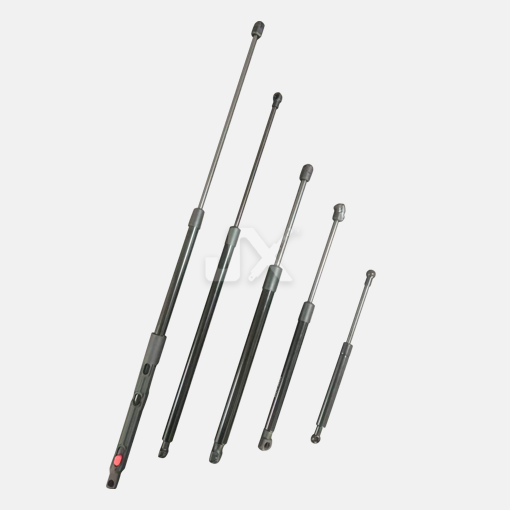
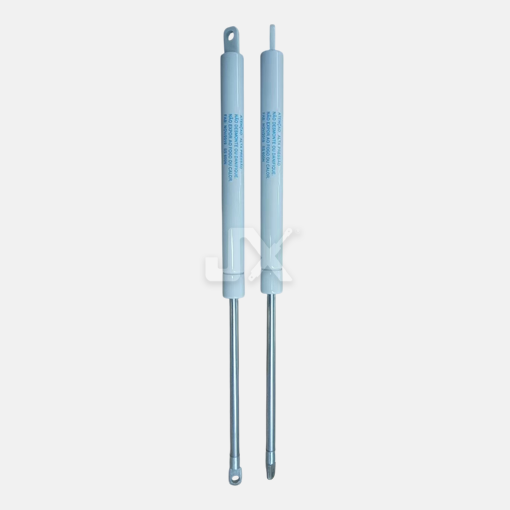
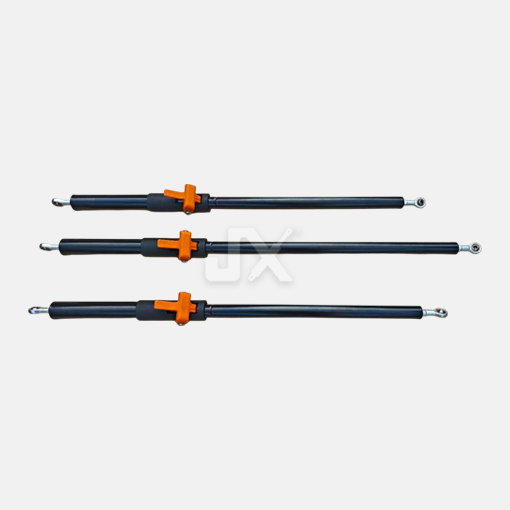
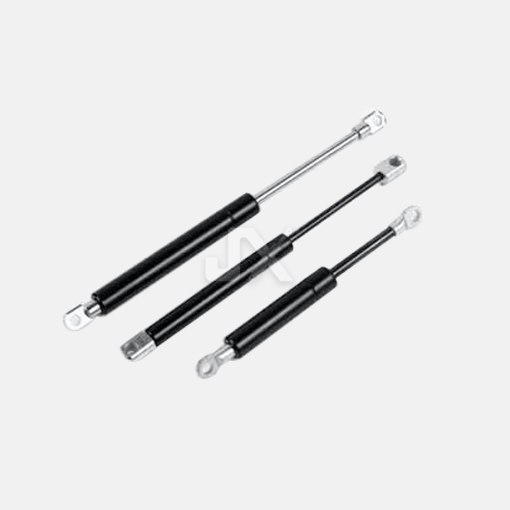
A closed cylinder that is filled with nitrogen engine hood gas strut is what a hood gas strut is. A piston rod moves outward because of the gas. The outside force lifts the hood and keeps it open at a right angle, so there's no need for a catch. In Japan and Korea, some parts catalogs call this part a "gas spring," while in Europe, they call it a "gas strut." Either way, they both mean the same thing: they help lift the hood and return it in a controlled, soft way when it is pushed down.
There are several types of locks and hinges, but engine hood gas struts are not the same as these. It's not enough to just use gas pressure to give service techs a strong mechanical hold while they work under an open hood. Add a separate prop rod or safety catch to the strut.
Why a Universal Strut Often Fails on a Specific Hood
It depends on the base where the hood is attached, how heavy it is, where the hinge is, and how much space there is for fitting. The extra length won't make a difference in how well the strut holds the hood of a Renault Duster, even if it looks close on the specs sheet. When importers try to use a part that's almost the same, though, the hood either falls open all the way or slams shut without any resistance.
It's not a good idea to guess what will fit in a service bay. A gas engine hood gas strut for the engine hood that isn't the right size can leave the hood unsupported in the middle of its lift, put uneven pressure on two engine hood gas struts, bend thin hinge brackets over time, or wear out seals faster than a part that is the right size. They have to make a warranty claim or come back for a second visit, which hurts their reputation more than the few cents they saved on the piece price.
Three Real Buyer Scenarios We See Most Often
Three patterns keep coming up in the things we've bought. The companies that make car parts (OEMs) need to be able to fit thousands of units with the same level of accuracy, force, and batch tracking. People who sell aftermarket parts need a single SKU that can be used for more than one model year without getting complaints about not matching. Fleet workers and van changers need a joint that won't break in the middle of a job because of rough roads, dust, or changes in temperature.
| Buyer type | Typical requirement | Design priority |
|---|---|---|
| OEM or Tier 1 accessory maker | Repeatable fit across production runs | CAD-matched force curve, lot traceability |
| Aftermarket distributor | One SKU covering multiple model years | Cross-reference accuracy, packaging |
| Fleet or body-builder converter | Reliable access in rough conditions | Corrosion grade, cycle life, bracket strength |
How Do I Measure My Hood for the Right Gas Strut Dimensions?
Recording Closed, Partial, and Full-Open Positions
First, find out how far apart the two fastening points are when the door is closed all the way, about halfway open, and all the way open. Instead of guessing, use a digital angle gauge to find the exact angle at which the hinge line meets the door. Write down any hinge stop or body panel that controls how far the hinge can move. This will help you figure out how far your engine hood gas strut can go without hurting itself.
Extended Length, Compressed Length, and Stroke Defined
Before you get a quote for a gas strut, you need to know its extended length, compressed length, and stroke. When the rod is fully out, the measured length is shown from center to center. When the rod is pushed in, the measured length is shown from center to center. People who are importing for the first time often make the mistake of comparing lengths based on general body size instead of mounting centers. Before you sign off on a drawing, you should ask your source what the tolerances are for all three numbers and the force.
Common Measurement Mistakes That Delay Approval
When new models are made, they keep making the same mistakes with the measurements. Each of them adds at least a week to the time it takes to take samples because the plant needs more information. You will get the wrong stroke number if you measure from the outside of the housing instead of the center of the ball-stud. You might not notice washer bottles or wire loops that are in the way if you don't check the mid-travel angle. You forgot to write down which way the rod faces when it is closed, so you might not know when you get there.
With a simple building plan, these little gaps are easy to avoid. The picture should show the pins or brackets with balls, the pivot's direction, the space between parts, the fastener type, and how the rod and cylinder are lined up. Being aware of the direction is important because the lubrication inside the cylinder sets in a different way when the rod is at rest pointing up or down. This changes how long the seal will live.
How Much Force Does My Engine Hood Gas Strut Need to Hold the Hood Open?
The Variables Behind a Force Calculation
You can't tell from a named force if an engine hood gas strut can hold a hood open or not. The real estimate is based on the hood's weight, center of gravity, where the hinge axis is located, where the struts connect, and how the lever arm moves along the travel path. Even if both hoods weigh the same, they may need very different force ratings if one hinge is closer to the strut mount than the other.
We don't use a single weight number to decide the size of each unique force curve; instead, we use a layout drawing or a 3D model. This is because a strut might feel right when it's fully open, but it might feel wrong when it's fully closed. This is another reason why a force-displacement curve is better than just a good Newton grade for showing how well something works in real life.
Case Study: Matching Force Curves for a Hyundai Platform Distributor
Six months after they were put on, the hoods of a popular SUV model were sagging on one side. In 2024, a Hyundai parts dealer in Southeast Asia called us with the problem. It kept happening. On both sides of the struts that their current supplier sent them, the nominal force was the same, but each side could hold 12% more force than the other. For the second test, we used matching pairs that were held together with a 3% force tolerance band. Before the shipment, our in-house test rig made sure of this.
Over the next eight months, the dealer looked at promised returns for the new batches and compared them to returns from the previous twelve months. From 9.4% of shipped units to 3.1%, units were sent back because the hood lift wasn't level. At the same time, 40% more sales came from that account. It wasn't necessary to make the brace stronger. When a provider tests and fills with gas themselves, this kind of detail is the only one that shows up. There was less room for error on a force that had been correctly calculated.
Gas Strut vs. Prop Rod — Which Fits Your Application?
People who want to buy sometimes wonder if a simple prop rod could be used on a cheap trim or export market instead of a gas engine hood gas strut. They each do it in a unique way. How the hood is used every day will help you decide which one to pick.
| Criterion | Hood gas strut | Hood prop rod |
|---|---|---|
| Operation | One-hand opening and holding | Manual positioning each time |
| Holding behavior | Continuous support across the travel range | Fixed support at one notch |
| Mounting space | Needs clearance for cylinder and rod | Needs storage clip when stowed |
| Component cost | Higher per unit | Lower per unit |
| Common failure | Gas leakage or seal wear over years | Bending or missed engagement |
| Best fit | Frequent access, passenger vehicles | Low-cost service access, light trucks |
Should I Choose One Strut or a Matched Pair?
When a Single Strut Is Enough
You only need one engine hood gas strut if the hood isn't too heavy, the mounting point is close to the middle, and the panel is stiff enough that it doesn't twist when you lift it. With a single-strut plan, the hood stays narrow, and the load path is short and straight. This works well for many small hatchbacks and industrial vans.
When Dual Struts Protect the Hood and the Hinges
Pickup trucks, vans, and cold box bodies usually need two legs close to each side for hoods that are bigger or heavier. Two engine hood gas strut units that are matched up right spread the weight and make it less likely for one opening to bend than if there were only one strut. Setups with two struts can also handle a drop in force from one unit without a quick fall. People who run fleets of vehicles need to know this because replacements are hard to find in remote areas.
Matching Tolerance for Paired Struts
It's possible for two struts with the same nominal force number to move in different ways. There may be a change in output even if both units have the same part number on the box. This is because of how they were made inside each cylinder.
| Design factor | Single strut | Dual struts |
|---|---|---|
| Component cost | Lower | Higher |
| Load symmetry | Limited | Better when matched |
| Typical hood width | Narrow to medium | Medium to wide |
| Synchronization need | None | Requires tolerance control |
Because of this space, if one of the struts on a two-strut hood needs to be changed, you should swap both sides together so that they match. If you only fix the broken side, the power of an old engine hood gas strut is mixed with the full power of a new one. This makes the lift uneven, which is what the owner just said was a problem.
How Does Climate Affect Engine Hood Gas Strut Performance?
Cold-Start Behavior in Russia and Central Asia
The gas pressure inside a joint changes along with the temperature. When it's cold, the available force and lift speed slow down. This is what Russian and Kazakh dealers worry about the most in the winter. Our struts can handle temperatures from -40°C to +80°C. Our rubber seal mixture is made so that the seals don't get too tight and break at the coldest end of that range.
In real life, this is important at some point: a mechanic who has to open a car's hood at -35°C while it's broken down on the side of the road needs the strut to hold the first time, not after a few pumps to warm the seal. It doesn't matter how well the part works; labels in Russian and EAC/TR CU approval are still needed in this area. Check all the paperwork before the first container goes.
Heat, Dust, and UV in the Middle East and Africa
On the other hand, the strut is stressed in different ways by heat from the engine bay, dust, and UV light that is always on. The way damping feels can change when it's very hot inside. Poor quality seal rubber can break down after being in direct sunlight for a long time. It's worse when the humidity comes from Southeast Asia because it speeds up rust on any metal surface that isn't covered properly.
Corrosion Protection Options Compared
Not just seeing the word "rust-resistant" on a spec sheet can help you figure out which surface treatment is best for your car. What's important is where it works.
| Option | Advantage | Limitation | Suitable use |
|---|---|---|---|
| Painted or coated steel | Lower cost | Coating damage exposes bare steel | Standard indoor-adjacent use |
| Zinc-plated steel | Decent general resistance | Weak against heavy salt exposure | General outdoor vehicles |
| Stainless steel | Strong corrosion resistance | Higher material cost | Coastal, marine, high-humidity fleets |
| Custom coating | Can target one specific climate | Needs validation testing | OEM and severe-duty contracts |
It is recommended by both Standardization (2022) and ASTM (2019) that all providers follow the same standard when contracts require recorded corrosion data. This can be done by testing to ISO 9227 or ASTM B117 with salt spray. When we test our batches at a faster rate, they lose less than 5% of their strength over twelve months. We give this number to distributors so that they can see how reliable the stock will be over time, not just in one case.
Which End Fittings and Mounting Options Fit My Hood Design?
Common End Fitting Types
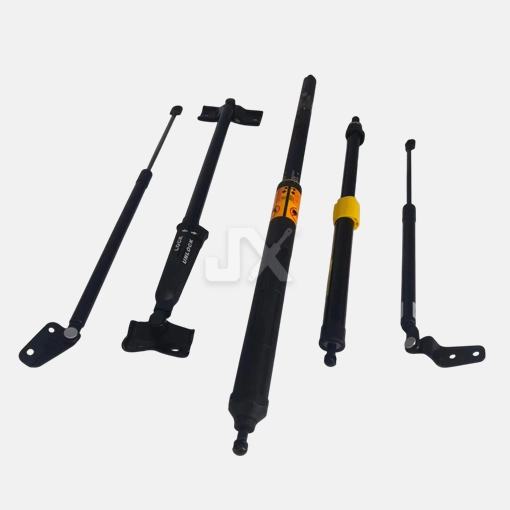
There are a few common ways for hood engine hood gas struts to connect. The best way will depend on the hinge hardware that is already there and how simple it is to set up. When it comes to passenger cars, ball sockets and ball screws are most often used because they make movement smooth around the whole opening circle. It is possible to use eyelet ends, clevis forks, threaded ends, and bracket-mounted assemblies on specialty equipment, van upgrades, and older platforms that didn't come with ball-stud gear.
Mounting Bracket Checklist
Before you approve a bracket design, you should know the type of fastener, the hole size, the center spacing, the thickness of the material, and whether the bracket will bolt on or weld to the body structure. Check the ball-stud's angle both when the bracket is closed and when it is open. Side loading can happen if the slope is off by even a few degrees. This wears down the seal over time.
Due to the short pre-approval list, there is no email back and forth at this time. It's important that the mounting centers exactly match the drawing of the vehicle or piece of equipment, that the fittings can move to the full angle without getting stuck, that the strut body doesn't get in the way of wiring, hoses, or other engine bay parts during the stroke, and that a technician can get to the fasteners later on without having to take off panels that aren't in the way.
Compatibility Verification Before Approval
Both a drawing and a real sample should be signed off on before something is ready to use. Before we confirm the tools for mass production, we send first-article samples to the technician for the distributor to test fit on a real hood. On paper, a drawing might look good, but in real life, there might be a problem with how much space there is around a battery tray or washer reservoir.
How Do I Know If a Gas Strut Will Survive Thousands of Open-Close Cycles?
Setting a Realistic Cycle-Life Target
How many times will the door open and close each month? How many years will it last? What will be the load and angle during that use? A delivery van hood that is opened twice a day for inspection has a very different cycle count over five years than a passenger car hood that is opened a few times a month. Tell your provider this number so that the test plan is based on how it will be used in the real world instead of a lab number.
Damping and Soft-Close Behavior
Nitrogen or hydraulic damping is used to slow down the hood so that it doesn't fall and slam shut when it has to. With this soft-close feature, the paint, the latches, and the user's fingers are all kept safe. This is very important for heavy hoods because a drop without control can be very dangerous. It's important that the damping is just right for how heavy the hood is. If you set the strut for a lighter hood, it will close too quickly on a heavy one, even if it feels like it has enough force to hold it open.
Inspection Steps We Run on Every Batch
Every batch that leaves our plant goes through a set of steps before it ships. This list of steps builds trust in a way that just saying "quality guaranteed" does not.
- Dimensional check on extended length, compressed length, and stroke against the approved drawing.
- Force testing at multiple positions along the stroke, not only at full extension.
- Air-tightness and leakage inspection on one hundred percent of units.
- End-fitting retention and articulation testing under load.
- Surface and coating thickness inspection for the specified corrosion grade.
- Cycle-life sampling on a representative batch quantity.
- Salt-spray testing per ISO 9227 or ASTM B117 where the contract requires it.
- Lot and batch traceability recording tied to each shipped carton.
When the two people are still getting to know each other and building trust in the first container, these checks give the seller proof to give to their own buyers.
What Technical Data Should I Send My Supplier for a Custom Quote?
Minimum Specification Checklist
A full list of specs, not just a picture and a part number, speeds up the quote process. Send the hood's general weight and type of use, as well as its closed and open mounting dimensions, the angle at which it needs to open, its target stroke and extended length, the number of struts it has, the force value or how you calculated it, its mounting orientation, the type of end fitting it has, the temperature range it will be used in and stored in, the environment it will be in for corrosion, how long it is expected to last, and any labeling or packaging needs your target market has.
Evaluating Supplier Capability
When a business sells a custom engine hood gas strut, they don't always watch over the whole process. Find out from the company itself if they hire outside help for the tube shaping, piston-rod cutting, gas filling, assembly, and testing, or if they do it all themselves. A unique change request goes through faster and costs less when all of these steps are taken care of by one business. Also, make sure that the expert support can give you a price based on an OEM part number, a drawing, or a real sample instead of a finished CAD file.
Commercial and Logistics Factors by Region
There are different business rules for each market, and making sure of them early on keeps shipments from being held up later.
| Region | Typical commercial expectation |
|---|---|
| Russia / CIS | EAC certification, Russian labels, prepayment, rail or truck via Manzhouli / Alashankou |
| South America | Portuguese / Spanish labels, CIF Santos or Buenos Aires, import-license handling |
| Middle East | Arabic labels, mixed-SKU containers, LC at sight, Jebel Ali redistribution |
| Africa | Price-tiered grades, mixed containers, TT advance or CAD |
| Central Asia | EAC compliance, small trial orders, land transport |
| Southeast Asia | Fast re-supply, tropical UV resistance, private-label rebadging |
When goods are shipped to Europe, the European Chemicals Agency says that RoHS and REACH declarations are mostly needed (2023). It would be better if your seller asked you which statements your market needs before providing all of them.
How Do I Validate a Prototype Before Mass Production?
Fit and Functional Checks
If the hood has two struts, make sure the prototype works as expected when it's closed and when it's fully open. Also, check the closing effort, holding performance at the midpoint and fully open, movement speed, and side-to-side synchronization before you sign off on the tooling. Test the bracket to see how it changes shape after being used many times. Also, make sure that you can still open the hood by hand if the engine hood gas strut flow stops.
Risk and Failure-Mode Review
Before they spend money on the first production run, the technical team and the buying team use a short failure-mode table to agree on what is okay.
| Risk | Likely cause | Fix |
|---|---|---|
| Hood will not stay open | Insufficient force or cold-weather pressure loss | Recalculate geometry, retest at minimum temperature |
| Hood opens too fast | Excess force or weak damping | Reduce force rating, retest movement profile |
| Strut bends over time | Side loading from bracket misalignment | Correct bracket geometry and articulation angle |
| Gas or oil leakage | Seal or manufacturing defect | Require 100% leak testing with traceability |
| Early corrosion | Coating mismatch for the climate | Specify material grade and salt-spray test data |
| Uneven dual-strut lift | Force tolerance mismatch between units | Use matched-pair batches with tight tolerance |
Documents to Request Before Tooling
Please ask for the approved technical drawing, the force-displacement specification, the material and coating declarations, the inspection plan, the prototype test report, the cycle-life results, the corrosion test results (if any), and records of how each batch was made. The International Organization for Standardization (2015) and the International Automotive Task Force (2016) say that before you place an order for production in a controlled market, you should also ask for ISO 9001 or IATF 16949 certificates as well as RoHS or REACH statements.
What Separates a Reliable Engine Hood Gas Strut Manufacturer From the Rest?
In-House Process Control vs. Outsourced Assembly
If a factory forms tubes, machines pistons and rods, fills engine hood gas strut tanks, puts together machines, and tests them all in-house, they can change a stroke, force value, or connection type without going through a bunch of different companies again. This control cuts down on the time needed for samples and always lets you know how much a custom order will cost in the end. It's the most important thing for a seller to plan a container around a set landing price.
Certifications and Test Reports That Matter
Make sure the gas spring meets well-known rules like ISO 11982, GB/T 25751-2010, and QC/T 207-2021. It should also be certified to ISO 9001 or IATF 16949 right now. See if the salt-spray, airtightness, and damper tests are done on all of the samples or just some of them. If problems are found at the small level, they are fixed before the whole container ships, not after a customer complains months later.
Why JX's Factory Model Reduces Buyer Risk
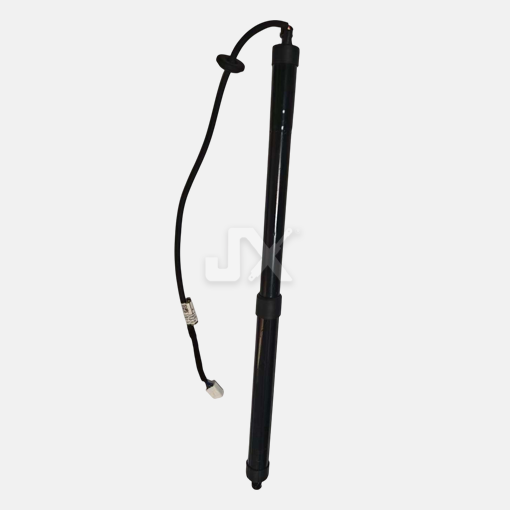
This factory, called the Xingtai Juxiang Machinery Manufacturing Factory, opened in 2002 in Xingtai, Hebei. It has built its engine hood gas strut spring and electric tailgate strut lines around full in-house process control for more than twenty years. Twenty technical experts work with the rest of our 100-person team to figure out how force changes with car weight, hinge shape, and lift angle before any tools are made. We use an OEM part number, a drawing, or a real sample to do this.
Each batch is tested to see how well it seals against air and how well it dampens vibrations. Our products are made to meet OE matching standards. This makes them strong enough to handle the weather in South America, Russia, the Middle East, Africa, Central Asia, and Southeast Asia, where our customers live. The usual time it takes to make something is 20 to 30 days. It is important to keep track of pre-production goods with an ERP-based planning system so that there are no last-minute delays. Additionally, we take care of all the export paperwork, set up third-party inspections, and group containers together, which helps dealers ship their first container of a unique engine hood gas strut.
Ready to Specify Your Custom Engine Hood Gas Strut?
Working with JX means you get an engineering team that sizes force curves from a drawing, a part number, or a physical sample, backed by in-house testing on every batch. We supply distributors and OEM accounts across more than 40 countries as a trusted engine hood gas strut manufacturer, with MOQ starting at [50 units per order] and standard lead times of 20 to 30 days. Send your hood weight, mounting dimensions, and target climate to jx@jxgasspring.com, and our team will return a quote and a sample plan within days.
Conclusion
To pick the right custom engine hood gas strut, it's not enough to just compare the hood's weight to a strut on a strut page. Know the mounting form, the real force curve, the opening angle, the end fittings, the temperature rating, and the cycle-life goal of the tools you want to buy before you go shopping. OEMs, resellers, and fleet buyers can all agree that a tested sample and a locked specification sheet are better than a first order that is being put together quickly. When you work with a good provider, they will give you engineering formulas, proof of inspection, batch tracking, and clear business terms without you having to ask.
FAQ
1. What is a hood gas strut?
A hood gas strut is a pressurized gas spring that lifts and holds an automotive hood or machinery cover open. It contains a nitrogen-charged cylinder, a piston rod, internal seals, and mounting ends that attach to the hood and the vehicle body.
2. How do I measure a hood gas strut for replacement?
Measure the center-to-center length when the strut is fully extended and when it is compressed, then subtract to get the stroke. Record the end fitting type, rod diameter, cylinder diameter, and the force rating stamped on the original part if it is still legible.
3. How much force does my engine hood gas strut need?
Required force depends on hood mass, the center of gravity, the hinge axis, the mounting point locations, the opening angle, and whether you are using one strut or two. A supplier should calculate this using your actual application geometry rather than hood weight alone.
4. Why is my engine hood gas strut not holding the hood up anymore?
Common causes include gradual gas loss through worn seals, an undersized force rating for the application, cold-temperature pressure drop, or an added accessory that increased hood weight beyond the original design. Check both struts on a dual-strut hood, since a mismatch between a worn unit and a new one often causes the uneven lift drivers notice first.
5. Is stainless steel better than coated steel for a hood gas strut?
Stainless steel resists corrosion better over the long term but costs more per unit than coated or zinc-plated steel. It usually makes sense for coastal fleets, marine-adjacent equipment, or markets with constant high humidity, while coated steel performs fine in drier, lower-exposure environments.
6. Can one engine hood gas strut replace a pair?
Sometimes, but only when the hood is light, the mounting structure is centrally located, and the panel resists twisting during the lift. Wider or heavier hoods generally need two matched struts to spread the load evenly and avoid stressing one hinge more than the other.
7. What certifications should I ask a strut manufacturer for?
Ask for ISO 9001 or IATF 16949 quality system certification, salt-spray test data referencing ISO 9227 or ASTM B117, and compliance with relevant gas spring product standards such as GB/T 25751-2010 or ISO 11982. For European shipments, also confirm RoHS and REACH declarations.
Build Long-Term Supply Before You Commit to Tooling
You can get an engineering team from JX that can size force curves from a model, a part number, or a real sample. We test each batch ourselves to make sure it meets our high standards for quality. We have distributors and OEM accounts in more than 40 countries, and people trust us to make engine hood gas struts. Our minimum order quantity (MOQ) is only 50 units, and the lead time for most orders is 20 to 30 days. Send to jx@jxgasspring.com the weight of the hood, the size of the fixing holes, and the temperature you want to set. Our team will send you a quote and a sample plan in a few days.
References
1. International Organization for Standardization. (2022). ISO 9227:2022 — Corrosion tests in artificial atmospheres: Salt spray tests. Referenced in the Corrosion Protection Options Compared section. https://www.iso.org/standard/80113.html
2. ASTM International. (2019). ASTM B117-19 — Standard Practice for Operating Salt Spray (Fog) Apparatus. Referenced in the Corrosion Protection Options Compared section. https://www.astm.org/b0117-19.html
3. International Organization for Standardization. (2015). ISO 9001:2015 — Quality management systems — Requirements. Referenced in the Documents to Request Before Tooling section. https://www.iso.org/standard/62085.html
4. International Automotive Task Force. (2016). IATF 16949:2016 — Quality management system requirements for automotive production and relevant service parts organizations. Referenced in the Documents to Request Before Tooling section. https://www.iatfglobaloversight.org/iatf-16949/
5. European Chemicals Agency. (2023). Understanding REACH. Referenced in the Commercial and Logistics Factors by Region section. https://echa.europa.eu/regulations/reach/understanding-reach
6. National Highway Traffic Safety Administration. (2023). Vehicle Safety and Equipment Information. Referenced in the Risk and Failure-Mode Review section regarding manual hood operation safety. https://www.nhtsa.gov/
About the author: Xu Peng is a Gas Spring Application Engineer with hands-on experience sizing force curves, stroke, and mounting geometry for automotive and industrial gas struts exported to over 40 countries. He works directly with distributors, OEM accounts, and body builders to translate hood drawings and OEM part numbers into tested, production-ready custom strut specifications.