How to Select the Right Equipment Gas Spring for Your Application?
Usually, a bad choice of support struts shows up quickly: a cover that won't stay up, a panel that slams, or a strut that freezes up in a chilly workshop. If the equipment gas spring is suitably designed for the load it bears, it will address all three concerns. This guide includes force, stroke, end fittings, locking function, temperature range, and mounting location, so an engineer or buying team may select the proper item on the first order instead of the third.
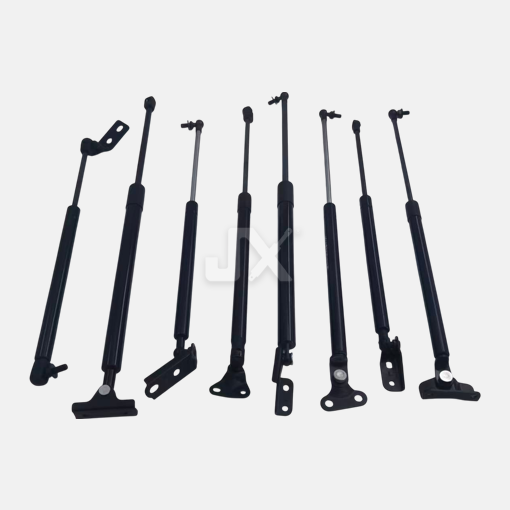
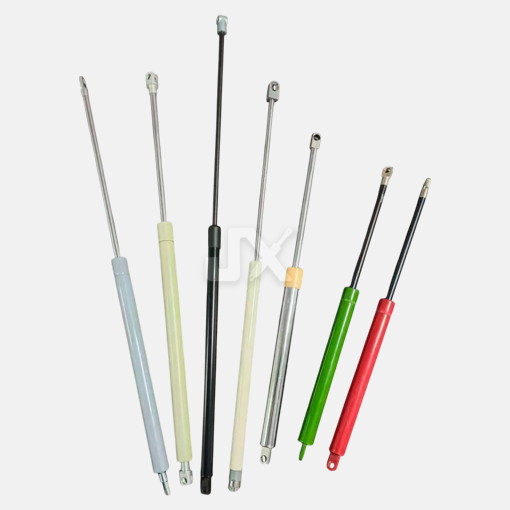
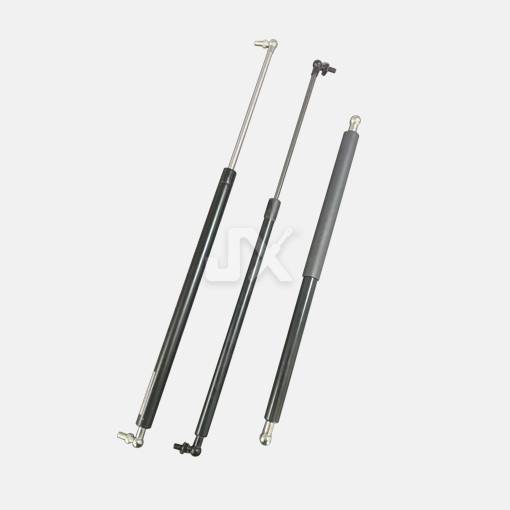
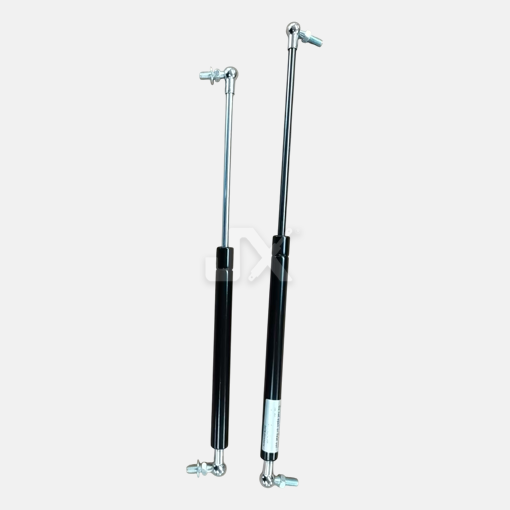
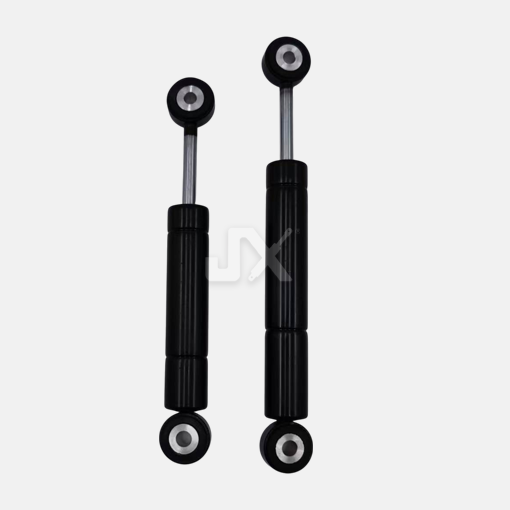
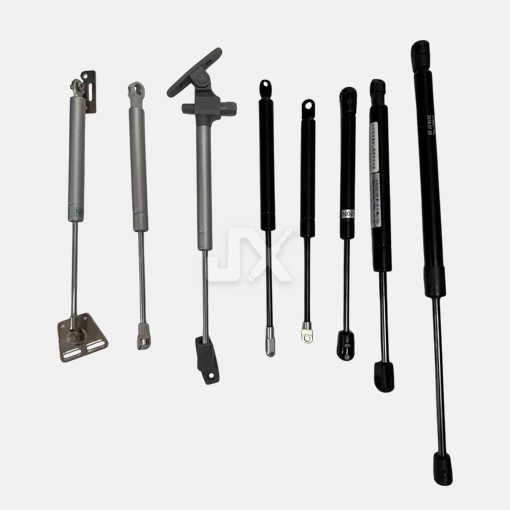
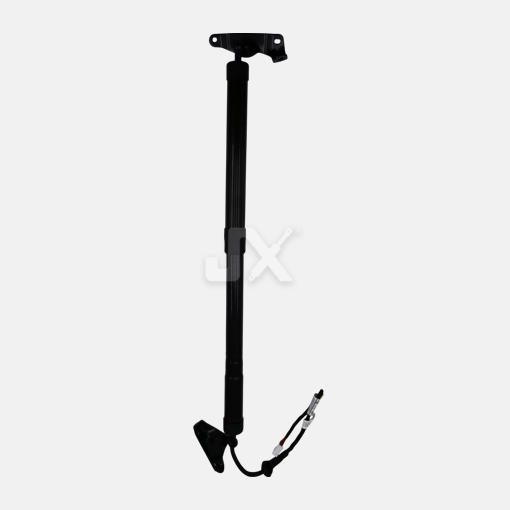
A gas spring is a sealed cylinder filled with nitrogen gas and a tiny amount of damping oil, which is used to raise, hold, and slow down the movement of covers, access panels, machine cabinets, and automation enclosures. A piston rod within the cylinder pushes out and pulls back, turning gas pressure into a regulated, almost continuous supporting force. From its Xingtai, Hebei facility, JX has been producing equipment gas springs and electronic tailgate struts since 2002 and is a reputable equipment gas spring producer supplying customers in more than 40 countries. Standard and lockable kinds with several end fitting choices, custom stroke and custom force, at a 50-piece MOQ. Reach the technical team at jx@jxgasspring.com for a spec review before you order.
What Load Factors Determine Gas Spring Force?
Force selection starts with three numbers: the weight of the cover or panel, the distance from the hinge to its center of gravity, and the number of struts sharing the load. Skipping any of these leads to a part that either will not lift the cover or lifts it too violently.
Workshop covers and cabinet doors often get treated as light items, but stacked electronics, wiring looms, and access hardware add real weight fast. A cover that feels light by hand can still need 300N or more once the true center of gravity is measured.
| Application | Typical Panel Weight | Common Force per Strut |
|---|---|---|
| Machinery access cover | 4 – 10 kg | 150 – 350 N |
| Automation cabinet door | 8 – 18 kg | 250 – 550 N |
| Self-service equipment panel | 3 – 8 kg | 100 – 300 N |
| Large enclosure lid | 15 – 30 kg | 450 – 900 N |
Weight, Leverage, and Strut Count
A cover mounted farther from its hinge needs less force per strut, since leverage does part of the work. Two struts sharing a wide lid split the load evenly and keep the motion balanced on both sides.
Real-World Pain Point: Operator Fatigue
Manual lifting of heavy access covers all shift long raises injury risk under workplace lifting guidelines, which is why occupational health researchers recommend mechanical assistance once loads and repetition climb. A correctly sized equipment gas spring removes that strain from the operator entirely.
How Do Gas Spring Size and Stroke Affect Performance?
Stroke is the distance the rod travels between fully compressed and fully extended inside an equipment gas spring. It must match the physical opening range of the cover, with a small margin left over.
Engineers typically add 10 to 15mm beyond the calculated stroke to prevent the piston from bottoming out against its internal stop, which protects the seals from repeated shock loading. Extended length and compressed length both need checking against the equipment's closed and open clearances before an order goes out.
Extended and Compressed Length
The extended length has to clear the surrounding brackets when the cover is fully open. The compressed length has to fit inside the available space when the cover is shut.
Matching Stroke to Opening Angle
Wider opening angles usually call for a longer-stroke equipment gas spring mounted farther from the hinge line, so the geometry stays consistent through the full range of motion.
Which Gas Spring End Fittings Fit Your Equipment?
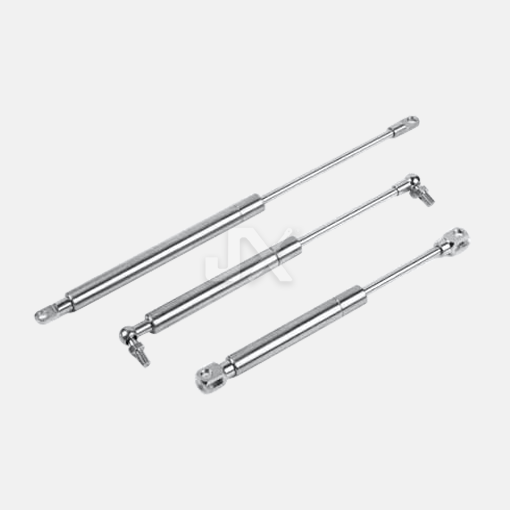
End fittings connect the equipment gas spring to the frame and the moving panel. Choosing the wrong type creates a loose, rattling connection or one that binds under angled loads.
| End Fitting Type | Best Suited For | Installation Notes |
|---|---|---|
| Ball socket / ball stud | Cabinets, covers with a slight angle change | Snap-fit, tool-free installation |
| Eyelet with pin | Fixed pivot mounts, heavier panels | Needs a mounting pin and clip |
| Clevis bracket | Automation equipment with precise alignment | Bolted, adjustable angle |
| Threaded stud | Custom OEM brackets | Fully custom to the drawing |
Matching Fittings to Attachment Points
Ball sockets remain the most common choice on machinery cabinets because they tolerate small misalignments without binding, which is useful on covers with slightly uneven hinges.
Custom End Fitting Requests
JX supports fully custom end fittings, branding, and packaging on every order, so OEM customers can match an existing bracket design without redesigning their equipment.
When Should You Choose a Lockable Gas Spring?
A standard equipment gas spring holds a cover open through gas pressure alone. A lockable equipment gas spring adds a valve that locks the rod at any point along its stroke, holding the panel steady at a chosen position rather than only fully open.
Automation equipment that needs a technician to work at a fixed access angle benefits from a lockable strut, since the panel will not drift down mid-task. Standard covers that only need full-open support rarely need the added cost of a locking mechanism.
When Standard Types Are Enough
Covers that swing to one fixed open position and stay there, such as most cabinet doors, work well with a standard strut and no locking valve.
When Locking Pays Off
Maintenance panels on production lines, where a worker needs both hands free at a mid-stroke angle, are a strong case for the lockable option.
How Does Operating Temperature Affect Gas Spring Selection?
Gas pressure inside a sealed cylinder rises and falls with temperature. Cold weather lowers internal pressure and reduces lift force, while heat raises it slightly.
Workshop floors in Russia and Central Asia regularly swing from sub-zero winters to hot summer interiors near machinery. JX developed a rubber sealing formula tested across -40°C to +85°C specifically for these conditions, holding pressure loss under 5% per year even through repeated thermal cycling.
Dust, Moisture, and Chemical Exposure
Workshop environments add dust, coolant mist, and cleaning chemicals to the temperature challenge. A dustproof, precision-sealed equipment gas spring keeps its force output stable instead of drifting as contaminants reach the piston seal.
Choosing a Temperature-Rated Part
Buyers exporting to harsh climates should always confirm the sealed temperature range on the spec sheet rather than assuming a standard part will perform the same in every region.
What Mounting Position Works Best for a Gas Spring?
Mounting position affects lubrication, wear, and how smoothly the rod of the equipment gas spring extends. Getting this wrong shortens service life even when the force rating is correct.
- Cylinder end up, rod end down keeps the internal oil pooled where it lubricates the seal properly during every stroke.
- Avoid a straight-line mount parallel to the panel, since this produces almost no turning force at the start of the lift.
- Mount farther from the hinge when possible, since greater leverage lowers the force needed from the strut itself.
- Match both sides symmetrically on dual-strut covers, so the panel opens evenly instead of twisting.
Why Orientation Changes Service Life
Mounting a strut upside down starves the seal of lubricating oil, which speeds up wear and raises the odds of an early gas leak.
How Can You Calculate the Required Gas Spring Force?
For an equipment gas spring, the core formula balances the turning force of the panel's weight against the turning force the strut supplies at the mounting point. A simplified version engineers use for quick sizing looks like this:
Force (N) ≈ Panel Weight (kg) × 9.81 × Lever Arm Factor ÷ Number of Struts. The lever arm factor usually falls between 0.5 and 0.7 depending on mounting geometry, and a safety margin of 1.2 to 1.3 should be added to the final result.
| Step | Worked Example |
|---|---|
| Panel weight | 12 kg |
| Weight in Newtons (× 9.81) | ≈ 118 N |
| Apply lever arm factor (0.6) | ≈ 71 N total |
| Split across 2 struts | ≈ 35.5 N each |
| Add a 25% safety margin | ≈ 45 N minimum rating per strut |
Why a Safety Margin Matters
Undersizing by even 15 to 20% can cause a strut to strain at full load, cutting years off its expected service life and raising the odds of an early return.
Verifying the Math Before Ordering
JX confirms every custom force calculation against the customer's CAD drawing before production begins, catching sizing errors before parts ship.
What Tests Should You Run Before Finalizing Your Selection?
A short validation pass on any equipment gas spring before placing a bulk order catches most fitment problems early, saving both time and freight cost on a wrong-size return.
- Mount one sample strut and cycle the panel through its full range of motion by hand.
- Check that the panel holds its open position without drifting down over several minutes.
- Confirm that the compressed length clears the surrounding brackets when the panel is closed.
- Test in the coldest and hottest conditions the equipment will realistically face.
- Verify the end fitting sits flush with no visible play or wobble at the mounting point.
Conclusion
The correct equipment gas spring for the job is a matter of matching five criteria to the actual application: force, stroke, end fitting, temperature rating, and mounting location. Any one of them that is skipped usually shows up later as a sagging, slamming, or wearing-out-early cover. A quick size calculation and a sample fitting test before bulk buying avoid just about every frequent fitment problem customers have with cabinets, coverings, and automation equipment.
FAQ
1. Can one equipment gas spring size fit multiple cover types?
Only if force, stroke, and end fitting all match closely enough. Small differences in panel weight or hinge distance often call for a different Newton rating even on similar-looking covers.
2. How do I know if I need one strut or two?
Panels wider than roughly 400mm usually need two equipment gas spring units to avoid twisting during the open and close motion, splitting the required force evenly between them.
3. What happens if the force rating is too high?
An oversized equipment gas spring pushes the panel open too fast and can make it difficult to close by hand, adding strain rather than removing it.
4. Do lockable gas springs cost significantly more than standard types?
Lockable versions carry a modest price premium for the internal valve mechanism, which is usually worth it for equipment needing a fixed mid-stroke working position.
5. Can JX match an existing OEM part number?
Yes, JX offers ODM and OEM matching across a catalog of more than 5,000 models, with custom stroke, force, and end fittings built to a customer's existing drawing or sample part.
Ready to Get Your Equipment Gas Spring Specification Reviewed?
JX supplies precision-sealed equipment gas springs for machinery cabinets, access covers, and automation enclosures, backed by IATF 16949 and ISO 9001 certification and a 2-year warranty. Standard lead time runs 20 to 30 days, with sea and air freight to more than 40 countries. Email jx@jxgasspring.com as your equipment gas spring supplier to confirm force, stroke, and end fitting before your next order.
References
1. FIRGELLI Engineering (2026). "Free Gas Spring Force Calculator — Sizing." Used for stroke tolerance and temperature-effect guidance. https://www.firgelliauto.com/blogs/engineering-calculators/gas-spring-force-calculator-sizing
2. Dictator GmbH (2019). "Advice for Calculating and Selecting the Right Gas Spring." Used for mounting orientation and load-weight sizing guidance. https://en.dictator.de/wp-content/uploads/614-E-Selecting-and-Calculating-Gas-Springs.pdf
3. JET PRESS (2026). "Gas Strut Configurator | Gas Spring Selection Tool." Used for end fitting and selection factor guidance. https://info.jetpress.com/gas-strut-configurator-gas-spring-selection-tool
4. TAI SAM Hardware Co., Ltd. (2025). "Gas Spring Force Calculation & Selection Guide." Used for the force calculation formula and lever arm factor. https://www.taisamhardware.com/en-US/newsc38-gas-spring-force-calculation-selection-guide-how-to-precisely-match-lid-weight-and-opening-angle
5. devcalculator.com (2026). "Free Gas Spring Calculator." Used for the safety margin recommendation in force sizing. https://devcalculator.com/gas-spring-calculator/
6. Centers for Disease Control and Prevention, NIOSH (2024). "Revised NIOSH Lifting Equation." Used for manual lifting risk context supporting mechanical assist. https://www.cdc.gov/niosh/ergonomics/about/RNLE.html