How Does a Medical Equipment Gas Spring Improve Safety in Patient Beds?
A gas spring in medical equipment controls how a part of a hospital bed rises, tilts, or folds. It replaces jerky hand turning with action that is smooth and steady, which keeps patients and staff safe. There is a chance of strain or a quick drop with every movement that nurses make to the backrests, leg rests, and height parts dozens of times during their shift. This guide answers the most common questions people who are buying medical equipment have, like how a gas spring lowers the risk of harm, which parts of a bed are best, how size and force ratings work, and when a unit needs to be replaced. The claims below are backed up by real facts from authorities and business experts. Hospital equipment buyers sourcing a dependable medical equipment gas spring manufacturer can reach JX directly at jx@jxgasspring.com. Our engineering team reviews bed drawings, patient weight ranges, and mounting geometry before recommending a stroke and force combination. Minimum order quantity starts at 50 pieces, so hospital furniture OEMs and rehabilitation bed makers can test a design before committing to a full production run.
How Does Controlled Bed Movement Reduce Patient Injury Risks?
What Is a Medical Equipment Gas Spring?
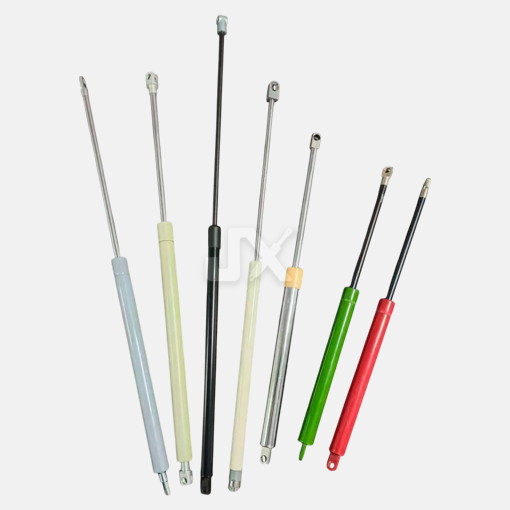
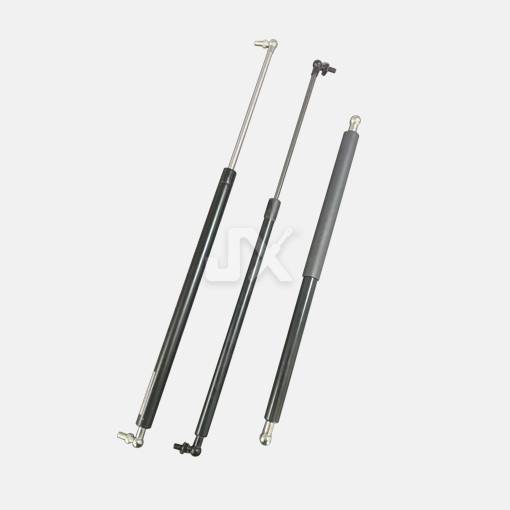
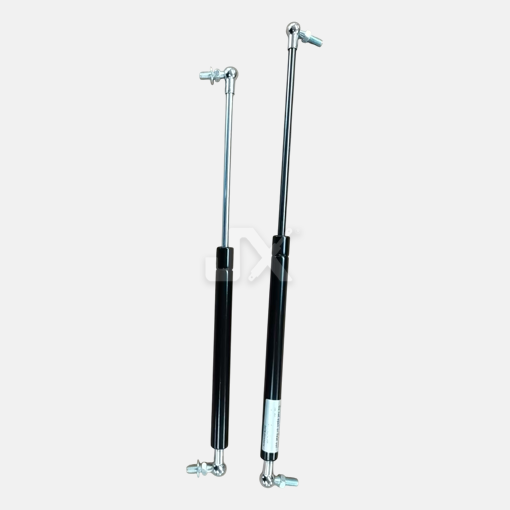
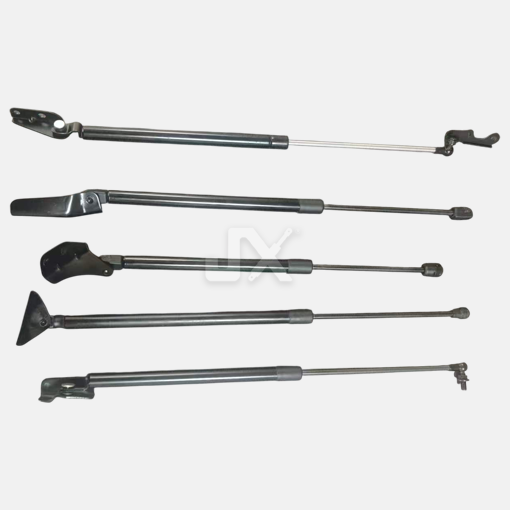
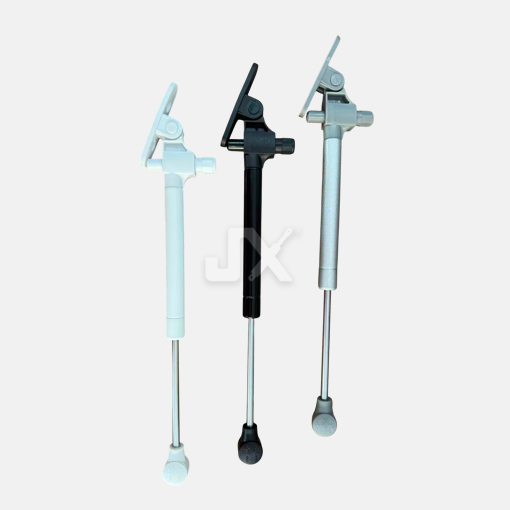
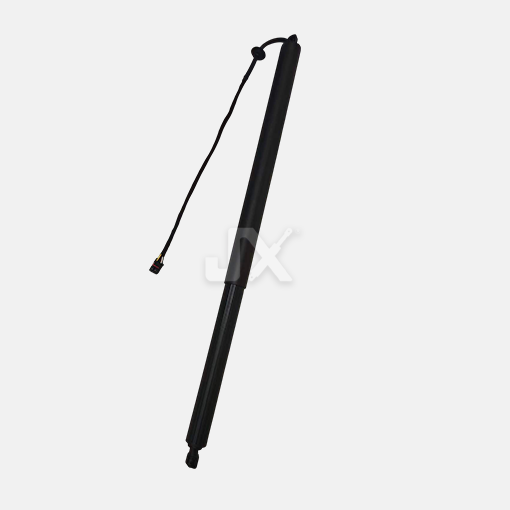
A medical gas spring is a sealed cylinder that is filled with pressurized nitrogen gas and, in most cases, a small amount of hydraulic oil. When the piston rod moves in and out of the cylinder, the gas pressure pushes back against it. This makes a steady counterforce that can be changed. In hospital beds, the same cylinder holds a backrest partially up, lowers a leg rest as it goes down, or makes it easier to lift a heavy bed section. A medical equipment gas spring doesn't lose its force quickly or snap back as a coil spring does. The cylinder, sealing set, and mounting brackets are made to be cleaned many times in a clinical setting.
Why Controlled Motion Matters for Patient Safety
Sudden bed movement puts patients at risk in several ways. A backrest that drops without warning can strike a patient's arm or trigger a fall attempt. A leg rest that snaps up can pinch skin against a side rail. FDA guidance on hospital bed entrapment recorded 691 reports of patients caught in bed system gaps over a 21-year period, including 413 deaths (FDA, 2006). Most of those affected were frail, confused, or restless individuals who could not free themselves quickly. A medical equipment gas spring with locking and damping functions removes much of that uncontrolled motion from the equation.
Which Bed Adjustments Benefit Most From Gas Spring Support?
Not every bed section needs the same support. Some movements happen constantly through a shift, while others happen only during setup or transport. Matching a medical equipment gas spring to the right section keeps the whole bed frame predictable for nursing staff.
- Backrest and head section — Raising a patient's head and shoulders for meals, breathing support, or visitor time happens many times daily. A locking medical equipment gas spring holds any angle from flat to nearly seated without drifting downward, and the built-in damping keeps the motion smooth even when a caregiver releases the control lever quickly.
- Leg rest and knee break — This section lowers under a heavier load than most staff expect, especially with a full-size adult patient. Integrated damping in the gas spring slows that descent, so the leg rest settles gently instead of dropping onto the calf or ankle area during repositioning.
- Bed height and tilt functions — Height changes support safe patient transfers and reduce caregiver bending. A properly sized medical equipment gas spring assists the lift mechanism, cutting the force a nurse must apply and lowering the odds of a back strain during a busy shift.
How Does Gas Spring Force Affect Bed Stability?
Force rating decides whether a bed section feels stable or shaky under load. A medical equipment gas spring rated too low lets a heavy backrest drift down under a patient's weight. A rating that is too high makes the section hard to push down and can feel abrupt for a smaller patient. Manufacturers calculate force from patient weight range, lever arm length, and mounting angle, then test the sealed cylinder against a target stroke length before it ships.
Sealing quality determines whether that force rating holds up over years of use. JX develops a rubber compound tested for UV resistance and stability from -40°C to 85°C, with pressure loss held under 5% over one full year of service. That range matters for hospital furniture destined for Russia, Central Asia, or other markets with harsh storage and shipping conditions.
| Bed Section | Typical Force Range | Typical Stroke Length | Locking Function |
|---|---|---|---|
| Backrest | 400–900 N | 250–400 mm | Recommended |
| Leg rest | 250–600 N | 150–300 mm | Optional |
| Height lift assist | 600–1,200 N | 300–500 mm | Not required |
| Overbed table | 100–300 N | 150–250 mm | Recommended |
Note: figures are general engineering ranges; final force and stroke depend on bed geometry and patient load.
What Prevents Sudden Movement During Patient Bed Adjustment?
Internal Damping Valves
A damping valve inside the medical equipment gas spring restricts oil flow as the piston moves, slowing the return stroke. This is why a locking gas strut lowers a leg rest gently instead of letting it fall under gravity. The damping effect works the same way every time, since it depends on oil viscosity and valve geometry rather than a caregiver's grip strength.
Positive Locking Mechanisms
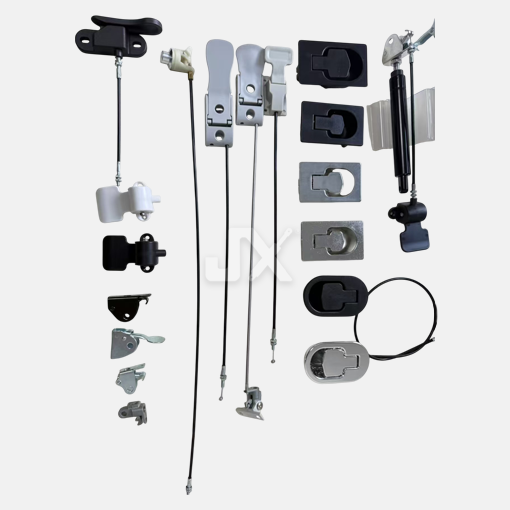
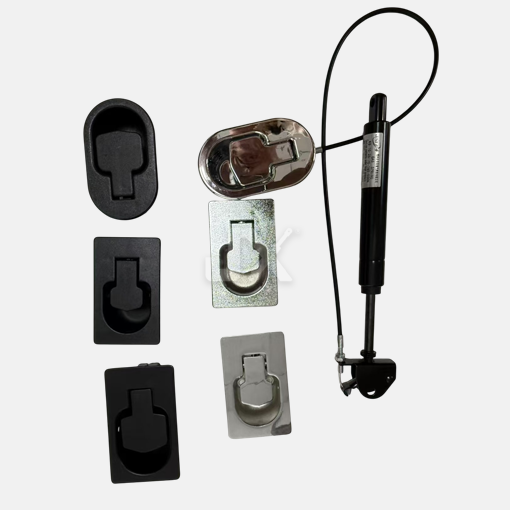
A locking medical equipment gas spring uses an internal valve connected to an external release button or lever. Pressing that lever opens the valve and lets the rod move; releasing it seals the valve and locks the rod at whatever position it reached. This lets a bed section hold at any angle within its stroke, not just at fixed notches like a ratchet mechanism.
How Do Gas Springs Compare With Manual Adjustment Systems?
Why Hospitals Are Moving Away From Manual Cranks
Manual crank systems and mechanical ratchets were the default for decades. Comparing them side by side with a medical equipment gas spring shows why hospital buyers have shifted toward gas-assisted designs.
| Factor | Manual Crank / Ratchet | Medical Equipment Gas Spring |
|---|---|---|
| Adjustment effort | High: repeated cranking or forceful lever pulls | Low; assisted lift reduces required force |
| Positioning | Fixed notches only | Infinitely variable within stroke |
| Motion smoothness | Prone to jerks and sudden drops | Damped, controlled motion |
| Caregiver injury risk | Higher, tied to repeated manual handling | Lower, less physical exertion per adjustment |
| Maintenance | Gears wear and need lubrication | Sealed, largely maintenance-free |
The stakes for caregivers are real. Nursing assistants had one of the highest numbers of musculoskeletal disorder cases of any US occupation in 2017, with an incidence rate more than five times the all-worker average (OSHA, 2017). Reducing the physical effort behind routine bed adjustments is one practical way to bring that number down.
Which Safety Features Should Medical Bed Gas Springs Have?
Not every gas strut sold online meets hospital-grade requirements. Buyers should check for a specific set of features before approving a medical equipment gas spring for a bed program.
| Feature | Why It Matters |
|---|---|
| Positive locking valve | Holds any position without drift under patient weight |
| Integrated damping | Prevents sudden drops and jarring motion |
| Precision sealing | Limits pressure loss so force stays consistent for years |
| Corrosion-resistant, smooth surface | Withstands frequent disinfectant wipe-down |
| Wide temperature tolerance | Keeps performance stable in extreme storage or shipping conditions |
| Certified manufacturing | Confirms testing against recognized mechanical standards |
Cleanability deserves special attention. CDC guidance on environmental infection control identifies surface disinfection as a core part of preventing healthcare-associated infections (CDC, 2003). A medical equipment gas spring with a smooth, corrosion-resistant housing tolerates repeated wipe-down with hospital disinfectants without pitting or seal damage.
JX manufactures its medical equipment gas spring line to GB/T 25751-2010 and QC/T 207-2021 mechanical standards, with a specially developed rubber seal formula built for harsh climates. The factory has produced gas springs and electric tailgate struts since 2002 and currently ships to more than 40 countries, backed by ISO 9001 certification.
How Should Gas Springs Be Sized for Patient Bed Applications?
Sizing starts with the heaviest patient the bed section must support, then factors in the lever arm between the pivot point and the load. A longer lever arm needs more force from the medical equipment gas spring to hold the same weight. Mounting angle changes the effective force too, since a gas spring pushes hardest along its own axis, not straight up. Medical electrical equipment standard IEC 60601-2-52 sets essential performance expectations for the beds these components support (IEC, 2009).
- Confirm patient weight range — Nursing beds, bariatric beds, and pediatric cots carry very different load profiles. A supplier needs the maximum expected patient weight, plus the weight of the mattress and any attached accessories, to calculate an accurate force rating.
- Measure stroke and mounting geometry — Stroke length must match the full range of motion for that bed section, from fully flat to maximum incline. Mounting bracket position affects the leverage the gas spring provides at each point in the stroke, so accurate measurements prevent a mismatch after installation.
- Select locking and damping specifications — Rehabilitation beds may need positive locking at every angle, while a diagnostic table's tilt function might only need smooth damping without a full lock. JX offers custom force and stroke combinations with a 50-piece minimum order, letting OEMs test fit before scaling production.
When Should a Medical Bed Gas Spring Be Inspected or Replaced?
A well-made medical equipment gas spring needs little routine maintenance, but hospital equipment still benefits from scheduled checks. ECRI Institute has flagged patient-handling device use errors and mechanical failures among its recurring technology hazard concerns for hospitals (ECRI Institute, 2015). Building gas spring checks into existing preventive maintenance rounds catches problems before they reach a patient.
Watch for three warning signs: the section drifts down on its own after being set, the motion feels jerky or hesitates partway through the stroke, or the cylinder shows visible oil residue near the seal. Any of these points to a worn medical equipment gas spring that needs replacement rather than adjustment. JX backs its production with a two-year warranty and standard lead times of 20 to 30 days for reorders.
Conclusion
With a medical equipment gas spring, adjusting a bed goes from being heavy and awkward to being smooth and easy to plan. Locking valves stay in place and don't move. Sudden drops are stopped by damping settings. Sealed, corrosion-resistant construction can handle being cleaned with disinfectant for years. All of these things make it less likely that a patient will get hurt and make it easier for nurses to do their jobs. When hospital bed makers and OEM buyers choose the right combination of force, stroke, and locking, they get a part that works the same way for the whole time it's being used. That investment is safe if you buy from a seller that has proof of mechanical testing and climate-rated seals, especially for goods going to places with strict storage and shipping rules.
FAQ
1. What is the typical lifespan of a medical equipment gas spring?
Most sealed units last several years of daily use when force and stroke are matched correctly to the application. JX rates its cylinders for pressure loss under 5% annually and backs each unit with a two-year warranty.
2. Can a locking gas spring hold a bed section during a power outage?
Yes. A medical equipment gas spring works mechanically through gas pressure, not electricity, so it holds its locked position even if bed power fails.
3. Are medical bed gas springs sold with custom force ratings?
Yes. Manufacturers size force and stroke to the specific bed section, patient weight range, and mounting geometry rather than offering one universal part.
4. What is the minimum order quantity for medical equipment gas springs?
JX sets a minimum order quantity of 50 pieces, which lets smaller OEMs and bed assemblers test a design before committing to bulk production.
5. How do I know if a gas spring is compatible with my bed design?
Send the bed drawing, target patient weight, and desired stroke to the manufacturer's engineering team. JX reviews these details before recommending a force and stroke combination.
Ready to Source a Reliable Gas Spring Partner for Your Bed Program?
Hospital bed OEMs looking for a proven medical equipment gas spring supplier can contact JX at jx@jxgasspring.com to start a technical review. Xingtai Juxiang Machinery Manufacturing Factory has built gas springs and struts since 2002, tests every batch against GB/T and QC/T mechanical standards, and ships from Hebei Province to more than 40 countries. Send your bed drawings and patient weight range for a sizing recommendation within days.
References
1. U.S. Food and Drug Administration (2006). Hospital Bed System Dimensional and Assessment Guidance to Reduce Entrapment. Cited under "Why Controlled Motion Matters for Patient Safety." https://www.fda.gov/regulatory-information/search-fda-guidance-documents/hospital-bed-system-dimensional-and-assessment-guidance-reduce-entrapment
2. International Electrotechnical Commission (2009). IEC 60601-2-52:2009 — Medical Electrical Equipment, Part 2-52: Particular Requirements for the Basic Safety and Essential Performance of Medical Beds. Cited under "How Should Gas Springs Be Sized for Patient Bed Applications?" https://www.evs.ee/en/iec-60601-2-52-2009
3. Occupational Safety and Health Administration (2017). Safe Patient Handling. Cited under "How Do Gas Springs Compare With Manual Adjustment Systems?" https://www.osha.gov/healthcare/safe-patient-handling
4. Global Market Insights (2024). Gas Springs Market — Size, Share and Forecast, 2025–2034. Referenced for industry context on gas spring adoption in healthcare. https://www.gminsights.com/industry-analysis/gas-springs-market
5. Centers for Disease Control and Prevention (2003). Guidelines for Environmental Infection Control in Health-Care Facilities. Cited under "Which Safety Features Should Medical Bed Gas Springs Have?" https://www.cdc.gov/infectioncontrol/guidelines/environmental/background/services.html
6. ECRI Institute (2015). Top 10 Health Technology Hazards for 2015. Cited under "When Should a Medical Bed Gas Spring Be Inspected or Replaced?" https://healthitanswers.net/ecri-institute-announces-top-10-health-technology-hazards-for-2015
By Wei Zhang, Senior R&D Engineer, Xingtai Juxiang Machinery Manufacturing Factory
Wei has spent over a decade designing gas springs and struts for automotive, furniture, and medical equipment applications, with direct experience testing sealing systems against GB/T and QC/T mechanical standards for OEM customers in more than 40 countries.