Cabinet Door Gas Spring vs. Strut: Which Lift Support Is Better for You?
Furniture buyers searching for a "gas spring versus strut" comparison often run into a surprise: the two terms describe the same physical part. A cabinet door gas spring is a sealed, nitrogen-charged cylinder, and "gas strut" is simply the other common name for it across the hardware trade. The real comparison worth making is between a cabinet door gas spring and a traditional mechanical coil spring or friction hinge, since those are the options that actually behave differently on a wall cabinet or flip-up door.
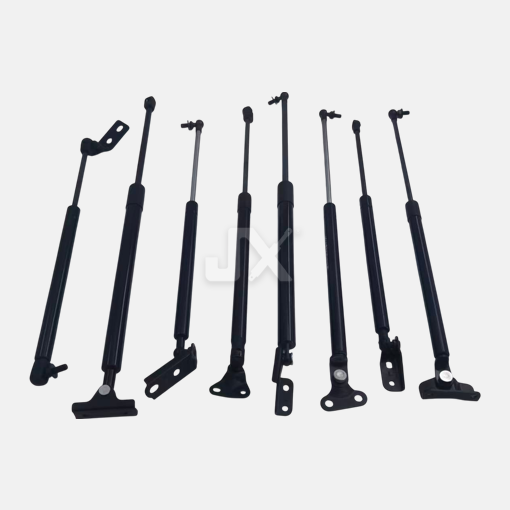
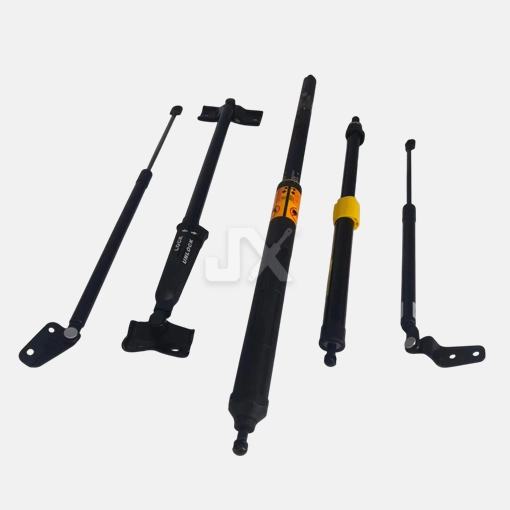
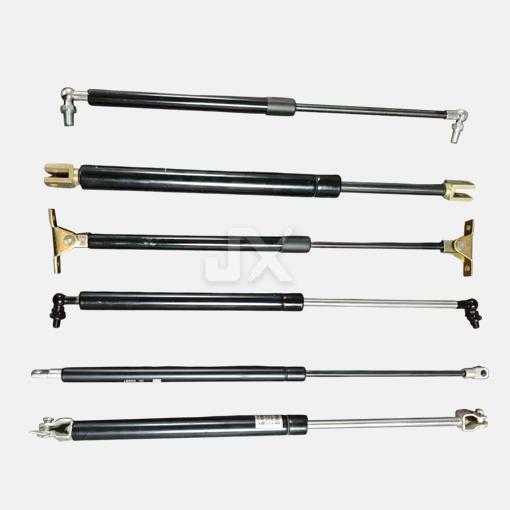
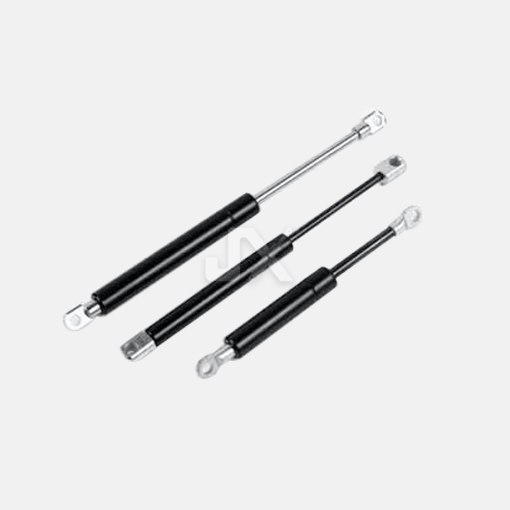
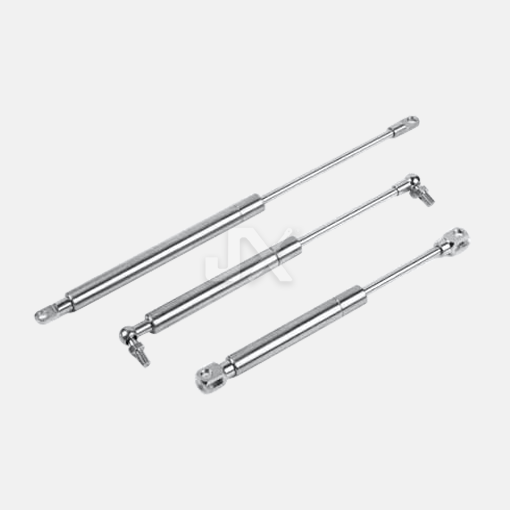
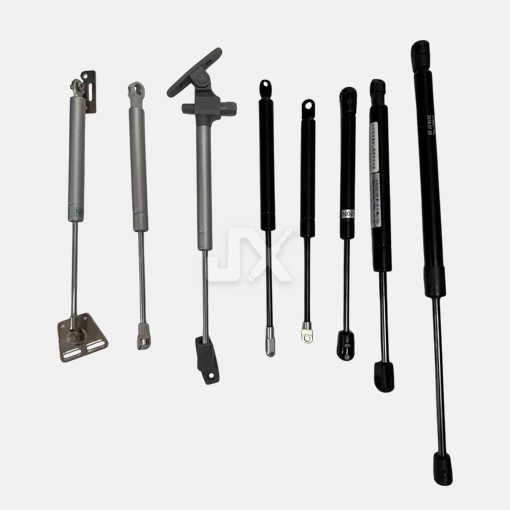
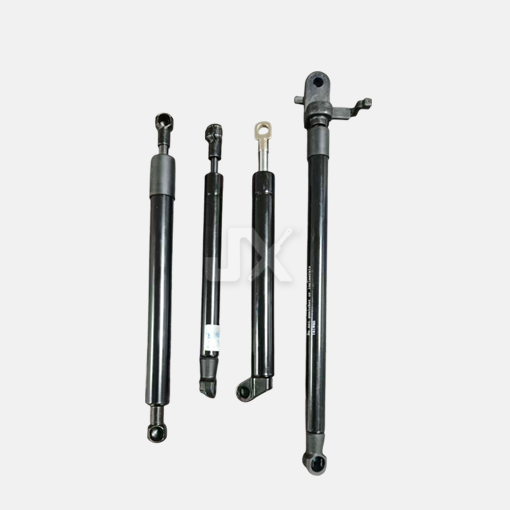
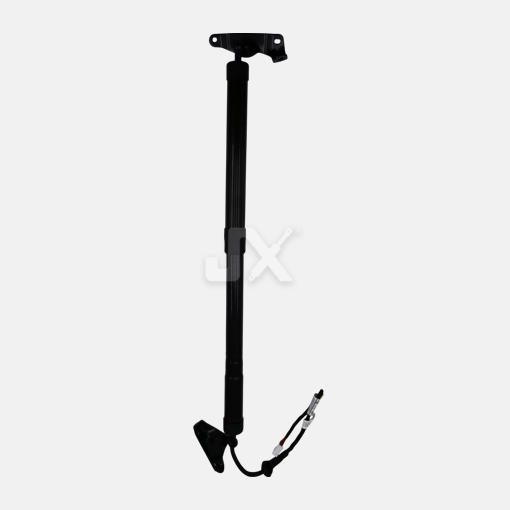
A cabinet door gas spring (also called a gas strut, gas shock, or lift support) is a sealed cylinder filled with pressurized nitrogen gas and a small amount of damping oil. It supports an upward-opening cabinet door, holding it steady while open and slowing its motion on the way down. JX has manufactured cabinet door gas springs since 2002 from its Xingtai, Hebei facility, supplying furniture brands and hardware distributors in more than 40 countries as a dependable cabinet door gas spring manufacturer. Custom force ratings, end fittings, and branding are available for kitchen cabinets, wardrobes, and whole-house furniture lines at a 50-piece MOQ. Reach the team at jx@jxgasspring.com for samples and pricing.
How Do Cabinet Door Gas Springs Work?
Inside the sealed cylinder, a piston separates nitrogen gas from a small oil reservoir. Pushing the door down compresses the gas into a smaller space, raising internal pressure. Releasing the latch lets that pressure push the piston rod back out, lifting the door.
Oil flowing through a small orifice in the piston slows the rod near the end of its travel, which is what keeps a cabinet door gas spring from letting a flip-up door slam or snap open. This damping effect is the main reason furniture makers choose gas-powered supports over plain metal springs.
Why "Gas Spring" and "Gas Strut" Mean the Same Part
Hardware catalogs, installation guides, and manufacturer spec sheets use gas spring, gas strut, and gas shock interchangeably to describe this exact component. A buyer searching for either term should expect to find the same product listed under both names.
What Are the Main Types of Cabinet Lift Supports?
Three broad categories cover most cabinet door hardware, and each behaves differently once installed.
- Cabinet door gas springs use compressed nitrogen and oil damping to lift and slow the door smoothly, holding it open at nearly any angle without extra clips or stops.
- Mechanical coil springs rely on the physical bending of a metal coil to store energy, producing a force that grows sharply as the door opens further.
- Friction or torsion hinges hold the door in place through hinge resistance alone, with no gas or spring assist involved.
Coil Springs vs. Gas-Powered Supports
A coil spring's force rises in direct proportion to how far it stretches, while a cabinet door gas spring delivers a comparatively flat, more predictable force through most of its stroke.
How Does Load Capacity Affect Lift Support Choice?
Door weight, height, and the location of the hinge all determine how much force a lift support needs. A tall door places its center of gravity farther from the top hinge, which raises the turning force the support has to overcome.
Standard overhead cabinet doors commonly use a 100N force rating per strut, often installed as a matched pair for wider or heavier panels. Bathroom cabinets and small panel doors can often run lighter, in the 40N to 80N range.
| Cabinet Type | Typical Door Weight | Common Force per Strut |
|---|---|---|
| Bathroom / vanity cabinet | 1.5 – 3 kg | 40 – 60 N |
| Standard wall / kitchen cabinet | 3 – 6 kg | 80 – 100 N |
| Wide flip-up panel door | 6 – 10 kg | 100 – 150 N |
| Large wardrobe / storage lid | 10 – 16 kg | 150 – 250 N |
Single Strut vs. Matched Pair
Narrow, light doors often work fine with one strut. Wide or heavy panels need two struts sharing the load evenly, which also keeps the door from twisting as it opens.
Which Option Offers Better Control and Stability?
Motion quality is where gas-powered supports separate themselves most clearly from mechanical alternatives. A cabinet door gas spring produces smooth, fluid movement with no sudden jump partway through the opening angle.
| Factor | Cabinet Door Gas Spring | Mechanical Coil Spring |
|---|---|---|
| Force curve | Comparatively flat throughout the stroke | Rises sharply with deflection |
| Soft-close damping | Built in via oil orifice | None, relies on a separate stop |
| Noise level | Quiet, cushioned motion | Can click or clatter at full travel |
| Holds mid-position | Yes, at most stroke points | Rarely, it tends to snap fully open |
| Sealed against dust/moisture | Yes, internal parts are fully enclosed | No, coil is exposed |
Why Damping Matters for Furniture Buyers
Integrated damping on a cabinet door gas spring prevents hard slamming and cuts the collision noise that cheap coil-spring hardware often produces in daily kitchen use.
Are Gas Springs or Struts Better for Heavy Doors?
Since gas spring and gas strut name the same part, the real question is whether gas-powered support outperforms a mechanical coil spring once a door gets heavy. It generally does, for one clear reason: force consistency.
A gas spring's fine sealing structure slows pressure attenuation, so a cabinet door gas spring keeps delivering close to its rated force for years, while a coil spring's mechanical fatigue gradually weakens its lift over repeated cycles.
Heavy Door Case: Wide Kitchen Flip-Up Panels
A wide flip-up panel over a kitchen appliance garage often exceeds 8kg once hardware and finish are added. Two matched cabinet door gas springs rated near 120N each handle this load smoothly, where a single coil spring would strain or fail early.
Heavy Door Case: Tall Wardrobe Lids
Tall wardrobe or closet lift-up lids place the center of gravity well above the hinge line, increasing torque. Custom force gas springs matched to the exact weight avoid the jerky motion a generic coil spring produces on this geometry.
Which Lift Support Fits Different Cabinet Door Angles?
Opening angle changes how much stroke and force a support needs. Most cabinet gas springs are designed for wall cabinets and flip doors opening between 90 and 115 degrees.
Standard 90-100 Degree Doors
Typical overhead kitchen cabinets and bathroom cabinets fall in this range, matching the compact stroke length most standard cabinet door gas spring models are built around.
Wide-Angle and Vertical-Lift Doors
Doors that swing past 100 degrees, such as some wardrobe and garage cabinet lids, may need a longer-stroke gas spring or a custom force specification to hold the wider angle without drifting shut.
What Installation Space Does Each Lift Support Need?
Available cavity depth inside the cabinet frame often decides which lift support actually fits, regardless of which one performs better on paper.
| Lift Support Type | Typical Install Depth | Mounting Hardware |
|---|---|---|
| Cabinet door gas spring | Compact, mounts along the side panel | Ball socket brackets, screws |
| Mechanical coil spring hinge | Built into the hinge body itself | Hinge plate, no separate bracket |
| Friction / torsion hinge | Minimal, hinge-integrated | Standard hinge screws only |
Retrofit Considerations
Replacing worn hardware on an existing cabinet is easiest with a complete retrofit kit that includes matching mounting brackets, since original bracket positions do not always suit a generic replacement part.
How Can You Choose the Right Lift Support for Your Cabinet?
Matching the door's weight, angle, and installation space to the correct force rating solves most fitment questions before an order ships. A short checklist keeps the process simple.
- Weigh the door, or estimate its weight from panel material and dimensions.
- Measure the distance from the hinge to the door's center of gravity.
- Decide between a single strut and a matched pair based on door width.
- Confirm the opening angle matches the stroke length of the chosen part.
- Check the available mounting depth inside the cabinet before finalizing the brackets.
Conclusion
A cabinet door gas spring and a gas strut are the same hardware sold under two common names, and both outperform a plain mechanical coil spring on control, noise, and long-term force stability. The real decision comes down to force rating, opening angle, and installation space, not a choice between spring and strut. Buyers who measure door weight and hinge geometry before ordering avoid nearly every common fitment mistake in cabinet hardware sourcing.
FAQ
1. Is a gas spring stronger than a gas strut for cabinet doors?
No. Gas spring and gas strut describe the same part, so there is no strength difference between the two names.
2. Can a cabinet door gas spring be recharged if it weakens?
Standard sealed units are not designed to be recharged in the field. Once internal pressure drops enough to notice, replacement is the practical fix.
3. How long do cabinet door gas springs typically last?
Quality units with a fine sealing structure and low air leakage commonly hold stable performance for years of daily kitchen or wardrobe use before force noticeably drops.
4. Do all cabinet doors need two gas springs instead of one?
Narrow, light doors often work fine with a single strut. Wide or heavy panels benefit from two matched units sharing the load evenly across the door.
5. Can JX customize force and length for a specific cabinet line?
Yes, JX offers custom force specifications, stroke lengths, and end fittings for whole-house furniture and kitchen cabinet production runs, starting at a 50-piece MOQ.
Ready to Compare Cabinet Door Gas Spring Options for Your Line?
JX builds precision-sealed cabinet door gas springs for wall cabinets, bathroom cabinets, and flip-up furniture doors, backed by ISO 9001 certification and over 20 years of manufacturing experience. Custom fittings, force ratings, and branding are available for cabinet makers and distributors worldwide. Email jx@jxgasspring.com as your cabinet door gas spring supplier to request samples and a quote.
References
1. Industrial Gas Springs, Inc. (2026). "How Gas Springs Work." Used to describe the piston, gas, and oil chamber mechanism. https://industrialgassprings.com/how-gas-springs-work/
2. AS Raymond (2026). "Gas Spring Clarifications." Used to confirm that gas spring and gas strut refer to the same component. https://www.asraymond.com/gas-spring-clarifications/
3. Berta Store (2026). "Gas Struts for Cabinet Doors: Force & Mounting Guide." Used for the 100N standard cabinet force rating and door geometry guidance. https://bertastore.com/blogs/hub/gas-struts-for-cabinet-doors
4. Camloc Motion Control (2023). "How Do Gas Struts Work?" Used to describe compression, pressure, and rod extension physics. https://camloc.com/us/help-centre/how-gas-struts-work/how-do-gas-struts-work/
5. Peir Damper (2025). "Coil Springs vs. Gas Springs: Key Differences & Application Guide." Used for the force-curve comparison between coil and gas springs. https://peirdamper.com/blog/what-are-the-difference-between-gas-spring-and-traditional-spring/
6. Antpedia / General Administration of Quality Supervision, Inspection and Quarantine of the PRC. "GB/T 25751-2010: Compression Gas Spring Technical Specification." Used for terminology and technical requirement standards referenced throughout. https://www.antpedia.com/standard/en/6157252.html