Lifting Gas Spring
1. Structural Diagram


2. Features
Ordinary gas springs, commonly known as support rods or compression gas springs, are in their extended state in their original state and are used in various industries to provide support and assistance.
3. Curve graph

Stretch Gas Spring
1. Structural Diagram
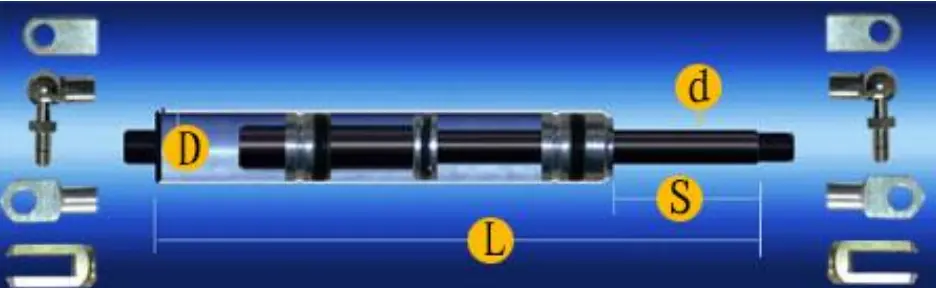
2. Features:
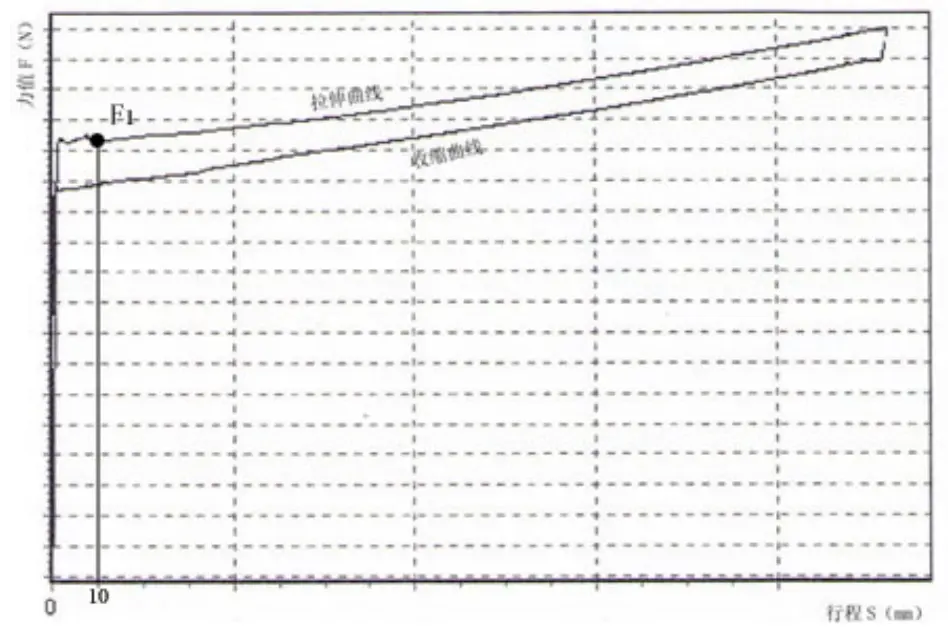
Extension gas springs, also known as tension springs or traction gas springs, are initially compressed and function to provide traction and extension. Due to differences in their internal structure, extension gas springs come in long and short versions. The length is determined by the customer's installation dimensions; longer springs, compared to shorter ones, have a gentler extension/contraction curve and a smaller F1 variation rate.
3. Curve graph
Controllable Gas Spring
1. Structural Diagram
2. Features:
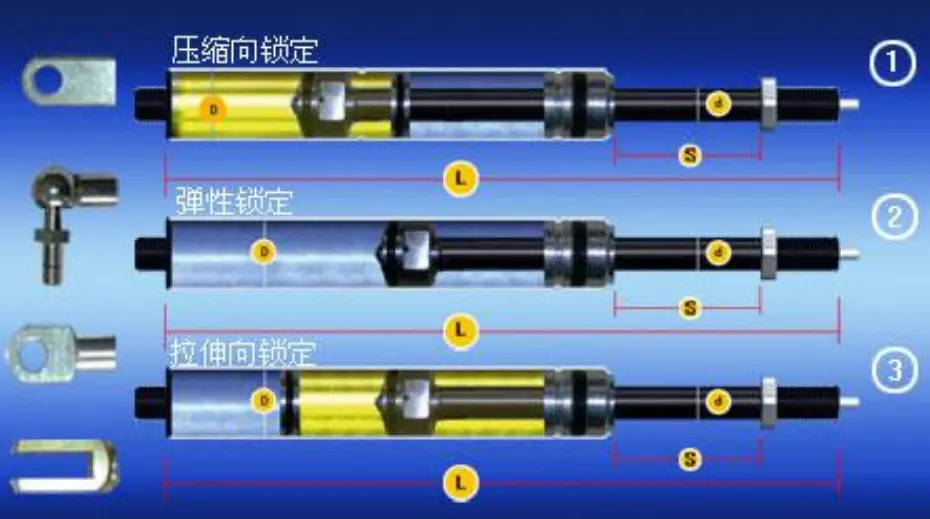
Controllable gas springs, also known as lockable gas springs or angle-adjustable gas springs, control their stroke by opening and closing a valve, allowing them to stop at any position. They are commonly used in places where angle and height adjustments are needed, such as tables, beds, chairs, and painted lamps. Based on the locking force, they can be divided into elastic locking and rigid locking. Rigid locking can be further divided into compression locking and tension locking, depending on the locking direction.
3. Curve graph

Randomly Stopped Air Spring
1. Structural Diagram

2. Features:
Free-stop gas springs, also known as balance gas springs or friction gas springs, do not require an external control mechanism when under load; their stroke can stop at any position.
3. Curve graph

Damping Gas Spring
1. Structural Diagram

2. Features
Damping gas springs, commonly known as dampers, serve to dampen vibrations, reduce shock, and eliminate noise. They are widely used in machine tools, doors, and railings. Based on their internal structure, they can be divided into ordinary dampers and bidirectional dampers. Compared to bidirectional dampers, ordinary dampers have the disadvantage of having a certain undamped section when the piston rod is about to fully extend. Bidirectional dampers provide full-range damping. The advantage of ordinary dampers is their compact structure and small size. The damping power of both types of dampers can be adjusted by changing the flow rate and viscosity of the damping oil.
Design and manufacture gas springs.
Although a gas spring is a simple accessory, its correct operation, even for simple applications, is complex and time-consuming. We have a dedicated R&D and production team capable of customizing gas springs to suit various scenarios based on different design requirements. To save engineering time and simplify processes, we offer two methods to meet your needs:
1. If you are interested in any type or size of gas spring, please fill out an inquiry form and send it to us.
2. If you need assistance determining the correct size and force for your application, we offer free computer-aided gas spring design services. Simply refer to the gas spring detail information table below, provide the corresponding gas spring parameters, and check using the side view of the application below. Finally, email us:

Please tell me the detailed dimensions of the device being used:
Weight of the lid (W=lbs.)
Opening angle (Ø=°)
Center distance from top to bottom (L=in.)
The distance between centers of gravity (C = in.)
The thickness of the lid (in.)
Ambient operating temperature (℉)
Number of cycles per minute for the lid
Support type gas spring
A support gas spring is a hydraulically controlled element consisting of a pressure tube and a piston rod with a piston unit. It can be adapted to different applications through connecting components. Its features include customizable force and smooth, quiet operation. Support gas springs provide stable support force, improving the ease of use and comfort of the product.
A controllable gas spring is a type of spring that can automatically adjust air pressure according to demand. It consists of a cylinder, an air cushion, and a valve. Its features include:
High precision : Enables high-precision gas control.
Highly adjustable : can be adjusted according to different needs.
High stability : The air pressure control mechanism gives it high stability.
Long service life : simple structure and easy operation.
Strong dynamic response capability : It can quickly respond to changes in body weight and always maintain appropriate support.
It can stop at any position : With the help of the release mechanism, it can stop at any position in the stroke, and there is a large locking force after stopping (up to 10,000 N or more).
Adaptable to various environments : It has good resistance to high and low temperatures and can generally adapt to working environments ranging from -40℃ to 80℃.
It is widely used in automobile, train, and airplane seats, medical devices, massage chairs, spa chairs, and lounge sofas.
Damper
Dampers are key components in engineering and mechanics, designed to effectively control motion, reduce impact, and absorb vibration energy.
Damping gas springs are a prime example of innovative integration. They combine the support and cushioning characteristics of a gas spring with the precise speed control function of a damper. In the automotive industry, damping gas springs excel in the opening and closing of hoods and trunks, ensuring smooth and stable movements, eliminating potential damage and noise interference caused by sudden opening and closing, and significantly improving user experience and safety. In the furniture industry, whether it's height-adjustable desks and chairs or comfortable sofa backrest angle adjustments, damping gas springs can provide just the right amount of resistance to assist in adjustments according to user needs, achieving smooth, stepless speed control, fully meeting personalized usage demands, and effectively enhancing product quality and user satisfaction.
tension gas spring
A gas spring is a high-performance mechanical component with stable tensile force output, providing continuous and balanced force during tensioning to ensure smooth operation. Its spring constant can be customized to suit different loads and working conditions. It is available in various materials, including carbon steel and stainless steel; stainless steel gas springs offer excellent corrosion resistance and can be used in harsh environments.
Tension gas springs are easy to install, effectively saving time and labor costs. They have a long service life, maintaining good performance even after multiple tension cycles, reducing the cost of frequent replacements.
Gas springs have a wide range of applications. In automobile manufacturing, they are used to assist in opening hoods and trunk lids, making operation easy and smooth. In the furniture industry, such as flip-top storage furniture, gas springs help cabinet doors open and close smoothly. In industrial equipment, such as the access panels of large machinery and the vent adjustment plates of ventilation equipment, gas springs are used to achieve reliable opening and closing actions, greatly improving the convenience and functionality of various equipment.