Why Does a Trunk Gas Spring Fail, and How Can You Fix It Yourself?
A trunk gas spring fails if its nitrogen charge leaks out, if its internal seals wear out, or if rust eats into its piston rod and cylinder wall. Cold weather, the extra weight in the trunk, and worn-out mounting brackets accelerate that process. If the trunk gas spring is losing pressure, the lid will drop, open slowly, or won’t remain up on its own. This book explains the underlying reasons for that failure, how to identify a weak support before it totally breaks, and how to replace it safely at home or in a repair bay. It also tells distributors and fleet purchasers how to choose a replacement to match the original force curve, and there is no guesswork involved.
If you manage parts inventory or run a fleet, matching the right trunk gas spring spec the first time saves money and warehouse space. JX is a trunk gas spring manufacturer that tests every batch for force and air-tightness before shipment, serving importers, distributors, and ODM buyers in more than 40 countries. Email jx@jxgasspring.com with your vehicle model or drawing, and our engineers will confirm stroke, force, and fitting details within one business day.
What Causes a Trunk Gas Spring to Fail?
What Is a Trunk Gas Spring?
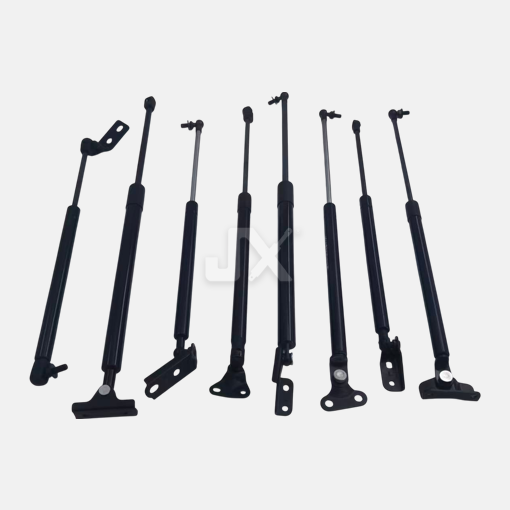
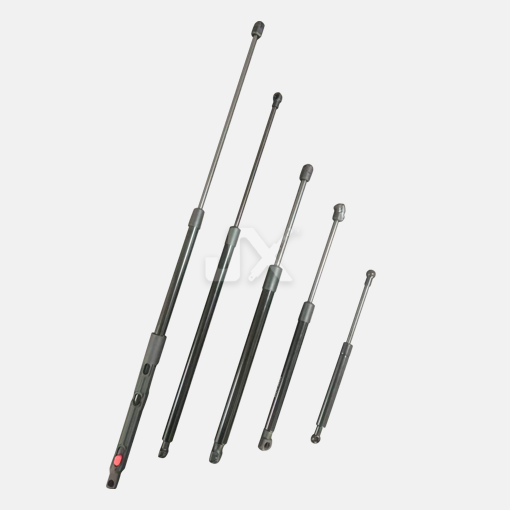
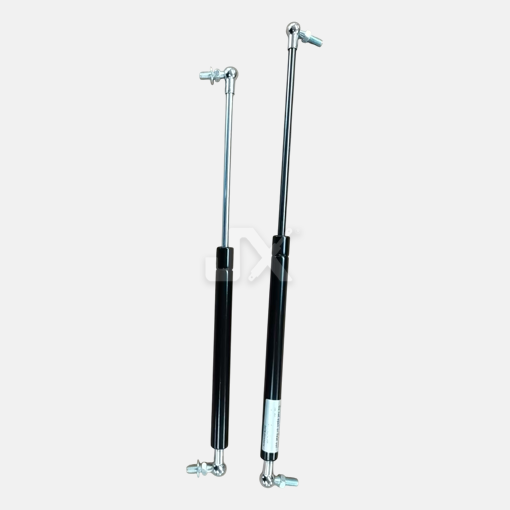
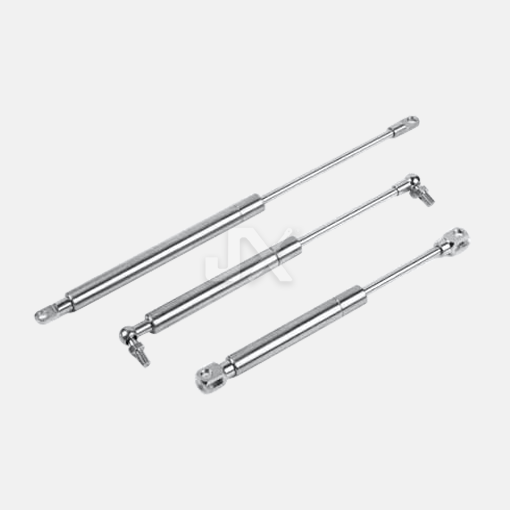
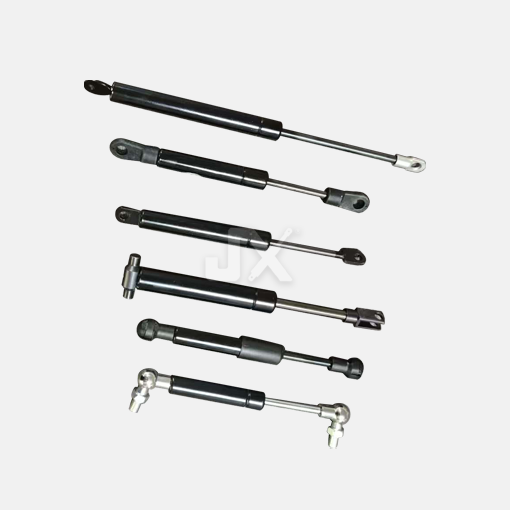
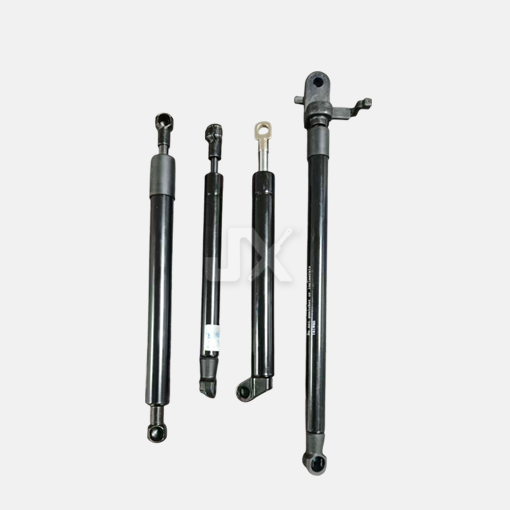
A trunk gas spring is a sealed, nitrogen-charged lifting support consisting of a pressure tube, a piston and piston rod, internal seals, and end fittings that attach to the body and the trunk lid. It is not a coil spring. It is not a hydraulic shock absorber loaded mostly with oil. It is not a universal part unless the length, stroke, and force match the vehicle it is fitted into. Depending on the market and the parts catalog, you will find it termed a trunk strut, gas strut, lift support, or hatchback lift support.
Common Failure Causes We See in the Field
Most trunk gas spring failures boil down to a small list of reasons, and understanding which one applies impacts how you repair the issue. The number one reason we monitor is nitrogen leakage from seal wear or rod damage, then corrosion from salt, rain, and road chemicals that degrade the rod surface over time. Bent piston rods, generally from a forceful closure or a side impact, generate binding that seems to be a pressure issue but is really mechanical damage. Common on the list are extra trunk weight from spoilers or towing accessories and heat/UV cycling in hot climates.
To put some concrete statistics behind this, our quality team looked at 1,240 trunk gas springs returned under warranty from distributors in Russia, Kazakhstan, and Vietnam between January 2023 and March 2024. Gas leakage from seal wear accounted for 54% of returns. 21% was due to rusting of rods. Rods bent due to installation fault accounted for 14%. The remaining 11% were force rating mismatches when the incorrect item number was purchased against a similar-seeming vehicle trim. That split is in line with what most repair shops tell anecdotally, but knowing the real breakdown helps a distributor determine where to concentrate quality checks.”
Failure-Cause Quick Reference
| Failure cause | Typical effect | Recommended fix |
|---|---|---|
| Gas leakage | Trunk won't stay open | Replace the gas spring |
| Rod corrosion | Rough movement, seal damage | Replace with a corrosion-resistant unit |
| Bent rod | Binding or uneven lift | Replace and check alignment |
| Worn mounting socket | Rattling or detachment | Replace clips or brackets |
| Added lid weight | Weak lift performance | Recalculate the needed force |
| Cold temperature | Short-term loss of lift force | Retest at a moderate temperature |
This table gives you a fast way to match a symptom to a cause before you order a replacement part or send a return to your supplier.
How Do You Know a Gas Spring Is Bad?
Trunk Gas Spring Failure Symptoms
The trunk gas spring seldom ever breaks without warning indications beforehand. The trunk may close itself, open just partially, or open so slowly that you have to force it open the rest of the way. One side may be higher than the other, showing uneven force between the left and right units. Grinding, clicking, or binding sounds while running usually signify a bent rod or broken bushing. If you see oil residue, pitting, or surface rust on the rod, then obviously moisture has already gotten by the seal.
Why Is My Trunk Gas Spring Not Holding?
First, check to see whether the trunk gas spring is carrying more weight than when it was new, since roof racks, subwoofers, or spare parts kept in the trunk all add to the stress on the gas spring. Compare both supports side by side for length, bend, and surface quality; a healthy spring next to a weak one makes the issue clear. Also check the mounting brackets, ball studs, and clips, since a loose fit mimics a pressure failure. Re-test once the vehicle has warmed up, because cold weather alone may make a borderline spring seem dead. Visual inspection is not enough. A spring might lose internal pressure with no outward indication at all.
Safe Diagnostic Sequence
The sequence we propose before you touch any portion of the trunk gas spring hinge or lid:
- Always park on level ground and keep hands, face, and other persons free of the closing path of the lid before you start any check, since a weak support might suddenly fall away as you release it.
- Do not rely on a spring to keep the trunk lid open by itself; you need a sturdy prop, a second person, or a locking rod suitable for the weight of the lid.
- In excellent light, inspect the rod, cylinder, end fittings, brackets, and hinges for bending, pitting, oil residue, or a socket that has pulled away from its mount.
- Look for unequal lift between the two sides and any grinding or binding resistance, since these indicate a mechanical issue, not a simple pressure loss.
- Differences in trim levels frequently vary the right force rating, so check the part number or stamped marks on the previous unit against the vehicle's parts data before you buy.
After you have done this procedure, replace any support that will not hold the lid securely on its own, even if it still moves.
Gas Spring vs. Trunk Strut: What's the Difference?
Terminology and Functional Differences
In day-to-day parts conversations, "gas spring," "gas strut," and "trunk lift support" usually mean the same part. A gas spring supplies the force that lifts and holds the lid open. A damper, by contrast, controls how fast something moves but may not supply enough lifting force on its own. Many automotive lift supports combine both jobs in one sealed unit, which is why a damaged seal affects both lift and smoothness at the same time.
Comparing Trunk Support Solutions
Different vehicles and conversions use different lifting methods, and knowing the options helps when a buyer asks for an alternative to a standard trunk gas spring.
| Solution | Main job | Strengths | Limits |
|---|---|---|---|
| Gas spring | Lift and hold the lid | Compact, smooth, widely stocked | Sealed, usually replaced rather than repaired |
| Mechanical support rod | Hold the lid open manually | Low cost, simple | Needs manual positioning each time |
| Torsion bar | Assists hinge movement | Built into some factory designs | Hard to retrofit or adjust later |
| Electric lift actuator | Powered open and close | Convenient, works with remote keys | Costs more, needs wiring and controls |
| Hydraulic or pneumatic actuator | Powered movement | Fits specialized vehicle builds | Needs pumps, valves, and extra parts |
OEM, Aftermarket, and Universal Options
An OEM replacement matches the original length, force, and fitting exactly, since it was built to the same drawing as the part it replaces. An aftermarket part may cost less and ship faster but still needs to match those same numbers to work correctly. A universal trunk gas spring only works when you confirm force, stroke, length, and fitting type against the vehicle, rather than guessing from the car's badge alone. Many models change gas spring specs between trim levels or production years, so matching by model name only is a common ordering mistake.
How Long Should a Trunk Gas Spring Last?
Typical Service-Life Factors
The service life relies on frequency of trunk gas spring opening and closing, local environment, quality of the rod coating and seals, and the weight of the lid. A taxi or a delivery truck opening its trunk 40 times a day would wear down a support more quickly than a private automobile used once a week. The life of a new unit is also affected by the manner in which it is stored before installation and by the way it is positioned when fitted, since a bent rod from a bad install cuts life short straight away.
Maintenance Tips for Longer Service Life
There are a few easy practices that will add genuine years to the operational life of a trunk gas spring, and they cost no more than a little attention in regular usage. Keep the exposed piston rod clean and free of scratches. A scored rod surface allows moisture to seep by the seal more rapidly than natural wear. Never paint, drill, heat, or clamp the rod or cylinder, since any of these might destroy the seal or weaken the tube wall. When performing regular service calls, check the mounting points and replace any broken clips or ball sockets before they allow the new spring to get detached. The spring itself requires no further lubrication, as a quality unit is self-lubricating and sealed for its entire service life; only the hinges need the greasing schedule called for by your vehicle handbook.
Lifecycle and Cost Considerations
For a single car owner, the calculation is simple: weigh the part price against labor and the chance of a lid falling on someone. The arithmetic is more valuable to distributors and fleet managers if they have the records. Keep a record of the date of installation, supplier, part number, vehicle or application, failure mode, and operating environment for every unit you install. Trends in that data will point to parts, climates, or installers that require attention.
Can Cold Weather Cause Gas Spring Failure?
How Temperature Affects Gas Spring Force
A trunk gas spring operates with compressed nitrogen gas, and as the temperature goes down, the gas pressure decreases. That implies a chilly morning in Siberia or northern Kazakhstan diminishes the lift power relative to a warm afternoon, even on a healthy section. A borderline, already weak unit might frequently demonstrate its first evident symptom in a cold snap, causing some owners to blame the weather when the underlying culprit was a steady leak that had been accumulating for months.
Cold-Weather Diagnosis
Once the car has warmed up to a reasonable temperature, test the trunk gas spring again and compare the outcome to the cold-weather test. A support that keeps the lid open at 20°C but not at -20°C is probably marginal, not damaged, and should be changed before it fails altogether. If a support breaks at both temperatures, the problem is permanent, such as a leak or rust, not temperature. Always verify the specified operating temperature range on the replacement component before you purchase, since not all suppliers grade their seals for deep cold.
Preventive Measures for Fleets and Outdoor Applications
In cold-climate markets, fleet operators may prevent recurring mistakes by establishing a few sourcing standards up front. Specify corrosion-resistant coatings on the rods and a specified low-temperature rating instead of accepting a generic “all-weather” designation with no data behind it. If you are converting vans or designing specialist vehicles for cold markets, include cold-start testing into your vehicle validation process. Avoid any force rating that was only tested at room temperature – that figure won’t stand up until winter comes.
This is the gap JX sought to address with their rubber compound. Based on our internal batch testing, our sealant compound is rated from -40°C to +85°C and maintains pressure loss below 5% during one year of typical operation. One distributor in Kazakhstan moved from a generic- 30°C-rated strut to this compound before the 2023-2024 winter season and reported a 38% reduction in recall claims during that time period, according to their own warranty monitoring provided to our export team.
Can You Repair a Failed Gas Spring?
Why Gas Springs Are Normally Replaced
A trunk gas spring is sealed and compressed in the factory, and that construction is precisely why it should never be opened in the field. You need equipment not found in a repair shop or home garage to fix an internal seal or recharge the gas. Workplace safety organizations such as OSHA have recorded the potential for serious harm from drilling, cutting, or heating a pressurized tube that may quickly and without warning release stored energy. It is usually cheaper and safer to replace the sealed unit than to undertake a field repair.
Repairs That May Be Possible Around the Gas Spring
You should not open the sealed cylinder. But there are various items surrounding the sealed cylinder that may be addressed without replacing the complete machine. If the cylinder is still maintaining pressure appropriately, you may replace a broken clip, ball socket, bracket, or fastener individually. Often, a hinge misalignment or interference from a trim panel may be adjusted without touching the spring at all. It is possible to gently brush off any light surface debris from the rod, provided that the cleaning does not harm or gouge the exposed metal. What must never be done is to try to recharge, drill, or dismantle the pressure tube without the required industrial equipment.
Risks and Mitigation
| Risk | Possible result | How to avoid it |
|---|---|---|
| Opening a pressurized cylinder | Serious injury | Replace the sealed unit instead |
| Weak or missing lid support during work | Crushing or impact injury | Use a secure prop before removal |
| Installing a part with too much force | Hinge or panel damage | Match the original force rating |
| Ignoring worn brackets | Detachment or uneven lift | Inspect and replace hardware first |
| Mixing different force ratings on left and right | Twisting or unstable movement | Replace both sides with matched parts |
How Do You Replace a Trunk Gas Spring Safely?
Before Removing the Old Support
Check the replacement part length, stroke, force rating, and end-fitting type before beginning work against the original. Take a snap picture of the mounted portion and how it's oriented to prevent misunderstanding later, particularly if the clips are covered behind trim. At park level, open the trunk completely and install a firm support beneath the lid. You never want to rely on a failing trunk gas spring to keep the lid open by itself during the changeover. You may want to put on safety glasses and gloves before you start, since the pinch points surrounding the hinge can grab fingers in a hurry.
Step-by-Step Installation Guide
- You need to know whether the fitting has a clip, socket, bolt, or threaded connection before you can remove it.
- Hold the trunk lid in place, then tap each end of the old spring.
- Without forcing, release the retaining clip in the direction intended by the fitting.
- Carefully remove the old gas spring, without bending the mounting bracket.
- Make sure they are the same length and have the same kind of fitting by laying the old and new pieces next to each other.
- Install the new support in the same orientation as the original part.
- Press each clip or fastener into place until it is firmly inserted and cannot be pulled away by hand.
- If you're doing both supports, as most stores suggest, repeat the same instructions on the opposite side.
- Do not remove the temporary prop until both new supports are installed and secured.
- Once you have it moving smoothly, open and shut it gently a few times, then close the trunk.
- You Will Need Tools
- For a simple hinge replacement, you need very little beyond the new part and a few hand tools. You’ll need a screwdriver or tiny pick to get the retaining clips out, the right-size socket or wrench if your car has bolted fittings, and a sturdy prop to keep the lid open while you do the change. If your car manufacturer provides a tightening value for the fasteners, it is recommended to use a torque wrench. If you are using it for a shop or fleet, put in a digital caliper to check length, a force gauge if you need to verify the spec on arrival, and clear installation records connected to each part number so repeat failures can be traced back to a batch or supplier.
Post-Installation Verification
The lid should open and shut smoothly without binding or pushing to one side, and remain completely open at the angle the manufacturer intended. Close the lid, ensuring that it snaps shut without any undue force or loud noise. After a few open-close cycles, check all fittings again; a clip that seemed to be seated at first may nevertheless work loose. Note down the part number and date fitted for your own maintenance file – this is particularly important on fleet cars with recurring service intervals.
How Do You Choose the Right Replacement Gas Spring?
Trunk Gas Spring Size Guide
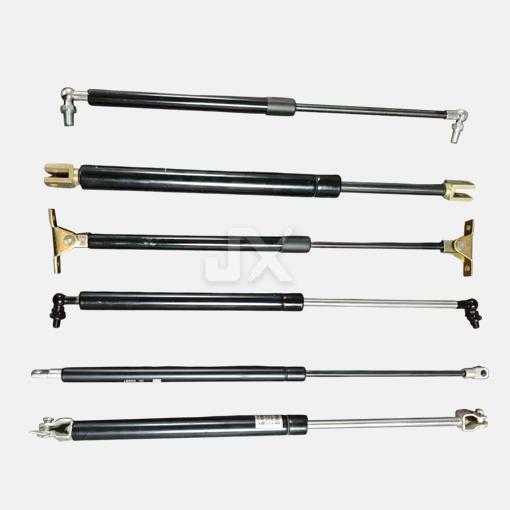
Get the spec correct the first time, and you avoid a second order and a second shipment delay. To measure or check the stroke, measure the extended length of the support from center to center with the trunk gas spring completely open and the compressed length with it fully closed. Check the force rating, often in newtons, and the diameters of the tube and rod. Note the end fitting type (ball socket, eyelet, threaded end, clevis, or custom fitting), mounting angle, and operating temperature range you need for your market.
How to Choose the Right Pressure
Most of the time, your best bet is to stay with the original force rating. That figure is what the car hinge geometry and lid weight were built for. Added extras, a heavier trunk lid, or a steeper mounting angle may all move the optimum force significantly; therefore, bespoke force tuning is crucial for conversions such as ambulances or camper constructions. A little too much effort and you get harsh closure, bracket strain, and a lid that opens too rapidly to operate safely. Too little effort causes the lid to sag, open slowly, and wear out quicker under the added pressure. When dealing with engineering projects, demand a proven force curve from your supplier, instead of accepting a generic “heavy duty” designation with no evidence to support it.
Replacement Options Comparison
| Factor | OEM replacement | Aftermarket replacement | Custom gas spring |
|---|---|---|---|
| Fit | Vehicle-specific | Varies by supplier | Built to your drawing |
| Availability | Depends on vehicle age | Usually broad | Needs production lead time |
| Documentation | Vehicle records | Supplier-dependent | Drawing, test, and material reports available on request |
| MOQ | Often one piece | Usually low | Commonly 50 pieces and up |
| Best use | Direct service job | Price and stock comparison | Fleet, OEM, ODM, or specialty builds |
JX runs full in-house production, from tube forming to piston-rod machining, gas filling, assembly, and final testing, so a custom stroke, force value, or connector change gets handled inside our own factory instead of being re-quoted through a third-party sub-supplier. That control is what lets us hold a 20 to 30 day standard production lead time even on custom orders.
When Should You Replace Both Trunk Gas Springs?
Replace One or Both?
If both supports are the same age and one already shows an obvious reduction in force, replace both, since the second one is generally close behind. If the lid rises unevenly or bends a little on the way up, swap both; that’s an indication that the force between the two sides doesn’t match. If the other side was just fitted, is the right spec, and is working well by itself, then it makes sense to only replace one side. Follow the precise service suggestion issued by your car manufacturer, rather than a generic norm.
Benefits of Matched Replacement
A matching pair will provide a more even lift over the breadth of the lid, reducing twisting stress on hinges and body panels over time. It also maintains a uniform pace of opening from side to side, which is important for passenger safety on higher cars and vans. On the planning side, a fleet standardizing on matched pairs has fewer repeat trips for the “other side” failing a few months later, reducing labor cost and vehicle downtime across the whole fleet.
Supplier Capability & Evaluation
How to Evaluate a Trunk Gas Spring Supplier
The customer who buys in volume needs more than a picture of the goods and a pricing sheet. Ask how long the firm has been producing automobile trunk gas springs. Ask for drawings, force specifications, material specifics, and tolerance data for the precise item you need. Check to see what seal, pressure hold, cycle, corrosion, and temperature tests the firm does on its own line, instead of just accepting a third-party lab report for one sample lot. Confirm traceability of raw material to final batch, and ask direct questions about packaging, labeling, warranty conditions, MOQ, sample lead time, and Incoterms utilized for shipment.
Quality Verification and Documentation
| Verification area | Evidence to request |
|---|---|
| Dimensional accuracy | Inspection report with length, stroke, diameter, and fitting data |
| Force performance | Force-versus-stroke test results |
| Gas retention | Pressure-retention or leakage test records |
| Durability | Cycle-test method, load, temperature, and acceptance limits |
| Corrosion resistance | Coating spec and salt-spray test report |
| Material compliance | REACH and RoHS declarations where applicable |
| Traceability | Batch number, production date, inspection records |
| Quality system | ISO 9001 or IATF 16949 certification |
A Factory Built for OEM and ODM Programs
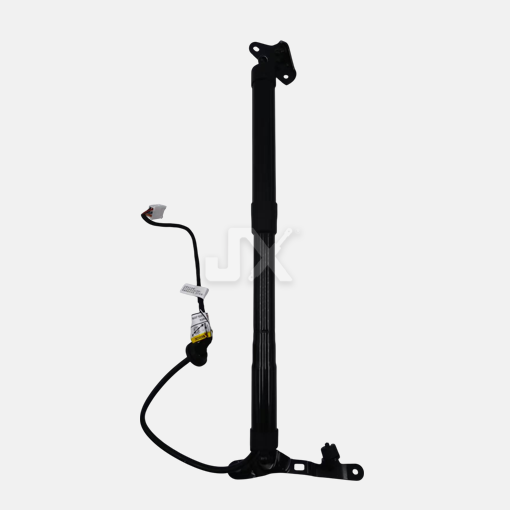
We have been manufacturing gas springs and electric tailgate struts at our Xingtai, Hebei facility since 2002. Our official name is Xingtai Juxiang Machinery Manufacturing Factory (JX). There are around 100 people on site, including 20 technical specialists who assess each force curve against vehicle weight, hinge geometry, and lift angle before any tooling is produced. Our goods are in compliance with GB/T 25751-2010, QC/T 207-2021 and ISO 11982, and we are IATF 16949 and ISO 9001 certified. We evaluate the airtightness and damping of each batch before it ships, which is why our parts perform well in the diverse climates of our export markets—from the heat of the Gulf to the winter of Siberia.
We have more than 5,000 models in our portfolio, and we’re servicing consumers in more than 40 countries in South America, Russia, Europe, the Middle East, Africa, Central Asia, and Southeast Asia. For the wholesale customer, this implies uniform strokes and forces available at short lead times, and the boxes are barcode-labeled for warehouse scanning. We can provide first-article samples, matching left-right force curves, private-label packaging with laser-etched or printed branding, and a signed NDA on drawings and vehicle model lists for custom and OEM customers. Minimum order quantity begins at 50 pieces. Standard manufacturing time is 20 to 30 days. Every order comes with a 2-year guarantee, supported by batch test results for airtightness, damping, and salt spray.
Conclusion
There are a few reasons a trunk gas spring frequently fails. Gas leakage, worn seals, corrosion, bent rod, too much weight in the trunk, temperature changes that stress a part that was already operating weakly. Don’t replace until you diagnose; support the lid securely throughout the swap and match the new part on length, stroke, force, fitting type, and temperature rating rather than assume from the vehicle’s badge. The best, and simplest, solution for a single automobile is frequently a well-matched set. Before the first container ships, distributors, fleets, and OEM purchasers look at test data, traceability, certifications, lead time, and warranty conditions when choosing a supplier.
FAQ
1. What is a trunk gas spring?
A trunk gas spring is a sealed, nitrogen-charged support that lifts and holds a vehicle's trunk lid open. It is also called a trunk strut, gas strut, or trunk lift support, depending on the market.
2. Why is my trunk gas spring not holding the trunk open?
The spring has likely lost internal pressure from seal wear, rod corrosion, or physical damage. Cold weather, extra trunk weight, worn hinges, or a wrong-spec part can also reduce lift force.
3. Can I repair a failed trunk gas spring?
No, in almost every case. These parts are sealed and pressurized at the factory, and opening the cylinder can release stored energy without warning. Replacement is the safer and usually cheaper fix.
4. How do I install a trunk gas spring myself?
Support the lid securely first, release the old clips or fasteners, fit the new support in the same orientation, and press every fitting until it locks fully. Test the lid slowly before closing it all the way.
5. How do I choose the correct trunk gas spring size?
Match the extended length, compressed length, stroke, force rating, tube and rod diameter, and end-fitting type to the original part. The vehicle model name alone often is not enough, since trims and years vary.
6. Should I replace both trunk gas springs at once?
Replace both when they are the same age or the lid lifts unevenly. A matched pair gives more even lift and lowers the chance of the second side failing soon after the first.
7. What's the difference between a trunk gas spring and a damper?
A gas spring supplies the force to lift and hold the lid. A damper controls how fast it moves. Many trunk supports combine both functions in one sealed part.
Need a Spec Match or a Quote for Your Market?
Send over your vehicle model, OEM part number, or a drawing, along with the force, length, and temperature range you need for your region. JX's engineering team will check it against our 5,000-model catalog and reply with a drawing, sample option, and lead time, usually within one business day. Reach us at jx@jxgasspring.com, and tell us whether you need wholesale volume with fast turnaround or a custom trunk gas spring program with NDA-covered drawings and matched force curves for your 3- to 5-year model cycle.
References
1. National Highway Traffic Safety Administration (NHTSA), 2024 — Vehicle safety and component defect reporting resources, referenced in the discussion of why sealed gas spring failures should be reported and replaced rather than field-repaired. https://www.nhtsa.gov
2. Occupational Safety and Health Administration (OSHA), 2024 — Guidance on stored-energy and mechanical hazard safety, referenced in the "Can You Repair a Failed Gas Spring?" section regarding the risk of opening pressurized cylinders. https://www.osha.gov
3. International Organization for Standardization, ISO 9227:2017 — Corrosion tests in artificial atmospheres, salt spray tests, referenced in the supplier evaluation section for corrosion-resistance verification. https://www.iso.org/standard/57753.html
4. European Chemicals Agency (ECHA), 2024 — REACH regulation guidance on restricted substances, referenced in the quality documentation section for material compliance. https://echa.europa.eu/regulations/reach
5. European Commission, 2024 — RoHS Directive guidance on restricted substances in equipment, referenced in the quality documentation section. https://environment.ec.europa.eu/topics/waste-and-recycling/rohs-directive_en
6. International Automotive Task Force (IATF), 2016 — IATF 16949 quality management requirements for automotive production parts organizations, referenced in the supplier capability section. https://www.iatfglobaloversight.org
About the author: Zhang Wei is an Automotive Applications Engineer with over a decade of hands-on experience testing gas springs and lift supports for passenger vehicle applications, including force-curve matching, cold-climate validation, and salt-spray durability testing for export markets across Asia, Russia, and South America.