Enclosure Gas Spring
Integrated damping prevents violent impact, safeguarding electrical components within cabinets.
Precision sealing minimizes pressure attenuation, delivering stable performance with low air leakage.
Compact structure, simple installation, saving internal cabinet space.
Multiple fittings available for standard cabinets and customized electrical enclosures.
Custom force and stroke for industrial control cabinets and outdoor communication enclosures.Minimum Order Quantity (MOQ): 50PCS
Enclosure Gas Spring for Industrial Cabinets — Smooth Control & Custom Force Solutions
Xingtai Juxiang has produced gas springs since 2002. Our Enclosure Gas Spring is built for control cabinets, communication enclosures and industrial panel doors. Stroke is between 30 and 500 mm, extended length is between 150 and 1500 mm, and force is between 300 and 1500 N. This little part provides stable motion control and is equipped with precise sealing and integrated damping. OEM purchasers in the telecom, medical, industrial machinery, and electronics industries utilize it extensively.
What Is an Enclosure Gas Spring and How Does It Work?
One part of hydropneumatic motion control is an enclosed gas spring. Cabinet doors and access panels can be lifted, held, or lowered with controlled force thanks to the piston being pushed by sealed high-pressure nitrogen inside the steel cylinder. It supports safe operation for heavy doors on telecom cabinets, CNC machines, and medical workstations by maintaining linear force throughout the whole stroke without abrupt jerking or falling, in contrast to standard mechanical springs. To maintain internal oil lubrication of the main seal and provide end-stroke damping, rod-down installation is advised.
Technical Specifications
| Parameter | Value |
|---|---|
| Extended Length | 150 – 1500 mm |
| Stroke | 30 – 500 mm |
| Force Range | 300 N – 1500 N |
| Piston Rod Diameter | Ø6 / 8 / 10 / 12 mm |
| Tube Outer Diameter | Ø15 / 18 / 22 / 27 mm |
| End Fitting Options | Ball joint, Eye, Clevis |
| Tube Material | Seamless steel tube |
| Piston Rod Surface | Chrome-plated |
| Working Temperature | -40℃ to +80℃ |
| MOQ | 50 PCS |
The wide working temperature range of -40℃ to +80℃ makes this spring suitable for both harsh outdoor telecom enclosures and climate-controlled indoor cabinets. Keep in mind that nitrogen gas follows the ideal gas law — force shifts approximately 3.5% per 10℃ temperature change. Factor this into your force calculation during the design phase.

Quality Control and Durability Standards
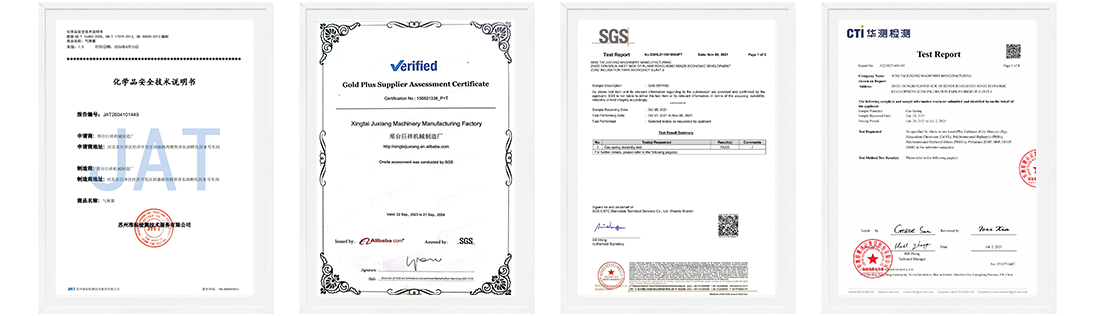
Each enclosure gas spring passes full performance testing before shipment, including fatigue cycling, seal leak inspection, force deviation check, temperature test and end fitting tensile test. Products run 50,000–100,000 cycles in fatigue testing with controlled force decay. Under correct installation, service life reaches 30,000–100,000 cycles for long-running field equipment.
Application Scenarios
Numerous heavy-duty cabinet applications are compatible with this gas spring. Outdoor telecom and electrical cabinets withstand UV rays, sea spray, and temperature fluctuations while keeping doors securely open for maintenance. Cutting fluid, metal fragments, and constant vibration are all tolerated by CNC machine enclosures. Equipment used for medical and diagnostic purposes has to move quietly and steadily. This gas spring is also used for variable force adjustment in self-service kiosks and electronic racks.
Customization and OEM Support
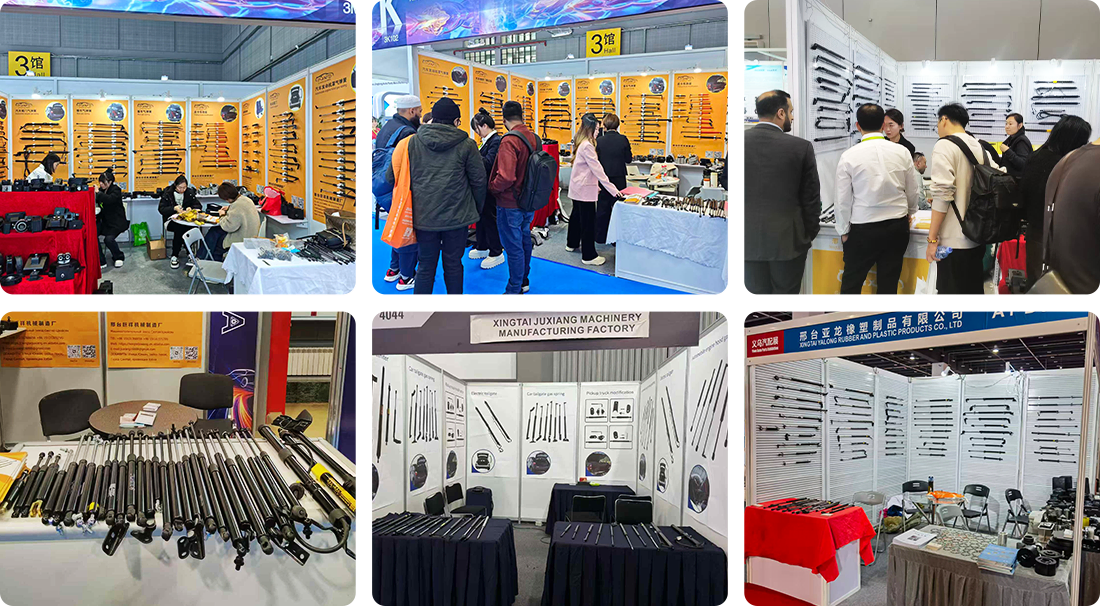
We customize stroke length, force value and connector types. Ball joint, eye and clevis fittings in different materials can match cabinet mechanical structure. OEM and ODM services are available with 50 PCS MOQ. Our factory manages the whole process from raw material selection to final inspection for consistent batch performance.

FAQ
Q1: How to calculate required gas spring force?
A: Use F = (W × L) / (n × d). Add 10–15% safety margin when selecting the force value.
Q2: Why install the spring rod-down?
A: Rod-down mounting keeps the seal lubricated and ensures stable hydraulic damping at stroke end.
Q3: Does temperature affect force?
A: Yes. Force changes by about 3.5% per 10℃. Select force based on your working temperature range.
Q4: What cycle life can I expect?
A: 30,000 to 100,000 cycles, depending on side load and working environment.
Q5: Can you make custom end fittings?
A: Yes. Multiple materials and fitting styles are available for non-standard cabinet structures.
Contact Us
Send your technical drawing or custom demands for Enclosure Gas Spring to our team via jx@jxgasspring.com. We provide technical support and matching solutions promptly.