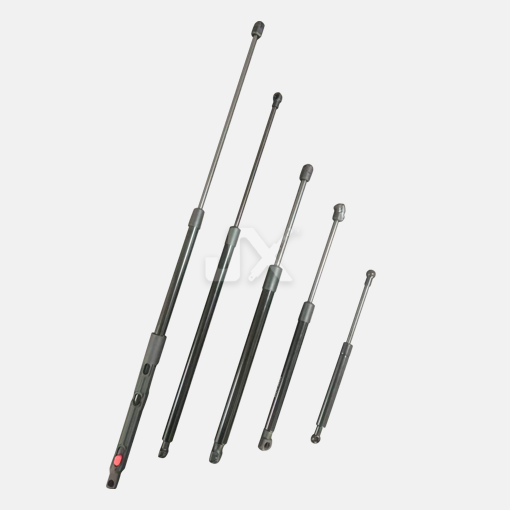
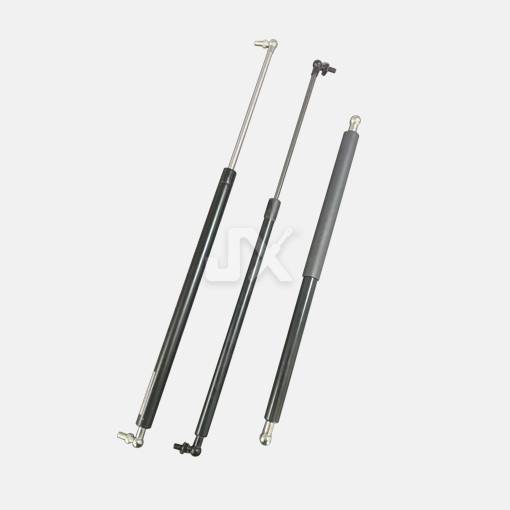
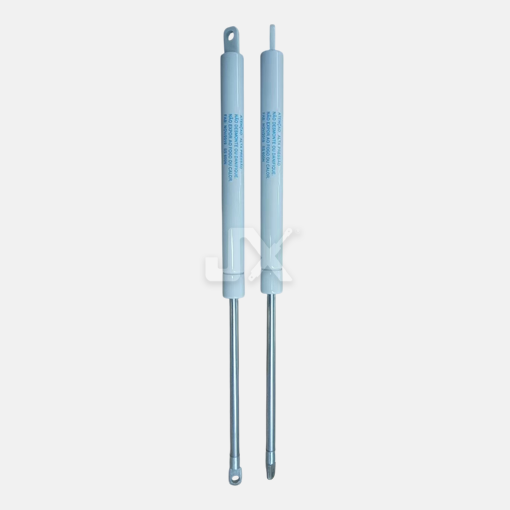
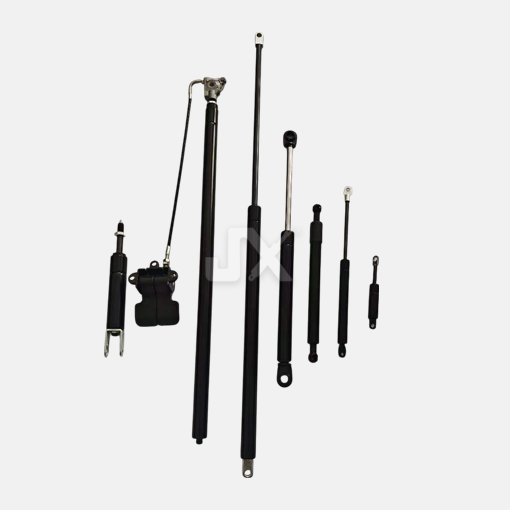
Where can I buy high-quality hood gas spring and related parts online?
I am asked by importers and fleet purchasers practically every week, “Where can I buy a quality hood gas spring online without guessing on fit or force?” The honest answer is: you get a hood gas spring from a seller that discloses true specs (stroke, force, fittings, and test data), not simply a snapshot of the device. This article will cover how to evaluate manufacturers, distributors, and markets, how to verify quality before you commit to a container, and what paperwork protects you on a repeat transaction. I write this from experience bench-testing, not a sales pitch.
Quick information before you buy:
- Established makers, industrial distributors, OEM suppliers, or specialized parts marketplaces that divulge comprehensive specifications may provide high-quality hood gas springs.
- Before ordering, you must match the replacement by its extended length, compressed length, stroke, force, end fitting, and mounting angle.
- Buyers from cold-climate and tropical areas will both find nitrogen-damped units with soft-close action and -40°C to +80°C ratings.
- Ask for airtightness, force, and salt-spray test findings, not a snapshot of a certificate
- The hood employs a matched set of struts. Replace left and right struts together to maintain lift balance.
For bulk purchasers, the comparison should be done on MOQ, lead time, Incoterms, and warranty, not just the piece pricing.
What Is a Hood Gas Spring Used For?
Hood Gas Spring Definition and Scope
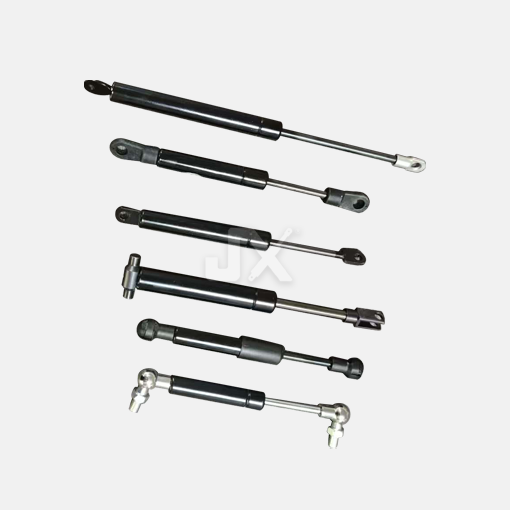
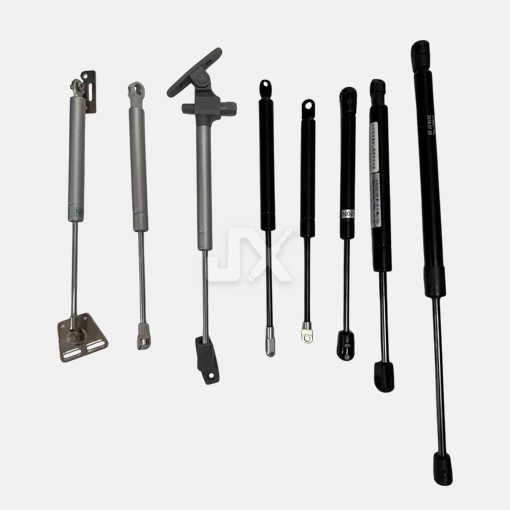
A hood gas spring is a sealed pressurized cylinder that holds and lifts the hood, bonnet, or engine bay cover of an automobile. It is not a hydraulic cylinder since it does not utilize fluid pumped in from outside, but rather compressed nitrogen gas. So, this is not simply a coil spring. It isn’t metal bending and stretching that lifts it. It is the gas pressure on a piston that provides the force.
People who purchase goods call them various things. Places where “gas strut,” “lift support,” “hood strut,” and “gas lift” all mean the same thing. It operates the same way regardless of what name you choose. In Brazil, individuals could refer to it as a “amortecedor de capô,” whereas in Russia, they might call it a “aновый aмортизaтор капота.”
How a Hood Gas Spring Works
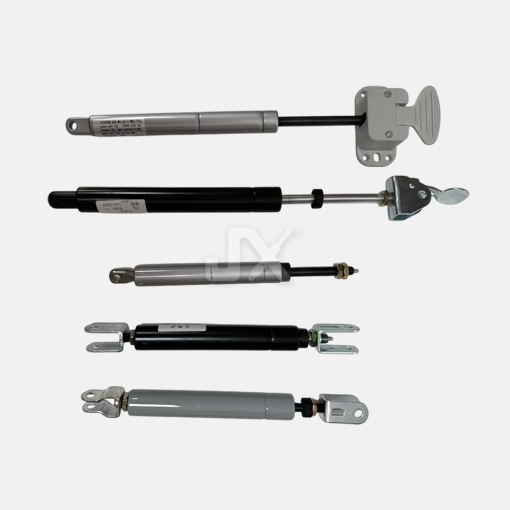
The unit is divided into five sections. Sometimes a little hydraulic oil is injected into the cylinder to loosen it up. These pieces travel in and out of the cylinder as you open and shut the hood. The seals and guides prevent escape of the gas and provide free movement of the rod. The ends of the hood gas spring are equipped with ball holes, eyelets, or hooks to attach the spring to the hood and the body frame. A dampening hole toward the end of the rod’s trip slows it down. This makes the part feel as it should with an OEM part: a gentle close.
The hood gas spring is manufactured in such a way that it does not need adjustment, greasing, or oiling over time. Self-lubricating pieces inside keep friction low from the first day it's utilized till the seal runs out.
Common Application Scenarios
Most of the time, buyers don't inquire about gas springs. They want to know about a certain job. In the table below, you can see three real-life situations that people ask us about every month.
| User scenario | Typical requirement | Important selection factor |
|---|---|---|
| OEM manufacturer | Repeatable force, custom stroke, validated cycle life | Engineering sign-off and batch-to-batch consistency |
| Industrial distributor | Broad size range and fast replacement stock | SKU control, barcode cartons, documentation |
| Repair shop or fleet owner | Direct swap for a worn hood strut | Accurate measurement and correct end fitting |
This part supports a lot of different things, like machine covers, generator cages, toolboxes, hoods for farm equipment, and the back doors of ambulances or cold vans. In South Africa, a camper converter is trying to fix the same mechanical problem as a Toyota dealer in Kazakhstan. However, they are applying different amounts of force to the issue.
Where Can You Buy Hood Gas Springs Online?
Online Supplier Types
There are six distinct shops selling hood gas springs online. All of them conduct business differently. A direct manufacturer can deal with diverse strokes and pressures and is responsible for the full process. Industrial wholesalers have a lot of options since they require a rapid remedy. People who just need one item purchase it at car parts shops. In industrial markets, there are tons of brands close to each other. Most of the time, e-commerce sites modify their pricing depending on their sales volume. Local IT firms provide emergency repairs.
The price depends on the quantity of your purchase, how fast you want it, and how much you want to customize it. If a fleet owner needs 10 units right now, they shouldn’t have to wait 30 days for the mill to build them. Dealers around the nation preparing next year’s SKU range shouldn’t purchase anything online that doesn’t come with a picture.
Supplier Capability and Evaluation
Before you believe a brand name, see what the seller can really show. In the following ways, a real production partner is not the same as a reseller with a PDF catalog:
- Published dimensional drawings and force curves for each part number, not just a product photo and a price.
- Force testing and cycle-life data recorded at specific stroke positions, so you know the hood gas spring behaves the same at 10% travel as at 90%.
- Material and coating details for the rod, cylinder, and end fittings, including salt-spray hour ratings.
- In-house OEM/ODM capability for stroke, pressure, fitting type, and branding, instead of outsourcing custom work to a third factory.
- Clear MOQ, sample policy, lead time, and warranty terms stated before you ask twice.
- Post not only a picture of the item and its price, but also force graphs and dimensional models for each part number.
- At certain stroke points, force tests and cycle-life data were recorded. This lets you know that the spring works the same way at 10% travel as it does at 90% travel.
- The materials and coatings of the rod, cylinder, and end fittings, as well as their salt-spray hour ratings.
- Instead of sending special work to a different plant, we can do OEM/ODM work on our own to change the stroke, pressure, fitting type, and brand name.
- Make sure you understand the MOQ, trial policy, wait time, and guarantee terms before you ask twice.
As you can see, these points are very important. A box full of parts that don't fit together or haven't been tried costs a lot more than the price cut per piece that brought the order in the first place.
A dealer in Kazakhstan switched from a generic drop-ship provider to an OEM force curve in 2023 because it met their needs for a Hyundai-platform hood hinge. The number of warranty claims dropped from 4.1% to 0.6% over the course of fourteen months and 1,200 units shipped, according to return data that the distributor gave our technical team. The only things that changed were the force curves and the salt-spray test. The price of a piece went up or down by less than four cents.
Online Buying Checklist
A short list before you click "order" will help you avoid having to send something back later. Check the type of product, its length (both long and short), its stroke, its force rating in Newtons, the diameter of the rod and cylinder, the finish on the material, the range of temperatures it can work in, how it should be installed, and whether it needs to be paired with something else. These eleven pieces of information cover almost all of the issues we hear from first-time importers.
How Do You Identify a High-Quality Gas Spring?
Technical Quality Indicators
A good hood gas spring doesn't get stuck or lose force all of a sudden as it goes through its full range. The piston rod should be clean and smooth. Any holes or scratches will quickly turn into a way for water to leak through. There shouldn't be any holes between the seals and guide rings and the ends of the cylinder. They should be square.
It's just as important how the outside looks as how the inside is built. Each part is made for a different climate in the United States. Parts made for export markets have a finish that doesn't rust or corrode and can handle seawater and salt spray. If you send a spring that can handle temperatures from -40°C to +80°C, it will always have the same lift force, no matter where it goes.
Quality Verification and Test Evidence
Ask the seller straight out if they can share more than just claims. A reliable factory should keep track of when they check new materials, take measurements, test force at set stroke positions, do pressure-retention or leak tests, keep track of cycle-life data, and, if necessary, show salt-spray results.
- Batch or lot traceability lets you trace a failed part back to its production date and raw material lot, which matters if a quality issue shows up six months after delivery.
- Calibration records for test equipment confirm the force numbers on paper match what a lab instrument actually measured, not an estimate.
- A certificate of conformity, issued per shipment, gives your own customs and quality team something concrete to file.
Follow the steps in GB/T 25751-2010, QC/T 207-2021, and ISO 11982 to make sure the hood gas springs work well. Each batch that leaves the JX plant also goes through airtightness and damper tests. Following the IATF 16949 process discipline for making auto parts, it has ISO 9001 certification, which is based on ISO's quality management framework (ISO, 2015).
Risks, Pitfalls, and Mitigation
Each help ticket has four mistakes that never change. If you choose the wrong force level, the hood will either not rise at all or stay closed. Make sure the force rating is correct and test a sample before you order a lot of them. So, right away, get data on surface finish and rust. If the rod finish isn't good, the seal goes out quickly and gas leaks out. If you quickly measure the thread or ball stud, you can avoid having an end fitting that doesn't fit get in the way of installation. The specs may be different from one batch to the next if the marketplace ad isn't approved and there isn't a picture attached. Get a picture and a test report before you put down a fee.
Gas Spring vs. Hood Strut: What's the Difference?
Terminology and Functional Difference
The word "hood gas spring" is used in engineering to describe any spring that is under stress. These are used to cover machines, hospital beds, and furniture. "Hood strut" or "hood lift support" only refers to things that have to do with car hoods. Most of the time, these are made with brackets that are specific to the car and a force value that is set to match the hood's weight and hinge geometry.
Gas Spring vs. Hydraulic Cylinder vs. Mechanical Spring
People who buy things online sometimes mix up these three ways of doing things. The following table shows what each one does.
| Feature | Gas spring | Hydraulic cylinder | Mechanical spring |
|---|---|---|---|
| Energy medium | Compressed gas | Pressurized fluid | Elastic metal or polymer |
| Typical function | Lift assist and holding | Powered motion | Return force |
| External power needed | No | Usually yes | No |
| Damping | Built-in orifice | Hydraulic circuit control | Limited unless added |
| Common hood use | Very common | Rarely needed | Needs added support |
Compression, Locking, and Tension Gas Springs
Most of the time, four sub-types of hoods are enough. There is gas pressure that makes a compression gas spring stretch and hold the hood open. Almost all passenger cars have this kind of spring on the hood. For service panels, a locking gas spring can keep the rod in one or more set places. The rod is pulled in by a tension hood gas spring instead of being pushed out. Things that fold up are more likely to have this problem than hoods. People who fix cars don't usually use flexible gas springs because they don't let you fine-tune the force for certain tools.
Which Hood Gas Spring Parts Need Replacement?
Replaceable and Commonly Worn Parts
Since the gas chamber can't be fixed on the job site, most sealed hood gas spring units are changed instead of being repaired. Rubber sleeves that protect, end fittings, ball sockets, eyelet mounts, mounting clamps, threaded studs, and mounting clamps are some other parts that may need to be replaced separately. Going 60,000 kilometers along the coast in your car is likely to break a rusty bracket before the spring's inner seal does.
Symptoms of Gas Spring Failure
Keep an eye out for these red flags during a regular check:
- The hood no longer stays open on its own, or it drifts closed within a few seconds of release.
- Extension feels slow, uneven, or jerky instead of a smooth, steady rise to full open position.
- The rod shows visible corrosion, pitting, or an oily film near the seal, which signals gas or fluid loss.
- End fittings feel loose at the mounting point, producing a rattle or play when the hood moves.
The hood can't stay open by itself anymore; it shuts off after a short time.
Replacement Safety and Installation Notes
Before you take off an old spring, you should support the hood mechanically. Once the strut is taken off, the hood can fall without warning. If you replace one hood gas spring at a time, the other one will wear out faster, and the new one will not move the car evenly. It is best to replace both springs at the same time. The gas chamber could lose its pressure quickly if you poke holes in, heat, bond, or take apart a compressed cylinder. The end fittings are already on every replacement that JX sends, so most users don't need any special tools to do the job.
How Do You Choose the Right Gas Spring Force?
Gas Spring Force Calculation
Before the test, a simpler way to find the starting point helps narrow the range of forces:
F = (W × d) ÷ (n × r × ·)
There are n springs in this case; r is the effective lever arm of the spring; F is the force of the gas spring in newtons; W is the weight of the hood in newtons; d is the distance from the pivot to the center of gravity; and · is a rough measure of how well the mechanism works. You can only get a range from this method. In real life, the number changes depending on the shape of the hood, the stress on the hinges, the temperature of the area, and the resistance of the seal. Another test should be done on a real sample to be sure of the end level.
Force Selection Guide
If the hood opens slowly or won't stay open, there may not be enough force to hold it open. If the hood is hard to close or opens quickly, the force is probably too strong. When the hood falls near the end of its journey, it's most likely not because of pure force, but because of the damping or the angle of the fitting. If two hood gas springs are carrying the same weight, you should find the force per spring instead of the total force, since each spring still needs to do its job.
Application-Based Force Requirements
Different kinds of tools need very different amounts of force. Like, an auto hood needs a lot more lift than a light cabinet door, and an industrial lid needs even more. A supplier does not use engineering terms when they say that a part is "heavy duty" without giving you a torque rating, size chart, or cycle-life number.
What Size Hood Gas Spring Do You Need?
How to Measure a Gas Spring
Get more than just a part number. Measure the old unit and the fixing places as well. The reason for this is that cross-reference lists can be wrong. Start by writing down the length when it is stretched from fitting center to fitting center. Then write down the length when it is squeezed. Take away one to find the length of the stroke. Write down the cylinder's diameter, the rod's diameter, the end fitting's type and thread, the mounting hole or ball-stud's size, and the distance between the mounting points when the cylinder is open and when it is closed.
Gas Spring Size Selection Table
| Specification | Why it matters | Common error |
|---|---|---|
| Extended length | Sets the open-hood geometry | Measuring outer edges, not fitting centers |
| Compressed length | Prevents bottoming out at full close | Ignoring clearance at closure |
| Stroke | Defines total travel distance | Assuming a longer stroke always helps |
| Force | Controls lift and holding power | Matching length but not force |
| Rod diameter | Affects strength and durability | Treating rod size as the force rating |
| End fitting | Required for correct installation | Ignoring thread or ball-socket differences |
Using a Gas Spring Size Calculator
A good online calculator should ask for the hood's weight, length, and width, where the pivot is, how steep the opening angle is, where it will be mounted, how many hood gas springs it has, and a safety cushion %. You should use every answer from the tool as a starting point. You can make sure of the exact specs before placing a large order by looking at the drawings, getting a sample unit, or calling the seller for a short technical call.
Which Materials Offer Better Gas Spring Durability?
Steel vs. Stainless Steel Gas Springs
The location of the car affects the materials used a great deal. Look at the table below to see how the most popular options compare.
| Material or finish | Advantages | Limitations | Suitable applications |
|---|---|---|---|
| Painted or powder-coated steel | Low cost, strong | Coating damage exposes bare steel | Indoor machinery, general use |
| Zinc-plated steel | Better corrosion resistance | Not ideal for heavy salt exposure | Cabinets, general maintenance |
| Stainless steel | Strong corrosion resistance | Higher cost, possible galling | Marine, outdoor, washdown settings |
| Corrosion-resistant coated steel | Balanced cost and protection | Depends on coating quality | Outdoor and industrial equipment |
Environmental Selection Criteria
People who buy in Russia, Central Asia, and the beaches of Africa are under different types of stress than people who buy in the middle of nowhere. If the wrong finish is used, it won't last as long if it is hit by salt spray, UV light, and rain, cleaning chemicals, dust, extreme heat or cold, and galvanic corrosion between metals that aren't the same. The rubber seal that JX uses is specially made to work in temperatures from -40°C to +85°C and keep air loss below 5% for a whole year. It was made with markets with harsh climates like Russia and Kazakhstan in mind.
Compliance and Material Documentation
Instead of a general certificate, ask for proof that will work for the people you want to hire. As of 2024, the European Chemicals Agency said that REACH sets rules for chemical-containing goods that come into the EU. According to the European Commission (2024), RoHS limits the use of dangerous materials in electrical or electronic products. The CE mark should be checked on the whole piece of equipment, not just one mechanical part. The 2023 report from ASTM International says that test methods for rust and mechanical performance should be named by name and not just talked about in broad terms. According to SAE International (2023), they put out automobile engineering rules that help people make gas springs that fit certain cars.
How Do You Check Gas Spring Compatibility?
Mechanical Compatibility Checklist
Before you place your order, make sure that the lengths when stretched and when compressed are the same, that the stroke is within a reasonable range, that the force is estimated correctly instead of being assumed, and that the thread type, mounting dimensions, and end fittings all line up perfectly. Also, make sure there is enough room along the line of travel and that the load won't bend the hood or frame.
Installation Orientation and Damping
The way the mount is mounted changes more than just the fit. As time goes on, it changes how the damping works, how the oil is spread inside the cylinder, how fast it extends, and how the load is sent to the mounting bracket. The supplier's installation plan should always be used instead of general installation tips found online. This is because each model has different alignment needs.
Compatibility Validation by Application
One who buys from an OEM should check the CAD geometry, force curve, cycle life, environmental conditions, and provide PPAP-style documentation if the end customer asks for it. For each SKU, a dealer should keep a cross-reference table that lists the size, force, fittings, and vehicles that it fits. Before placing an order, a repair shop or fleet buyer should compare the old part's label, measurements, and symptoms to those of the new part.
What Should You Check Before Buying Online?
Supplier and Product Comparison Table
| Evaluation factor | Minimum information to request | Why it matters |
|---|---|---|
| Product specification | Drawing, dimensions, force, stroke, fittings | Confirms technical fit |
| Quality evidence | Inspection report, force test, cycle data | Reduces failure risk |
| Materials | Rod, cylinder, seal, coating details | Supports durability |
| Customization | Length, force, fittings, branding | Supports OEM needs |
| Commercial terms | MOQ, unit price, sample cost, payment terms | Supports budget planning |
| Logistics | Lead time, packaging, shipping, Incoterms | Prevents delivery surprises |
| Documentation | Certificate of conformity, material records | Supports audits |
| Warranty | Coverage period and exclusions | Clarifies post-delivery risk |
Procurement Factors for Bulk and OEM Orders
The more people purchase, the longer they should agree to a list of agreements before the first container ships arrive. When evaluating the MOQ, consider how much work you anticipate being done each year, how samples are accepted, tooling costs, how long it typically takes to have items created, and how you would want to be paid. You both have to agree on EXW, FOB, FCA, CIF, or DAP conditions. You should also agree on the demands for export cartons, palletization, private labeling, warranty coverage, and additional parts that are accessible for the complete model cycle. U.S. Buying from the U.S. and the EU in 2024: It adds that customers should make sure the documentation from their home nation fulfills customs standards when they arrive there.
JX is 20-30 days for the wait period, and they need a minimum of 50 pieces to start creating them. Our ERP system tracks items that need to be manufactured before being created so they arrive on schedule." We usually ship by boat, and for urgent requests, we ship by air. Our products are guaranteed for two years. Our ODM/OEM services have covered more than 5000 kinds in more than 40 countries.
Final Online Purchase Checklist
First, make sure you understand the application and hood weight, the force rating in newtons, the stroke, the extended and compressed lengths, the rod and cylinder diameters, the end fittings, the material and corrosion protection, the operating temperature range, the test documentation, the MOQ, the lead time, the warranty, Incoterms, and the sample or first-article approval process. Only then should you approve the order.
Conclusion
A hood gas spring saying it's "heavy duty" or looks excellent does not make it good. Instead, look at the documented specs and form of the program. The most significant inspections are those that consider force, stroke, end fittings, materials, mounting orientation, length when stretched and length when compressed, and test evidence.
The easiest approach to obtain a part if you need it just once is usually to go to the closest distributor. When shopping around, don’t only look at pricing. You want to see their testing history, customisation, traceability, paperwork, MOQ, lead time, and warranty for OEM programs, nationwide distribution, or regular bulk purchases.
FAQ
1. What is a hood gas spring?
It's a hood gas spring that lifts, holds, and controls how the hood or lid of your car moves. The lift support is also called a gas strut, hood strut, or lift support. The pressure of nitrogen gas is used instead of hydraulic fluid or metal spring tension to make it work.
2. How do I measure a hood gas spring for replacement?
From the middle of the end fittings, find the length when it is stretched out and the length when it is squished together. Then, find the stroke length by subtracting the two lengths. Write down the power number, rod diameter, cylinder diameter, thread type, and fitting design before you place your order.
3. How do I calculate the correct gas spring force?
Look at the hood's weight, its center of gravity, how it's mounted, how many springs it has, and the length of its lever arm to figure out the force. To be sure of the answer, test it in real life. Things like temperature, friction, and mounting angle can all change how well something works, not just in the formula.
4. Should hood gas springs be replaced in pairs?
Yes, most of the time. The lift isn't even when you put a new hood gas spring next to an old one on the other side. The stronger unit also runs out faster. Putting in a matched pair instead of them keeps the load even.
5. Which is better, stainless steel or steel gas springs?
Steel that doesn't rust as quickly is better for use in the navy, outside, and washdown areas. For less money, steel that has been covered or plated works well indoors or in light industrial settings.
6. How long do hood gas springs last?
How long something lasts depends on how often it cycles, how much weight it has, how the temperature changes, how much rust it gets, and how good the seal is. A provider shouldn't just give you a guess at how long something will last; they should give you cycle-life data based on exact test conditions.
7. Can a gas spring be repaired or refilled?
You have to buy whole sealed gas springs to change them because most shops don't have the pressure-control tools needed to fill them up and seal them again. Different end fittings and mounting hardware can sometimes be changed while the cylinder itself is still under pressure.
Get a Quote That Matches Your Hood Gas Spring Application
Email jx@jxgasspring.com with the weight of your hood, the size of the mount, and the market you want to service. JX will send you a hood gas spring specification that works for you in two business days. In Xingtai, Hebei, we have a plant that is both IATF 16949 and ISO 9001 certified. We need at least 50 pieces to ship, and it takes 20–30 days after you approve a sample for us to start making your order. Russians, people in Central Asia, and people in Southeast Asia already buy hood gas springs from JX because they know they can make them again and again.
References
1. International Organization for Standardization (ISO), ISO 9001:2015 Quality Management Systems, 2015: https://www.iso.org/iso-9001-quality-management.html — cited for quality management certification standards.
2. ASTM International, Standards for Corrosion and Mechanical Testing, 2023: https://www.astm.org/ — cited for salt-spray and material test method references.
3. European Chemicals Agency (ECHA), REACH Regulation Guidance, 2024: https://echa.europa.eu/regulations/reach — cited for chemical substance compliance in EU-bound parts.
4. European Commission, RoHS Directive and CE Marking Guidance, 2024: https://single-market-economy.ec.europa.eu/sectors/mechanical-engineering_en — cited for electrical restriction and equipment-level CE marking rules.
5. SAE International, Automotive Engineering Standards Database, 2023: https://www.sae.org/standards — cited for vehicle component engineering standards.
6. U.S. Customs and Border Protection, Importing Into the United States Guidance, 2024: https://www.cbp.gov/trade/basic-import-export — cited for customs and country-of-origin documentation requirements.
About the author: Liu Yang is an Automotive Product Engineer who has been making and testing gas springs for OEM hood support programs for eleven years. This means setting the force curve and making sure that salt spray won't hurt the springs. He has worked with import teams in Africa, Central Asia, and Southeast Asia to help them figure out how to fit and approve things. He doesn't write marketing copy; instead, he writes from himself through bench tests.