Why Choose an Equipment Gas Spring for Industrial Machine Covers?
If your maintenance personnel still manually raise a heavy machine cover, you already know the danger of a pinched finger or a dropped panel. But it’s not that manual effort; it’s a controlled, pressurized lift, thanks to an industrial equipment gas spring that opens softly and stays put without a prop rod. Buyers often ask about this issue before they make their purchase. This article looks at whether a gas spring really solves the lifting, safety, and durability difficulties on CNC doors, electrical cabinets, and inspection hatches. What I mean is force calculation, safety risk, supplier vetting, and regional purchasing trends from Russia to Southeast Asia based on 20 years of in-house gas spring manufacturing at Xingtai Juxiang Machinery Manufacturing Factory, or JX.
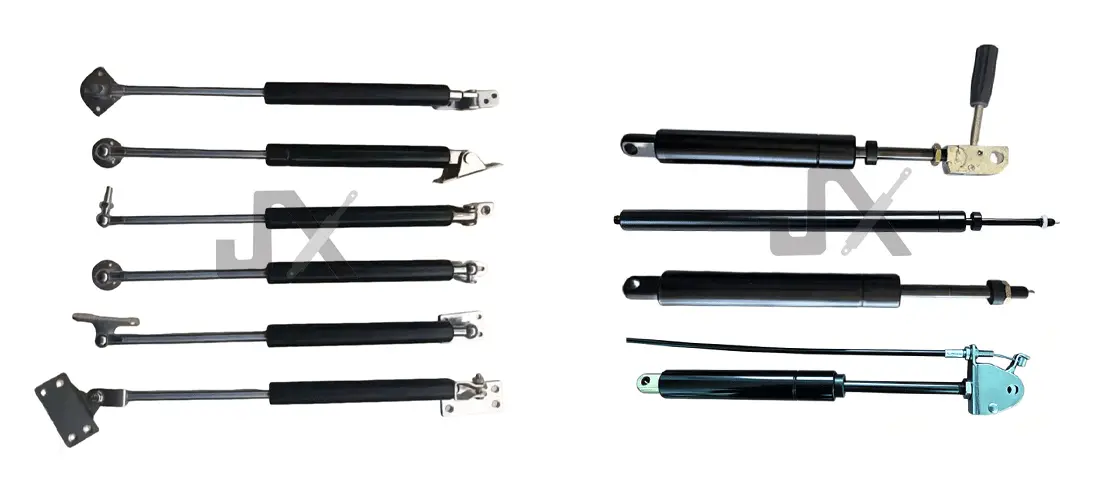
What Is an Equipment Gas Spring Used for in Industrial Covers?
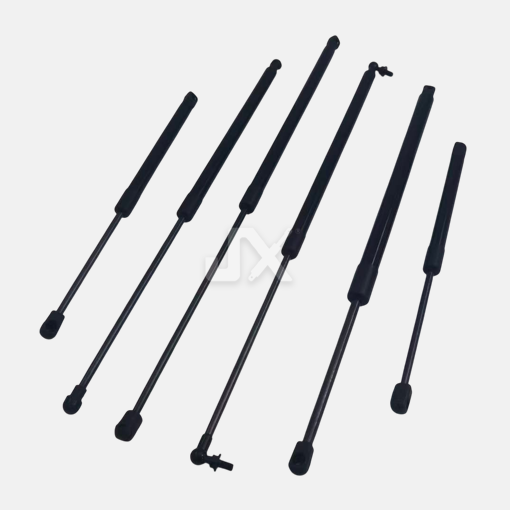
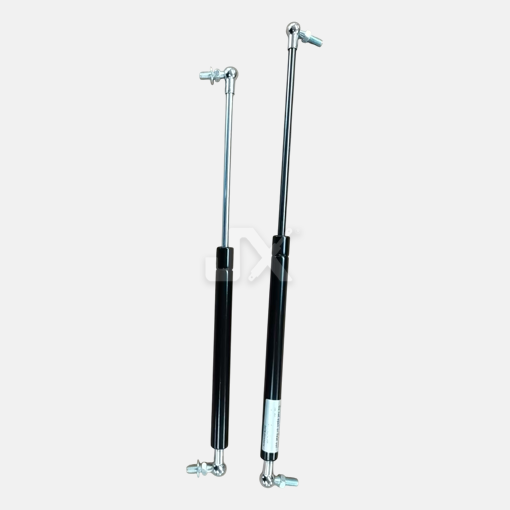
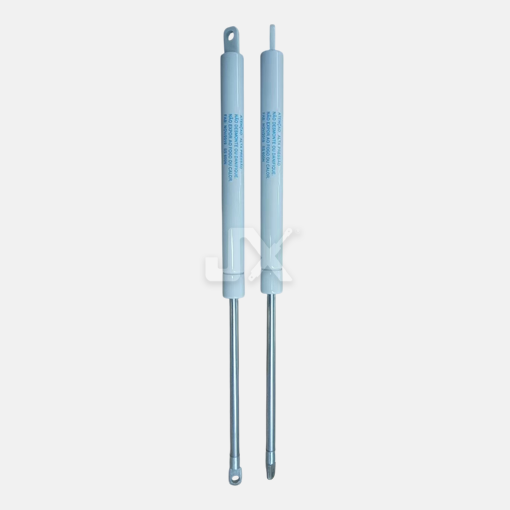
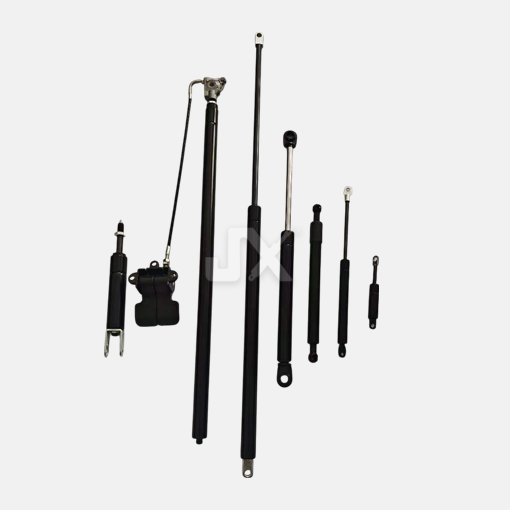
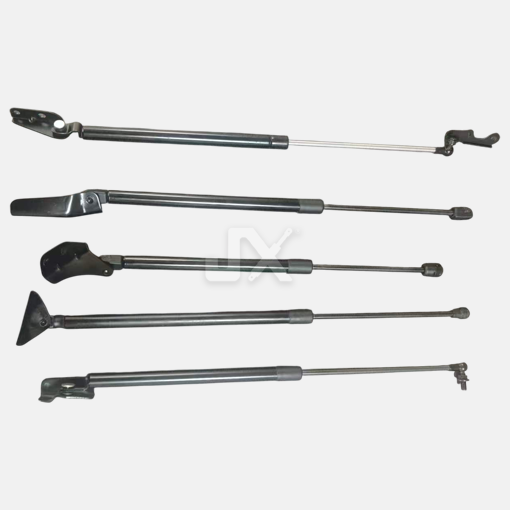
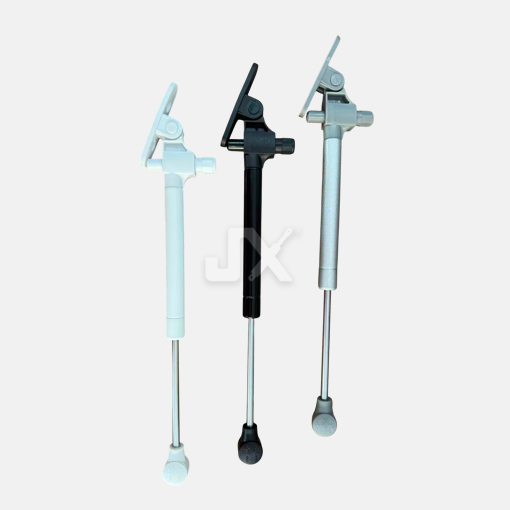
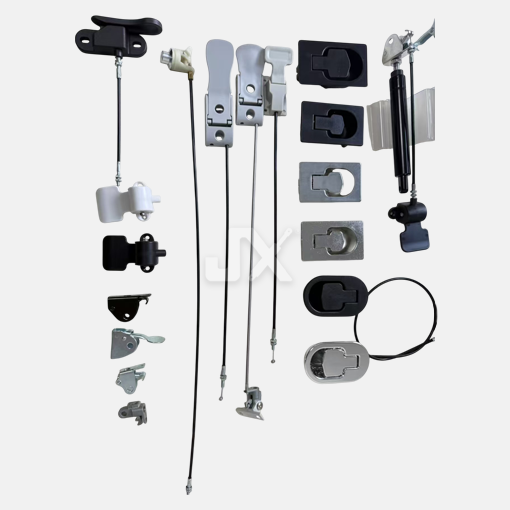
A ("gear gas spring") is a metal cylinder sealed and filled with pressurized nitrogen gas. It is sometimes referred to as a lift support or gas strut. Inside the cylinder is a piston rod that moves. The gas pressure pulls the piston up to raise it. You may attach the equipment gas spring to the frame and cover using a plate mount, a ball joint, a clevis, or a bracket.
Core Components and How They Work Together
High pressure keeps the nitrogen gas within the cylinder. The seals are exact enough that even after thousands of rounds, gas doesn't escape beyond the piston rod. When the stick moves out and comes back, the door opens or closes. The seal system controls the smoothness of the movement. The strength of the brackets holding the spring in place is equally as crucial as the strength of the spring itself.
What an Equipment Gas Spring Is Not
An equipment gas spring is not a pressure tank for process fluids, but a tool making it possible to lift and move items in a controlled fashion. Even if one had to operate beneath a higher cover, it was not the same thing as having complete guarding or a motorized safety prop. Support is not intended to be the sole means of preventing the weight of service work from collapsing the panel; it’s intended to be utilized every day.
Common Applications Across Industrial Settings
In one facility, a “equipment gas spring” is employed on machine lids, safety guards, control panel doors, and inspection hatches. The same sort of part is seen on tools, on the hoods of agricultural equipment, and on the doors of telecom enclosures that technicians enter many times a day. A gas spring handle may be used for any lid that is too uncomfortable or heavy to open and shut easily.
Main Equipment Gas Spring Types to Know
Buyers may pick between a compression equipment gas spring (pushes when extended) or a tension spring (pulls). They may also pick between locking and non-locking designs and between units with fixed or adjustable force. What sort of material you use is also significant. Stainless steel rods or coated rods are excellent for unclean locations or outdoor applications.
- Compression gas springs force the cover open and are the most common option for top-hinged lids, hoods and access panels that need to raise away from the operator.
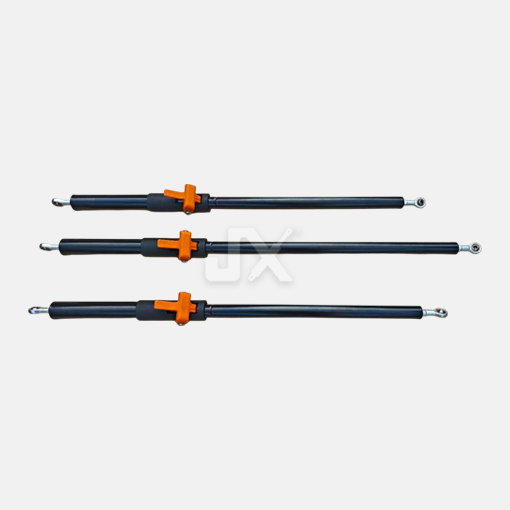
- Lockable gas springs are suitable for inspection hatches that need to be held in place for a multi-step repair job, employing an internal valve that the operator activates by hand to keep the cover in a selected position.
- Stainless steel models withstand corrosion in washdown, coastal, or high-humidity plants, which is significant for purchasers in Southeast Asia and coastal South America facing continual exposure to moisture.
This type difference tells you if a part will fit your cover the first time or whether you need to try it again.
Why Use Gas Springs on Machine Covers and Access Panels?
They get tired quickly when they have to open a 15-kilogram cover by hand dozens of times during their shift. People move quickly and loosely when they are tired. Most of that work is done by an equipment gas spring, which makes the motion smooth instead of jerky.
Ergonomic and Productivity Gains
Taking away some of the pulling force changes how things work in the shop. I talked to a plant engineer in Hebei while working on a repair job. He said that once the gas springs could do it on their own, workers quit using scrap metal to hold open covers. It took about two minutes less per check to get props after that small change, which adds up to 20 cycles. When you set the movement of covers to be the same on all machines, each cover does the same thing. This makes training new operators go faster.
Protecting Covers, Hinges, and Components
It is less powerful when someone falls without being able to stop them, and it's also less effective when someone hits something. Remember that putting things together over and over again can stress hinges, handles, and the metal panel itself, which can break welds in just a year. An equipment gas spring shouldn't be the only thing stopping the cover from moving too far; it also needs mechanical stops on the outside.
Use-Case Scenarios by Buyer Type
If you match the right buyer with the right criteria, you can avoid the waste of having different buyers look at the same part in different ways.
| Buyer type | Typical requirement | Key evaluation criteria |
|---|---|---|
| OEM builder | Integrated gas spring for a new machine cover | CAD geometry fit, cycle life, repeatable force, NDA drawing support |
| Distributor | Replacement and stockable gas struts | Standard dimensions, carton packaging, MOQ, delivery lead time |
| Plant maintenance | Equipment gas spring replacement for weak struts | Existing force match, end fitting type, corrosion condition, install access |
This shows that the "best" gas spring is different for every person and every case.
How Do Gas Springs Improve Safety on Machine Covers?
It is safer for them to use an equipment gas spring than to leave a heavy cover hanging. The pressure of the gas balances out some of the weight of the cover, making it much easier to move. One more thing that the spring does is slow down the last part of the shutting action.
Controlled Opening and Closing Behavior
The right-sized equipment gas spring keeps the extension smooth and stops the sudden snap that can hurt people at the hinge line. It doesn't fall all at once when the cover is closed; it falls slowly. When the cover is close to the head, this is even more important. Any cover a tech will put their hands or tools under should still have its own prop rod or lock, though.
Safety Risks and Mitigation Checklist
There are five main ways that industrial covers break down, as shown by field reports and warranty claims.
| Risk or pitfall | Possible cause | Mitigation |
|---|---|---|
| Cover falls unexpectedly | Weak, damaged, or undersized gas spring | Use a verified replacement sized to current cover weight plus margin |
| Bracket tears away | Insufficient panel reinforcement | Check fasteners, welds, and backing plates against pull-out load |
| Side loading on the rod | Misaligned pivot or wrong ball joint | Keep movement coaxial and confirm mounting geometry before install |
| Overextension damage | No mechanical travel stop | Add a positive stop independent of the gas spring itself |
| Seal failure or corrosion | Wrong material for the environment | Choose coatings, stainless steel, or protective boots for the setting |
| Rod is loaded on one side | Pivot or ball joint isn't lined up right | Movement that is parallel to the rod and correct fitting geometry before installation |
Stretching too far can damage it. There is no mechanical travel stop. Add a positive stop that is not connected to the equipment gas spring.
If there are bad seals or rust, or if the material isn't right for the job, choose coated, stainless steel, or safety boots.
Compliance Considerations Buyers Should Confirm
A machine producer that wishes to get a CE mark has to ensure that their cover-support design fulfills the standards of ISO 12100:2010 on risk assessment of equipment (ISO, 2010). (International Organization for Standardization, 2023) states that when the gas spring is part of a safety-related control function, it has to be considered on a machine-specific level. This is what ISO 13849-1 requires. In 2024, when a cover is part of protection against moving parts, persons in the US should look at 1910.212, OSHA’s regulation for machine guarding, the US Department of Labor and OSHA have said. The materials used in the seal and coating must also be on the list, according to REACH and RoHS (European Chemicals Agency, 2024).
Gas Spring vs. Mechanical Spring vs. Hydraulic Cylinder: Which Fits Your Cover?
People who are buying a car for the first time often choose a coil equipment gas spring because it seems easier. A full stroke, though, rarely has the same force action as a gas spring.
Equipment: Gas Spring vs. Mechanical Spring
When you squeeze a coil equipment gas spring, its force changes quickly. The effort to open isn't even along the stroke because of this. For more even support, a gas spring naturally slows down the motion, so the cover doesn't bounce when it gets to the end of its journey. Even though they don't have a lot of space, gas cylinders still work well in small machines that need to do a lot of rounds.
| Criteria | Equipment gas spring | Mechanical spring |
|---|---|---|
| Force behavior | Fairly stable across a defined stroke | Changes significantly as it compresses or extends |
| Damping | Built in through gas and seal friction | Usually needs a separate damper added |
| Customization | Stroke, force, fittings, and locking can be specified | Wire size, rate, and preload must be engineered from scratch |
| Best fit | Covers, lids, doors, access panels | Compact return mechanisms, high-cycle small parts |
Equipment: Gas Spring vs. Hydraulic Cylinder
It's easy to use a gas spring to hold a small cover because it doesn't need a pump, a tank, or a way for the hose to go. While self-contained help is great for short strokes and powered motion, controlling outside forces is better for long strokes and big loads. If you need your machine to be moved all the time or have perfect closed-loop placement, I don't think an equipment gas spring is the best choice.
Compression, Tension, and Lockable Designs
A compression gas spring will help your cover open away from the hinge and lift up. Tension designs should only be used when the building is strong enough to safely stop the force pulling on it. Pick a gas spring that locks if you need to keep a cover at a certain angle while you check it. Make sure the lock will still work if the gas pressure drops.
What Machines and Industries Need Equipment Gas Springs?
There are three main sources of demand for JX in foreign markets. Each one focuses on a different part of the demand.
Industrial and Manufacturing Equipment
CNC machine doors, press guards, packaging machine covers, and large electrical control cabinets all use small gas springs that are the right size for the panel's weight and swing radius. In Southeast Asia, companies that make cabinets for telecoms often ask for quick strokes because the cabinets can only go so deep. But people who build switchgear need stronger ratings for steel doors.
Mobile, Agricultural, and Construction Equipment
Covers for tractors, engines, and utility trailers need to be able to lift heavy things, but they also need to be able to fight vibrations. This is because parts get loose over time when they're on rough ground. People in Central Asia and Africa often ask for a wider temperature range because the tools will be used outside in both hot and cold weather.
Case Study: Retrofitting a Guard Line for a Machine-Tool Builder in Uzbekistan
A company near Tashkent that makes machine tools came to JX because eight months after they were installed, their original gas struts stopped pulling things noticeably. The workshop got below -20°C in the winter, and the old covers they were using were not strong enough to handle the cold. The nitrogen fill that JX made was designed to start up at -40°C and has a formula for sealing that is meant to keep pressure loss to less than 5 percent per year. For the next 14 months, the client didn't make any warranty claims on the new units, and the operator's opening force dropped from about 18 kg per cover to about 6 kg per cover. The customer also saw a 32% drop in the cost of replacing panels after the covers stopped slamming shut from broken springs.
How Much Force Does Your Equipment Gas Spring Need?
If you choose a gas spring that is too small or too large, the cover could be too heavy to lift or open too quickly and stop. You can avoid both of them if you set the force correctly at the beginning.
Basic Force Calculation Formula
A simple size connection looks like this:
To find the force that a gas spring needs, multiply its cover mass by its gravitational acceleration times its effective lever arm. This equals the number of springs times their spring moment arms.
This formula can only give you a rough idea because the moment arm changes as the cover swings through its arc.
Inputs Required for a Reliable Calculation
Our tech team needs a certain set of measurements before they can give you a custom force value. If you skip any of them, the estimate will be less exact.
- Cover or lid mass, measured directly rather than estimated, because sheet-metal thickness varies between batches and visual guessing often misses the true weight by 15% or more.
- Center-of-gravity location relative to the hinge axis, along with the closed, mid-travel, and fully open angles, since force needs vary across the swing rather than staying constant.
- Number of gas springs planned per cover, the extended and compressed lengths available in the mounting space, and the desired manual opening effort the operator should feel.
If you guess the weight of the cover or lid, you could be off by 15% or more because the thickness of sheet metal changes from batch to batch. Instead, you should measure it directly.
The closed, mid-travel, and fully open angles, as well as where the center of gravity is in relation to the hinge axis. This is because the swing needs different amounts of force at each point.
—How many gas springs are planned for each cover, the longest and smallest lengths that will fit in the mounting space, and how hard the user should have to work to open the cover by hand.
Reading Force Charts the Right Way
The temperature of the room, the area of the piston, the width of the rod, and the pressure in the cylinder all affect the force. This is why each maker's pressure charts are different. JX does not use values from the catalog for special orders. Instead, they give details on nominal force, extension force, compression force, and temperature adjustment. To compare different springs, check out a real one and see how hard it is to open, not just the written force rating. This is because even if two springs have the same rating, they may feel different when they are put together.
How Do You Choose the Right Equipment Gas Spring for Your Application?
It takes weeks to make two sets of samples for people who buy something without going through all the steps. If you follow the steps in the right order, that won't happen.
Selection Sequence Step by Step
Start with how the cover will be used and how much it weighs. Next, talk about the force that is needed, the length of the stroke, and the lengths when they are stretched and when they are compressed. Next, make sure you know how to mount it correctly and what kind of fitting it needs. Pick the right material and finish for the job next. Finally, choose whether you need locking force or force that can be changed. People who want to buy a replacement part that fits an original part should be able to tell the difference between that and an OEM recalculating force for a changed or larger cover, since they need different data.
How to Measure an Existing Equipment Gas Spring
Find the difference between the length from center to center when it is expanded and when it is shrunk. This will hit you hard. Make a list of the cylinder diameter, rod diameter, end fitting type, bracket spacing, mounting angle, and write them down before you take off the old part. Also, take pictures of the labels and mounting spots. It's not enough to just look at how long two parts are; they might look the same but have different fitting shapes or levels of force.
Supplier Evaluation Checklist
If you want to buy a sample of an equipment gas spring, make sure you get a written warranty period, force test data for a sample batch, and material certificates for the tube and rod. GB/T 25751-2010, QC/T 207-2021, and ISO 11982 standards are met by every unit that JX makes, and each one comes with a 2-year warranty. The method for making things is also ISO 9001 approved. Our 20 technical staff members figure out the force based on the cover's weight and shape. They then give you 2D and 3D data under an NDA so that you can use it to build your machine.
How Do Wholesale and OEM Buyers Source Equipment Gas Springs Differently?
There are two kinds of people who buy from JX. The very first things you should ask a seller will depend on the group you belong to.
Wholesale and Distributor Priorities
Hardware and industrial MRO stores restock standard sizes in cartons and add other parts to mixed bins that are already full. They choose based on the price per piece, the amount of stock they can get, the labels on the boxes, and the option to drop-ship to their own customers. Since the user already has the tool on their computer, there isn't much technical risk. This means it's simple to switch sources based on price or how often they send.
OEM and Custom Buyer Priorities
Instead, machine builders and electrical cabinet makers buy for design fit and privacy. They need a certain stroke, a force value that is based on the weight of the cover, and different kinds of connectors, such as plate bolts, ball joints, and clevis fittings. For outdoor or wet locations, you need models that are protected and don't let dust in. In cold workshops, you need to test them in groups to make sure they work well when it's cold. For the most part, this group needs prototype samples, drawings that are kept secret under an NDA, and small test runs before the main production runs.
Our Internal Order Data Snapshot
Take a look at JX's foreign sales from the past 12 months. There is a clear difference between the two types of buyers. During that time, 61% of all shipments were from OEMs with custom connection setups, and 84% were from dealers based on order count. Once the plans and NDA terms were agreed upon, it took OEM buyers an average of 18 days from the time they got the sample to the time they approved it. When we used ERP-based scheduling, our standard lead time for both groups was 20 to 30 days. These numbers are from our own order records, not a poll of everyone in the business. They change how we staff lines for samples versus lines for large amounts of production.
You can't use the same sheet of numbers to price things for both OEM and dealer sales. You need to use two different modes instead.
What Do Regional Buyers in Russia, Africa, and Southeast Asia Expect From a Supplier?
Different parts of the country have very different ways of doing business. It's important that your packages and paperwork don't get held up at customs.
Russia and Central Asia: Cold-Climate Duty
Russian and CIS purchasers don’t care about things like Russian language labeling, EAC or TR CU certification, or the ability to start up at -40°C. These are the aspects that make or break the transaction for them. If you go by rail or truck via Manzhouli or Alashankou, you normally pay in advance, in whole or in part. JX has developed a rubber seal composition, which is designed to prevent pressure loss below 5% per year at temperatures between -40°C and +85°C. This market has learned this. In Central Asia, customers in Kazakhstan and Uzbekistan generally make small test purchases first and then attempt to acquire the best price before placing a major order.
Africa and South America: Price Tiers and Logistics
Most of the time, African shoppers obtain what they need from government, NGOs, and fleets. They prefer various grades, with varying costs, and combined containers with other machine parts. It is easy to conduct business with you, pay in advance by CAD or TT, and your export packages are straightforward. Very often, consumers in Brazil and Argentina purchase products via groupings of second-tier stores. The items must be labeled in Portuguese or Spanish, and the import license must be taken care of by someone else for the goods to be sent to Santos or Buenos Aires.
Southeast Asia and Middle East: Speed and Rebadging
Southeast Asian purchasers prefer short-term contracts and the ability to adjust pricing fast rather than long-term contracts. Often, they will do a modest test order before a huge sale. In humid, UV-rich tropical areas, you need non-rusting coatings. Also, a lot of purchasers prefer private-label or rebadged goods for their own distribution networks. In the Middle East, purchasers are very concerned that products are marked in Arabic and can cope with dust and heat. Orders are often consolidated into mixed-SKU packages moving via Dubai or Jebel Ali.
Conclusion
On the factory floor, you need to make sure that the force, the seal quality, and the fastening type of the industrial equipment gas spring you pick are appropriate. The correct size unit makes the operators' work easier. Also, it stops the cover from wandering off unattended. If properly sealed, it will hold its rated force for years instead of months. The catalog is big enough and priced well for customers who purchase in quantity. If an OEM customer wishes to go forward with a complete production run, they require planned force figures, NDA drawing assistance, and modest test runs. Each location has various requirements for labeling, certification, and payment arrangements. If you hire somebody, they should know these rules.
FAQ
1. What is the typical lifespan of an equipment gas spring in a workshop?
If you close an equipment gas spring well, it should keep its useful force for a few years of normal workshop use. But the exact length of time it lasts depends on how often it is used, how hot or cold it gets, and how much dust it is exposed to. Low-grade seals lose less than 5% of their pressure each year, which means that the power stays close to its original rating for a longer time.
2. Can an equipment gas spring be adjusted after installation?
They can't be changed after they've been set up because the gas charge is locked at the plant. You can get designs with adjustable force or locks for uses that need different holding positions, but you have to pick this option before the order ships. You can't add it to a standard part after the fact.
3. What is the difference between a locking and non-locking gas spring?
It has a valve inside that stops the piston from moving when the spring is set off. This makes sure that the cover stays in place along its stroke. A spring that doesn't lock can go from fully stretched to fully compressed without getting stuck. It works best for covers that only need to be stable when they are fully open or closed.
4. How do I know what force gas spring I need for my cover?
First, find out how heavy the cover is, where the hinge is, and what the angle of the fixing is when the cover is closed, half-open, and open all the way. These inputs are used by JX's technical team to figure out the force, along with a gap for wear and tear. After that, they compare their answer to a real sample before going ahead with full production.
5. Can gas springs operate in cold climates like Russia or Kazakhstan?
Yes, as long as the seal and nitrogen fill recipes are made to work well at low temperatures. From -40°C to +85°C, JX's rubber mixture can work. This includes cold-start conditions that are common in workshops in Russia, Kazakhstan, and other Central Asian countries.
6. What certifications should an equipment gas spring supplier provide?
You should check to see if the product meets well-known standards like GB/T 25751-2010, QC/T 207-2021, or ISO 11982. You should also make sure that the production system is approved by ISO 9001. Before giving the go-ahead, you should also ask for REACH and RoHS material statements for EU exports.
How to Start a Sample Order With a Trusted Equipment Gas Spring Manufacturer
You lose workdays, have to do a second round of samples, and make the repair team very angry when you choose the wrong gas spring. JX has been making equipment gas springs and electric door struts since 2002. Twenty experts work for them and help OEM clients with NDA 3D and 2D drawing support and force calculations. To begin, we need at least fifty pieces. It takes twenty to thirty days to ship by air or sea to more than forty countries. Send an email to jx@jxgasspring.com with the type of fitting, cover weight, and stroke. After that, we'll send you a force idea and some prices for your next build.
References
1. International Organization for Standardization. (2010). ISO 12100:2010 — Safety of machinery: General principles for design. https://www.iso.org/standard/51528.html
2. International Organization for Standardization. (2023). ISO 13849-1:2023 — Safety of machinery: Safety-related parts of control systems. https://www.iso.org/standard/73481.html
3. U.S. Department of Labor, Occupational Safety and Health Administration. (2024). 1910.212 — General requirements for all machines. https://www.osha.gov/laws-regs/regulations/standardnumber/1910/1910.212
4. European Union. (2023). Regulation (EU) 2023/1230 on machinery. EUR-Lex. https://eur-lex.europa.eu/eli/reg/2023/1230/oj
5. European Chemicals Agency. (2024). Understanding REACH. https://echa.europa.eu/regulations/reach/understanding-reach
6. International Organization for Standardization. (2022). ISO 11982:2022 — Road vehicles: Gas springs — Specifications. https://www.iso.org/standard/80095.html
About the Author: Li Jun is a senior mechanical engineer who has worked for over 15 years in a variety of fields, creating gas springs, figuring out forces, and designing factory and car seals. He worked directly on force validation and cold-climate seal testing for export markets in Russia, Central Asia, and Southeast Asia. These tests were done as part of OEM integration projects in the farm equipment, machine tool, and cabinet industries.