What Is a Trunk Gas Spring and How Does It Work for a Vehicle Trunk Lid?
If you have pressed down on a heavy trunk lid and felt it smoothly close, you already know what a trunk gas spring can accomplish. This little cylinder handles all the lifting effort that a person’s arm would have to do on every cycle of opening and closing. A trunk gas spring is a sealed, pressurized cylinder filled with nitrogen gas and some oil. It counterbalances the weight of a trunk lid, tailgate, or rear hatch. This tutorial addresses the most important parts, physics, symptoms of failure, and purchase information before you make a replacement order.
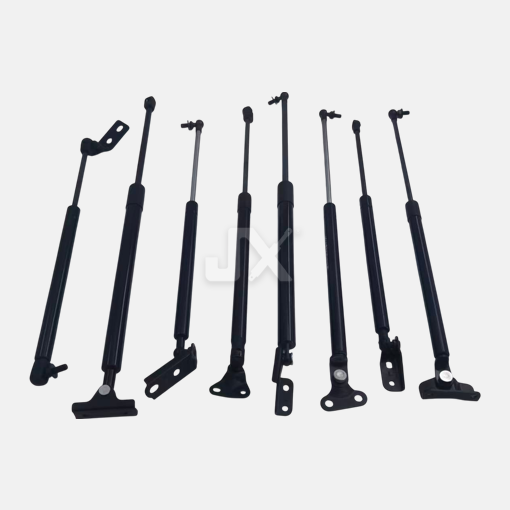
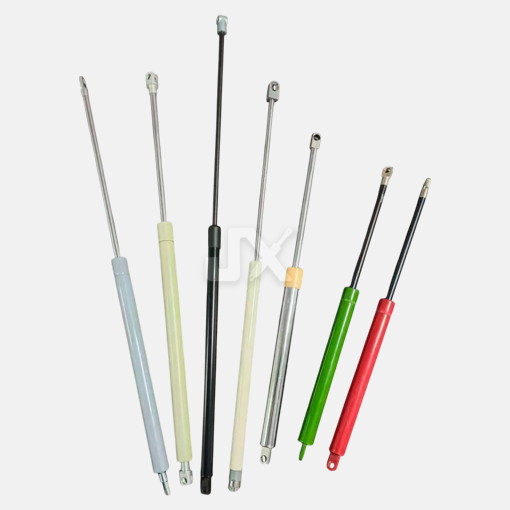
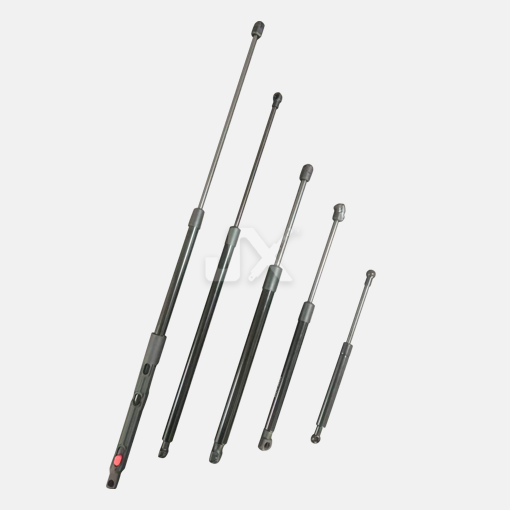
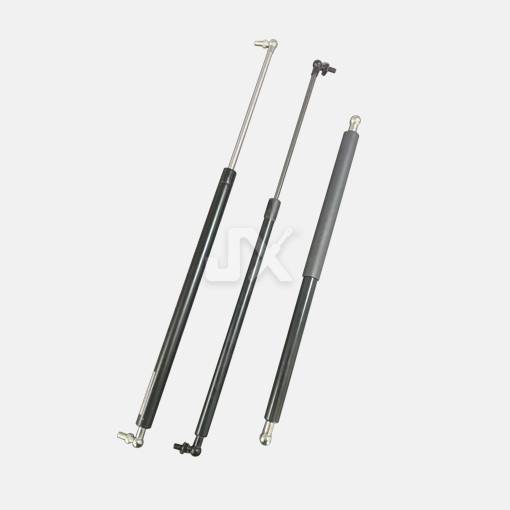
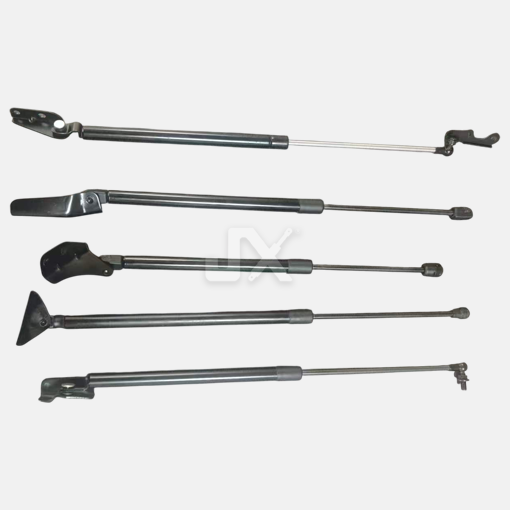
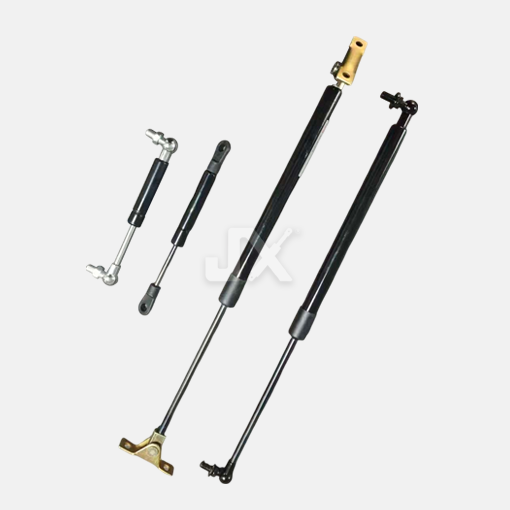
A trunk gas spring (sometimes called a gas strut, lift support, or boot strut) is a sealed cylinder of steel or aluminum filled with pressurized nitrogen and lubricating oil. A piston rod moves in and out of the cylinder. It stores energy when pressed down and releases it to raise and hold a trunk lid, hatch, or tailgate open. JX was founded in 2002. Since 2002, JX has been manufacturing OEM and aftermarket trunk gas springs in Xingtai, Hebei, as a reliable trunk gas spring producer. Our trunk gas springs are exported to more than 40 countries. Every unit ships IATF 16949- and ISO 9001-certified, with customizable length, pressure, and end fittings starting at a 50-piece MOQ. Reach the technical team at jx@jxgasspring.com for spec sheets and pricing.
What Are the Main Components Inside a Trunk Gas Spring?
All trunk gas springs have five common pieces, independent of manufacturer or vehicle use. The exterior of the design seems basic, but the precise production tolerances determine how long the item will endure during everyday riding.
The Sealed Steel Cylinder and Piston Rod
It is a sealed tube of steel or aluminum, open at one end, containing a hardened, chrome-plated rod that expands and retracts. The rod bears the load. It requires a smooth, corrosion-resistant surface. Pitting on the rod will harm the internal seals after a few thousand cycles.
Nitrogen Gas and Damping Oil
A piston inside the cylinder divides a chamber of nitrogen from a tiny reservoir of oil. Compressing the rod squeezes the gas into a smaller volume, increasing internal pressure and storing energy. Releasing the lock allows the pressure to force the rod back out. At maximum extension, the piston has a small hole, which allows oil to pass through and slow the rod down, so that the lid does not pop open or slam shut.
End Fittings and Seals
The ball sockets, eyelets, or studs link the trunk gas spring to the car body and the lid bracket. The rod moves smoothly with the gas and oil kept in by the O-ring and wiper seals. JX makes these seals using a special rubber composition engineered to resist constant exposure to road salt, UV radiation, and temperature extremes ranging from -40°C to +80°C.
How Much Force Does a Trunk Gas Spring Need?
Force selection depends on lid weight, the distance from the hinge to the center of mass, and the mounting angle of the strut. A miscalculated Newton rating causes a lid that will not stay open or one that flies up too fast, and sizing errors above roughly 20% commonly lead to premature failure.
Most passenger vehicles use two trunk gas springs working together, so each unit only needs to supply half the total counterbalancing force. Heavier tailgates and pickup bed covers sometimes need three struts or a higher individual Newton rating.
| Application | Typical Lid/Panel Weight | Common Force per Strut |
|---|---|---|
| Compact sedan trunk lid | 6 – 10 kg | 150 – 300 N |
| Mid-size sedan trunk lid | 10 – 15 kg | 250 – 450 N |
| SUV rear hatch / tailgate | 15 – 25 kg | 400 – 700 N |
| Pickup bed / tonneau cover | 20 – 35 kg | 600 – 1000 N |
Force Calculation Basics
Engineers multiply the panel weight by the distance from the hinge to its center of gravity, then divide that figure by the number of struts and their mounting distance from the hinge line. JX runs this calculation for every custom order, matching stroke length and pressure to the customer's CAD drawing before production starts.
Common Newton Ratings by Vehicle Type
Aftermarket buyers should always confirm the OEM Newton rating stamped on the old part rather than guessing from vehicle size alone. Two vehicles in the same class can specify different force values depending on hinge geometry.
What Causes Trunk Lids to Fall Instead of Staying Open?
Almost usually, a trunk lid that falls down by itself has lost its internal gas pressure. For years, small gas molecules have seeped past the piston seal. It is a slow process.
The symptom is worse in cold weather, since nitrogen shrinks in the cold and hence the pressure within reduces even more. A trunk gas spring that keeps the lid open in summer may droop considerably in winter, indicating that the loss of pressure is beyond a safe limit.
Seal Degradation and Gas Leakage
Rubber seals harden and break with time, exposure to UV light, and exposure to road chemicals. Once the seal lets off the rod, the gas leaks out slowly until the strut can no longer hold the lid up.
Age and Cycle Count
The majority of vehicle boot struts will break at some point between 50,000 and 80,000 open-close cycles, which usually works out to be between five and eight years of regular residential usage. Replacing a trunk gas spring before it fails means the lid won’t suddenly drop and squeeze fingers or harm cargo.
How Do Temperature Changes Affect Gas Spring Performance?
In a sealed cylinder, you couple gas pressure to temperature. Heat expands the nitrogen and somewhat increases force production, whereas cold shrinks it and lessens lift. A good-grade trunk gas spring is designed for operation in a narrow band of performance across the whole specified temperature range.
Cold-Weather Performance
Markets such as Russia and Central Asia take automobile seals to their limits, with winter temperatures often dipping below -30°C. For these temperatures, JX created a rubber sealing compound, tested from -40°C to +85°C, that limits pressure loss to below 5% per year, ensuring the trunk gas spring is still responsive after a cold overnight parking session.
Heat and Pressure Expansion
High summer heat within a closed trunk may drive cylinder temperatures far above ambient air temperature. Frequent heat cycling may lead to earlier oil breakdown and seal deterioration. Struts designed solely for normal conditions might have a shorter service life in hot, humid areas.
Gas Spring vs Mechanical Hinge: Which Supports Trunk Lids Better?
Some low-cost panels still rely on a spring-loaded mechanical hinge instead of a hydraulic strut. Both approaches raise the lid, but they behave very differently in daily use.
| Factor | Trunk Gas Spring | Mechanical Hinge |
|---|---|---|
| Motion control | Smooth, dampened, near-constant force | Jerky, force varies with angle |
| Soft-close action | Yes, via internal oil damping | No, it relies on friction or a separate stop |
| Corrosion resistance | Sealed cylinder, coated rod | Exposed spring, prone to rust |
| Serviceability | Bolt-in replacement, no adjustment | Often needs tension adjustment |
| Weight added to lid | Low, compact cylinder | Moderate, larger hinge assembly |
Weight and Space Efficiency
A trunk gas spring mounts along the inner trunk wall without adding bulk near the hinge line, leaving more usable cargo space than a bulky spring-hinge assembly.
Control and Damping
Because gas struts maintain a relatively flat force curve throughout their stroke, they avoid the sudden snap that a mechanical coil spring can produce near full extension. This matters for soft-close trunk designs on modern passenger vehicles.
What Measurements Are Needed to Replace a Trunk Gas Spring?
Ordering the wrong length or force rating is the most common mistake in aftermarket replacement. Four measurements determine whether a new trunk gas spring will fit correctly.
| Measurement | What to Check | JX Customization Range |
|---|---|---|
| Extended length | Ball-to-ball distance, rod fully out | Fully custom per drawing |
| Compressed length | Ball-to-ball distance, rod fully in | Matched to OEM stroke |
| Force rating (Newtons) | Stamped on old strut body or cap | Custom pressure charge |
| End fitting type | Ball socket size, eyelet, or stud | Ball socket, eyelet, clip, or stud |
Length and Stroke
Stroke length is the physical distance the rod travels between fully closed and fully open. It must match the range of motion of the lid, or the strut can bottom out and damage internal seals.
End Fitting Type
Ball socket sizes commonly measure 10mm or 13mm in automotive applications, though industrial equipment uses other standards. JX offers tool-free installation with pre-installed end fittings matched to the customer's original part number.
Force Rating Verification
Buyers should always pull both old struts and compare their stamped ratings before ordering, since left and right units on the same vehicle sometimes differ slightly by design.
How Can You Tell When a Trunk Gas Spring Is Worn Out?
There are a few warning indicators that show up well before a catastrophic disaster. Early detection prevents the lid from accidentally coming down on goods or hands.
- The lid steadily descends on its own, even without the wind or any other weight to help it along.
- The opening seems much heavier than when the car was new.
- A hissing or whistling sound may be heard from the cylinder when it is moved. This means the seal is leaking.
- You'll see oil residue on the rod or pooling around the bracket.
- One side holds the lid open; the other has plainly given up, resulting in an uneven, twisted motion.
Visual and Performance Warning Signs
Oil staining is the clearest physical clue, since a properly sealed trunk gas spring should never leave residue on the cylinder body.
Cycle Life Expectations
Replacing both left and right struts together, even if only one has failed, keeps lift force balanced and avoids repeat labor costs within a short window.
How Should Trunk Gas Springs Be Maintained for Longer Service?
With a sealed and self-lubricating construction, a properly designed trunk gas spring requires almost no periodic maintenance. A modest list of practices might nonetheless stretch the service life substantially.
- During routine cleaning, wipe the exposed rod with a soft cloth so the road filth does not reach the seal.
- Do not spray solvent-based cleaners directly onto the cylinder body or seals.
- Replace struts in pairs so as to ensure the left and right lift force matching
- Check end fittings for looseness or damaged plastic clips during regular service visits.
- Choose a trunk gas spring that can handle the local environment, particularly if there is a lot of salt or it becomes really cold.
Why Pair Replacement Matters
Uneven force between two struts forces the lid to twist slightly on its hinges every time it opens, which accelerates wear on the hinge pins and the remaining good strut.
Simple Care Habits
Because the internal components stay sealed away from dirt and moisture, external cleaning is the only maintenance a healthy trunk gas spring ever needs.
Conclusion
A trunk gas spring may appear like a basic metal cylinder, but the nitrogen charge, damping oil, and precise seals do the silent task of raising, holding, and gently shutting a trunk lid thousands of times throughout a vehicle’s lifetime. If you know how something works, what force is needed, and how it fails, you are better and quicker at making replacement options. Buyers may sidestep most of the fitting challenges associated with aftermarket sourcing by matching length, stroke, force rating, and climate rating to the original part.
FAQ
1. Can I replace a trunk gas spring myself?
Yes, most passenger vehicles allow a bolt-in replacement with basic hand tools. The ball socket ends simply pop onto the mounting studs, and no gas recharging or special tools are required for a standard trunk gas spring swap.
2. How long do trunk gas springs typically last?
Most units last five to eight years or roughly 50,000 to 80,000 open-close cycles under normal conditions, though harsh climates and heavy daily use can shorten that window.
3. Are trunk gas springs interchangeable between car models?
Only if extended length, compressed length, force rating, and end fitting type all match. Even vehicles that look similar in size can have very different Newton ratings.
4. What's the difference between a gas spring and a shock absorber?
A shock absorber needs an external spring to hold a load and only manages motion damping, while a trunk gas spring both supports the full weight of the lid and dampens its movement in one sealed unit.
5. Can a trunk gas spring be recharged instead of replaced?
Standard automotive units are sealed for life and cannot be safely recharged in the field. Once pressure drops or a seal leaks, replacement is the only reliable fix.
Looking for a Verified Trunk Gas Spring Supplier for Your Next Order?
JX manufactures precision-fit trunk gas springs across more than 5,000 models, backed by a 2-year warranty and 20–30 day standard lead times from its Hebei factory. IATF 16949 and ISO 9001 certification, custom branding, and sea or air shipping are available on every order. Email jx@jxgasspring.com as your trunk gas spring supplier for a quote today.
References
1. Explain That Stuff (2022). "How Gas Springs Work." Used to describe the internal energy storage and release mechanism. https://www.explainthatstuff.com/gassprings.html
2. WDS Components (2024). "All About Gas Struts." Used to describe cylinder, piston, and oil chamber construction. https://www.wdscomponents.com/en-us/all-about-gas-struts
3. Camloc (2023). "How Do Gas Struts Work?" Used to describe rod, seal, and orifice function. https://camloc.com/us/help-centre/how-gas-struts-work/how-do-gas-struts-work/
4. National Highway Traffic Safety Administration (2024). "Child Safety: Trunk Entrapment." Referenced for background on trunk lid design and U.S. federal safety requirements. https://www.nhtsa.gov/road-safety/child-safety
5. Aritech Gas Springs (2026). "Gas Struts Explained: Force, Measurement and Selection Guide." Used for force rating ranges, cycle-life data, and sizing error thresholds. https://aritechgassprings.com/gas-struts-explained/
6. Antpedia / General Administration of Quality Supervision, Inspection and Quarantine of the PRC. "GB/T 25751-2010: Compression Gas Spring Technical Specification." Used for terminology, marking, and technical requirement standards referenced throughout. https://www.antpedia.com/standard/en/6157252.html