What should be paid attention to in installation and compatibility testing of an electric tailgate strut?
The electronic tailgate strut uses a motor-powered mechanism to open and close SUV and MPV tailgates on demand, eliminating human lifting. Get this part wrong, and it may cost more than money – it can slam a tailgate shut, drain a battery, or squeeze a hand. This document covers the mechanical fit inspections, electrical compatibility stages, sensor validation, and test methodologies that are needed by installers and procurement teams prior to authorizing a part number. Our team tests each electric tailgate strut against vehicle-specific load and climatic profiles using internal test data from Xingtai Juxiang Machinery Manufacturing Factory before it ships.
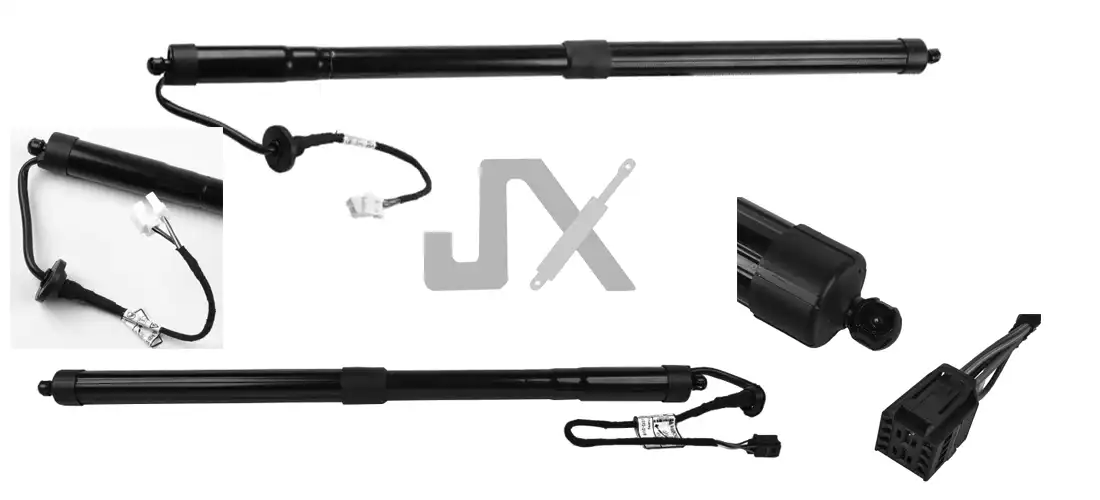
Quick Answer: What to Check Before You Trust an Electric Tailgate Strut
The short version: check mechanical fit, electrical compatibility, sensor behavior, structural load, and weather resistance before the strut ever enters production or retrofit kits. Test it as part of the full tailgate system, not as a motor and screw.
The Five-Point Compatibility Checklist
Before you approve an electronic tailgate strut for a vehicle program or retrofit kit, go through these five areas. Everyone has generated actual returns and warranty claims when not sourced.
- Mechanical geometry: The extended length, compressed length, stroke, ball-stud size, and bracket angle all have to match the original tailgate hinge locations within a few mm; otherwise, the strut will bind under its own motion and wear out early.
- Electrical rating: The voltage, peak current, and fuse size must match the vehicle harness; a mismatched electric tailgate strut might blow fuses or drain a battery overnight in cold regions.
- Sensor and Control Logic: The position sensors, anti-pinch thresholds, and controller protocol (CAN or analog) must be compatible with the vehicle’s body control module; otherwise, the tailgate may stop short or reverse abruptly.
- Environmental sealing: Dust, humidity, and vibration resistance are factors in whether the unit survives tropical storage in Southeast Asia or -40°C starts in Russia and Kazakhstan.
- Load and cycle validation: Static and dynamic load testing validates the actuator maintains the tailgate open without drift and endures numerous daily cycles without noise increase.
Five tests capture the majority of faults before a single unit enters a customer’s car. Miss any one of these, and it tends to show up later as a warranty claim, not a lab problem.
Why This Checklist Matters for Buyers and Installers
Wholesale buyers worry about recurring purchases and low return rates. Custom and OEM purchasers worry about passing vehicle-level validation the first go. When a part is fitted “close enough” instead of perfectly, both organizations lose money. A fully extended strut that's 8mm too long can still shut but will increase side load that may limit gearbox life by months. I have observed this identical pattern during supplier audits: the item passed visual inspection, but failed after 3,000 open-close cycles.
What Is an Electric Tailgate Strut and How Does It Work?
An electric tailgate strut is a power-driven linear actuator. It replaces or enhances the manual gas spring on most hatchbacks and provides the tailgate with motorized, remote-controlled movement in lieu of the spring-assisted manual lift.
Core Components Inside the Housing
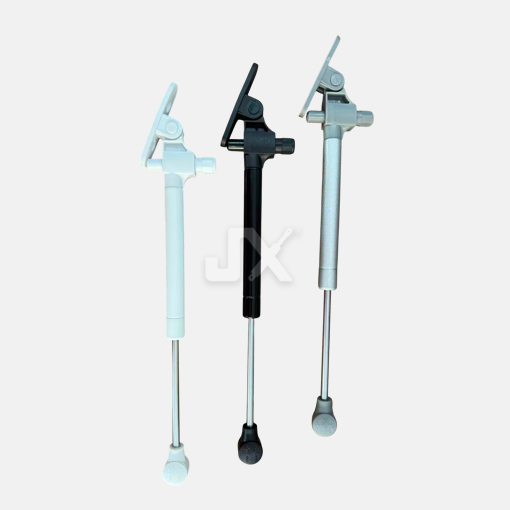
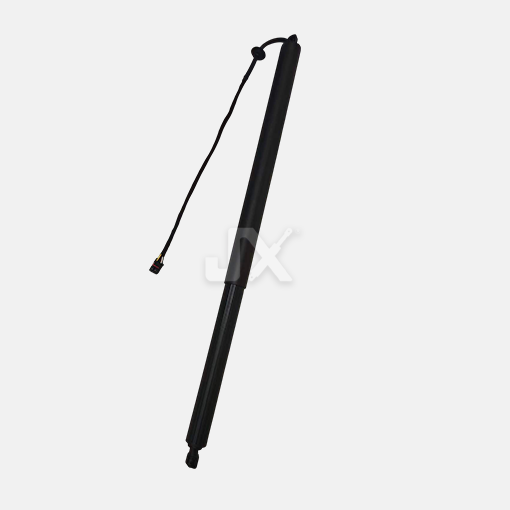
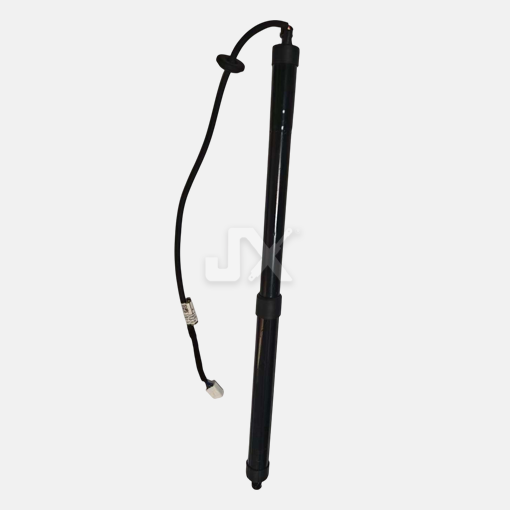
A functional unit is not a motor stuck to a tube. It usually includes a DC motor, gearbox, lead or ball screw, telescopic tube, ball sockets at either end, Hall-effect position sensor, and wire hookup to a control module. Instead of buying loose parts and constructing a kit, we manufacture all of them in-house at our plant – motor winding, damping structure, sealing, and sensor calibration. This setting is important because an incorrect motor-to-gearbox ratio is one of the main reasons why aftermarket kits operate the tailgate slowly or make noise.
How the Opening and Closing Cycle Runs
The signal to the control module comes via a key fob, a dashboard button, or a foot sensor located under the bumper. This in turn drives the screw mechanism which extends or retracts the electric tailgate strut at a predetermined rate. The Hall sensor gives position data to the controller to instruct it when to slow toward the end of the journey and when to halt. Larger SUVs and vans often have two actuators that operate in sync, which is why synchronization testing is just as vital as single-unit performance.
Electric Strut vs Gas Strut: Key Differences
| Criterion | Electric Tailgate Strut | Gas Strut |
|---|---|---|
| Operation | Powered opening and closing | Manual lifting with spring assist |
| Control | Remote, button, sensor, or ECU input | Usually none |
| Load compensation | Motor and gearbox controlled | Gas pressure assisted only |
| Integration | Requires wiring and control logic | Minimal electrical work |
| Typical buyer | OEM platforms, upgrade-kit sellers | Standard hatchback replacement |
| Main failure risk | Electrical faults, sync errors, current draw | Pressure loss over time |
How Do You Choose the Right Electric Tailgate Strut Before Installation?
First step in picking the proper part: dimensions. Not a catalog shot. Mass of the vehicle, stroke, and electrical architecture will determine whether an electric tailgate strut will operate on day one or fail in the first cold month.
Matching Stroke, Load, and Voltage to the Vehicle
Before obtaining samples, please measure the fully extended length, completely compressed length, stroke, mounting point spacing, and ball stud diameter of the original item. Add rated voltage — usually 12V for passenger SUVs and MPVs — plus peak current, standby current, operating speed, and projected duty cycle. But the heft of the tailgate alone does not give you the true load. The motor needs to overcome resistance from hinge friction, weather-seal resistance, and lever geometry on every single cycle.
12V vs 24V Systems and Sensor-Equipped Variants
| Decision Factor | 12V System | 24V System |
|---|---|---|
| Common application | Passenger SUVs, MPVs, light vehicles | Commercial vehicles, select industrial platforms |
| Current for equal power | Higher | Lower |
| Wiring sensitivity | More sensitive to voltage drop | Different insulation and controller needs |
| Compatibility risk | High if ECU expects a different voltage | High if wired into a 12V harness |
Struts with sensors provide position precision, synchronization between dual actuators, and obstacle detection. However, they increase wire complexity and controller requirements. A simple strut without sensors may be appropriate for a simple manual-switch retrofit kit, while a CAN-integrated device is appropriate for a factory assembly line that demands complete anti-pinch functionality.
Evaluating Supplier Test Data and Production Consistency
Before making a trial order, get dimension drawings, electrical pinouts, and load, speed, noise, and cycle-life test data from any provider. At Xingtai Juxiang, every electric tailgate strut lot is traceable to its motor, gearbox, and sensor lot, which helps when a distributor has to explain a field failure three years after the sale. Our rubber seal compound is rated at -40°C to +85°C with pressure loss under 5% over one year – statistics that apply directly to customers shipping into Russia, Central Asia, or coastal Southeast Asia.
What Vehicle Factors Determine Electric Tailgate Strut Compatibility?
Compatibility is not only about the part number matching a catalog entry. The tailgate's structure, hinge condition, and intended program type all change what "fit" actually means.
Mounting Geometry, Ball Studs and Bracket Orientation
Before purchasing, compare the ball-stud type, bracket form, mounting orientation, and fastener size to the original electric tailgate strut. Check expanded and compressed lengths at every tailgate position, not only completely open and totally closed. Measure clearance to body panels, hinges, trim, glass, and weather seals since a strut that clears while at rest may still hit trim mid-travel. Check tailgate torsion and left-right symmetry — an older car with a slightly drooping hinge may load one side of a twin strut configuration more than the other.
Fitment Differences Across OEM, Retrofit and Fleet Programs
Before a single unit gets to the assembly line, OEM programs need CAD data, design validation, and change-control records. Retrofit and distributor programs need extensive vehicle coverage, accurate fitting charts, and comprehensive kit packaging with instructions since the end consumer usually installs it without a workshop manual. Fleet and maintenance programs are all about replacement accuracy, easy wiring, and troubleshooting advice above all else, since downtime on a commercial vehicle loses money every hour it sits idle.
Case Study: Validating Fitment Across Three SUV Platforms
During a 2024 development project, our engineering team performed compatibility testing of an electric tailgate strut on three mid-size SUV platforms for a Southeast Asian retrofit kit distributor. We created 60 prototype units and put each through 5,000 open-close cycles in a climate room at temperatures ranging from -20°C to 60°C. Two platforms stayed the same. The third revealed a 12% increase in current draw after 3,000 cycles, caused by a 3-degree mounting-angle mismatch that induced side stress on the lead screw. We changed the bracket shape and re-ran the batch. Current draw was within 4% of baseline. This averted what would have certainly been a field return rate in excess of 5% in the first year based on trends we have seen across comparable side-load mismatches in earlier projects.
How Should an Electric Tailgate Strut Be Installed Step by Step?
A correct installation protects both the warranty and the installer. Rushing the mechanical steps is the most common reason a good part gets blamed for a bad fit.
Pre-Installation Inspection
Support the tailgate mechanically before removing the original strut — an unsupported tailgate can drop suddenly and cause injury. Record the original strut's length, orientation, connector type, and wiring route before disconnecting anything. Inspect hinges, brackets, ball studs, and seals for damage or corrosion, since reusing a worn bracket with a new actuator just transfers the old problem to the new part.
Mechanical Installation Sequence
Follow a fixed sequence every time rather than relying on memory, especially across a team installing multiple units per day.
- Disconnect the vehicle battery following the vehicle's service procedure.
- Secure the tailgate with an approved mechanical support fixture.
- Remove the original strut and inspect the mounting hardware for wear.
- Install the new electric tailgate strut in the orientation specified by the drawing.
- Confirm free movement through the full opening range by hand before powering up.
- Route wiring away from hinges, sharp edges, and pinch points.
- Add protective sleeving, grommets, and strain relief at every connector.
- Reconnect the battery and run the control system's initialization sequence.
Wiring Routing and Protection
Document battery positive and ground, motor polarity, Hall sensor lines, control-module trigger input, and manual-switch wiring in a single diagram kept with the install kit. Never rely on wire color alone to confirm polarity — always check against the supplier's pinout drawing or the vehicle's own service documentation, since different production batches sometimes use different wire colors for the same function.
How Do You Verify Motor and Power Supply Compatibility?
Electrical mismatches cause more field failures than mechanical ones, mostly because they are harder to spot during a quick visual inspection.
Voltage, Current, and Fuse Checks
Verify nominal voltage, maximum starting current, stall current, and the fuse or relay rating before connecting the strut into any vehicle harness. Check voltage loss during peak operation, since a voltage drop above 10% under load generally indicates inadequate wiring or a loose ground connection, not a broken actuator. You will also need to check the motor polarity and direction, as a reversed connection may cause the tailgate to shut when it is supposed to open!
Control Module and Network Integration
Other kits utilize a separate switch, others use a control module that comes with the kit, and many factory-integrated systems employ CAN or LIN communication associated with the vehicle's body control module. A universal type electric tailgate strut kit for aftermarket use will need its own controller and will not communicate with the original ECU unless an interface adaptor is used. Knowing this before you install will save you hours of problems afterward.
Field Measurement Protocol
Check voltage and continuity using a multimeter. Then measure current during starting, normal travel, and a simulated stall. Test the connection retention and water-ingress resistance simultaneously since a loose connector often shows up as an intermittent defect weeks after installation, not an abrupt failure.
What Sensor Checks Matter for Safe Electric Tailgate Operation?
Sensors are what separate a simple powered strut from a system that stops safely when something gets in the way.
Sensor Types Used in Powered Tailgates
Hall sensors monitor motor rotation for position estimates, limit switches validate end-of-travel points, and current sensing identifies blockage or stall circumstances. Latch-position sensors and pinch sensors give additional degrees of protection, especially for cars marketed in areas with stringent child safety standards. The combined intelligent sensor module and control module provides sensitive responsiveness and safe anti-pinch behavior during the complete stroke, especially the final few centimeters of closing travel when the pinch danger is largest.
Validating Anti-Pinch and Obstruction Response
Test for accurate detection of open and closed position, then intentionally create an impediment during both opening and shutting to verify that the tailgate stops or reverses as planned. Watch out for false triggering from vibration or interference from surrounding accessories. An electric tailgate strut that reverses on a bumpy road is as big a safety hazard as one that fails to reverse on a real pinch incident. Also check whether manual operation still works after a power failure, since every car owner needs that backup eventually.
How Do You Test Electric Tailgate Strut Performance Before Approval?
Performance testing needs to happen on the full tailgate assembly, not on a bench with the electric tailgate strut isolated from real load and geometry.
Functional and Load Test Plan
A proper test run records opening and closing time, final position accuracy, motor current and voltage through the full cycle, noise level, and synchronization between dual struts where fitted. Repeated-cycle durability testing — we run most validation batches to at least 10,000 cycles — reveals wear patterns that a single-day test will never show.
Quality Verification Table
| Test Area | Example Verification | Evidence Produced |
|---|---|---|
| Dimensions | Length, stroke, bracket position | Inspection or CMM report |
| Electrical | Voltage, current, polarity, sensor output | Electrical test report |
| Performance | Speed, load, noise, cycle life | Functional test report |
| Environment | Water, dust, temperature, corrosion | Lab or production report |
| Safety | Obstruction, stall, manual release | Validation record |
| Traceability | Batch, motor, gearbox, operator, date | Serial or lot record |
Environmental Standards to Reference
Instead of blanket compliance, refer to the particular standard that applies to each test. ISO 16750 establishes environmental and electrical load tests for road vehicle equipment (ISO, 2023). ISO 20653 provides ingress protection ratings for dust and water for elements in vehicles (ISO, 2013). The salt-spray corrosion testing for coated housings is governed by ISO 9227 (ISO, 2017). The IEC 60068 standard specifies test techniques for the environment that are used for temperature and vibration cycling (IEC, 2021). SAE International (2020) promulgates environmental norms for electronic equipment in heavy-duty and commercial vehicle applications. These provide purchasers a tangible item to ask for, not a generic “waterproof” assertion on a data sheet.
What Causes Electric Tailgate Struts to Fail After Installation?
Most field complaints trace back to a handful of repeat causes, and almost all of them are checkable before the vehicle leaves the shop.
Common Symptoms and Root Causes
| Symptom | Likely Cause | First Check |
|---|---|---|
| No movement | Blown fuse, poor ground, failed controller | Battery, fuse, connector |
| Slow movement | Low voltage, excess friction, dry hinge | Voltage under load |
| Stops halfway | Sensor fault, incorrect calibration, obstruction | Reinitialize and inspect path |
| Reverses unexpectedly | Anti-pinch trigger, current spike, misalignment | Seal pressure and bracket fit |
| Uneven dual-strut movement | Synchronization failure | Compare actuator travel data |
| Excessive noise | Gear wear, side load, loose fasteners | Mounting torque and alignment |
| Water-related failure | Damaged seal, poor connector protection | Housing and wiring entry points |
A Controlled Troubleshooting Sequence
A disciplined sequence saves time and avoids swapping good parts for bad ones. Confirm the symptom and the operating conditions it appeared under, then check mechanical free movement by hand. Measure voltage and current under load, inspect connectors and sensor signals, and read any available control-module diagnostic codes. Compare readings against a known-good unit before replacing anything, since many "defective" electric tailgate struts turn out to be wiring or grounding issues instead.
How Can Installation Errors Create Safety and Warranty Risks?
A good part installed wrong still produces a bad outcome. Most warranty disputes I have reviewed trace back to installation shortcuts rather than part defects.
Major Risk Points During Installation
Several specific mistakes show up again and again across field reports and warranty claims, and each one is preventable with a short checklist before the tailgate closes for the first time.
- Incorrect orientation or forced alignment: Installing the strut under side load from day one shortens gearbox and seal life, sometimes by more than half of the rated cycle count.
- Dropped tailgate during removal: Skipping a mechanical support fixture risks injury and can bend brackets, which then makes the new strut look defective when the real problem is a warped mounting point.
- Pinched or chafed wiring: Harness routed too close to a hinge will wear through insulation within months, causing intermittent faults that are hard to diagnose later.
- Wrong fuse rating: An oversized fuse can mask a developing motor fault until it causes a bigger failure, while an undersized one causes nuisance trips that frustrate the end user.
Regional Compliance and Documentation Gaps
Different markets expect different proof before approving a part. European buyers expect ISO 9001 or IATF-style documentation, REACH and RoHS declarations (ECHA, 2024), and third-party inspection reports. Russia and CIS buyers require EAC/TR CU certification and Russian-language labeling, plus confirmed -40°C start-up performance. South American importers expect Portuguese or Spanish labeling and CIF terms into Santos or Buenos Aires. Matching the right documentation to the right market avoids customs delays that can sit a container at port for weeks.
Conclusion
Installing and validating an electric tailgate strut comes down to five things: mechanical fit, electrical compatibility, sensor behavior, structural load, and weather resistance. Skip any one of these and the failure shows up later as a warranty claim instead of a lab defect. Whether you are sourcing a batch for an aftermarket kit or validating a part for a CKD assembly line, test the strut as part of the full tailgate system, document every measurement, and match the paperwork to the market you are shipping into.
FAQ
1. What is an electric tailgate strut?
An electric tailgate strut is a motorized linear actuator that opens, closes, or assists a vehicle tailgate. It usually includes a motor, gearbox, screw mechanism, sealed housing, mounting ends, and position feedback sensors.
2. How do I choose an electric tailgate strut for an SUV?
Measure the original extended and compressed lengths, stroke, mounting points, tailgate mass, and electrical system voltage. Then confirm controller type, sensor requirements, weather resistance, noise level, and expected duty cycle before placing an order.
3. Can a gas strut be replaced with an electric tailgate strut?
Usually yes, but the vehicle may need new wiring, a control module, switches, sensors, and reinforced brackets. Check geometry, load capacity, clearance, and manual-release function before finalizing the swap.
4. Is a 12V or 24V electric tailgate strut better?
Neither is better on its own. 12V actuators suit most passenger SUVs and MPVs, while 24V units suit commercial platforms. The vehicle's own electrical architecture decides which one is compatible.
5. What causes an electric tailgate strut to stop halfway?
Common causes include incorrect calibration, obstruction detection, low voltage, sensor failure, or mechanical misalignment. Check free travel by hand, then measure voltage and current before replacing the unit.
6. Are electric tailgate struts waterproof?
Many are built with dustproof, waterproof, and vibration-resistant housings, but actual protection depends on seals, connectors, and installation quality. Ask for an IP rating or environmental test report rather than assuming full waterproofing.
Ready to Validate an Electric Tailgate Strut for Your Next Program?
JX has produced gas springs and electric tailgate struts since 2002 at our Xingtai, Hebei facility, backed by 20 technical staff and full in-house control over motor, sealing, and sensor integration. If you need a reliable electric tailgate strut manufacturer for OEM validation, CKD kits, or aftermarket upgrade programs, send your vehicle model, stroke length, voltage, and target volume to jx@jxgasspring.com. Our team can return a fitment review and sample plan within days, not weeks.
References
1. International Organization for Standardization, ISO 16750: Road Vehicles — Environmental Conditions and Testing for Electrical and Electronic Equipment (ISO, 2023). https://www.iso.org/standard/68243.html — cited in the Environmental Standards to Reference section.
2. International Organization for Standardization, ISO 20653: Road Vehicles — Degrees of Protection Against Foreign Objects, Water and Access (ISO, 2013). https://www.iso.org/standard/56198.html — cited in the Environmental Standards and Sealing sections.
3. International Organization for Standardization, ISO 9227: Corrosion Tests in Artificial Atmospheres — Salt Spray Tests (ISO, 2017). https://www.iso.org/standard/69294.html — cited in the Quality Verification Table and Environmental Standards section.
4. International Electrotechnical Commission, IEC 60068: Environmental Testing (IEC, 2021). https://webstore.iec.ch/publication/4011 — cited in the Environmental Standards to Reference section.
5. SAE International, SAE J1455: Recommended Environmental Practices for Electronic Equipment Design in Heavy-Duty Vehicle Applications (SAE International, 2020). https://www.sae.org/standards/content/j1455_202007/ — cited in the Environmental Standards to Reference section.
6. European Chemicals Agency, Understanding REACH (ECHA, 2024). https://echa.europa.eu/regulations/reach/understanding-reach — cited in the Regional Compliance and Documentation Gaps section.
About the Author
Zhao Ming is a Technical Consultant at Xingtai Juxiang Machinery Manufacturing Factory, where he supports engineering validation for gas springs and electric tailgate struts sold across more than 40 countries. He has spent over a decade working on actuator testing, sealing design, and vehicle-level compatibility review for OEM and aftermarket clients across Africa, Central Asia, Southeast Asia, and South America.