What are the material selection and processing requirements for damper gas springs?
The correct hydraulic damper selection depends on matching the material grade and manufacturing technique to the load, stroke, temperature, and corrosion exposure. This document details the rod steel grades, seal compounds, surface coatings, and manufacturing controls that hardware importers, appliance manufacturers, and OEM customers need to be aware of before signing off on a supplier. You’ll discover decision tables, a brief field case from a Southeast Asia cabinet-hardware importer, and a checklist you can pass to your quality team now.
Answer Engine Summary: Key Takeaways
- Damping force over time is maintained in hydraulic cabinet door, lid, or seat mechanism dampers by the use of alloy steel rods, precise seals, and stable hydraulic oil.
- Seal life and leak resistance are determined by rod surface hardness, roundness, and roughness.
- Corrosion protection (zinc-nickel plating, stainless steel, chrome-free coatings) is what determines if a damper can survive in coastal, tropical, or sub-zero markets.
- Heat treatment enhances wear resistance, but distortion and residual stress need to be strictly controlled.
- Buyers should seek mill certifications, salt-spray data, cycle test records, and pressure-loss numbers before making a trial order.
- Wholesale customers want batch-to-batch uniformity. OEM customers demand feel samples, NDA protection, and private label packaging.
Direct Answer: To make reliable hydraulic damper units, you need to use alloy or stainless steel cylinders and rods, chemical-compatible seals (NBR, FKM, or PU), precision machining to meet tight roundness and roughness targets, controlled heat treatment, and documented leakage and force testing before they leave the factory.
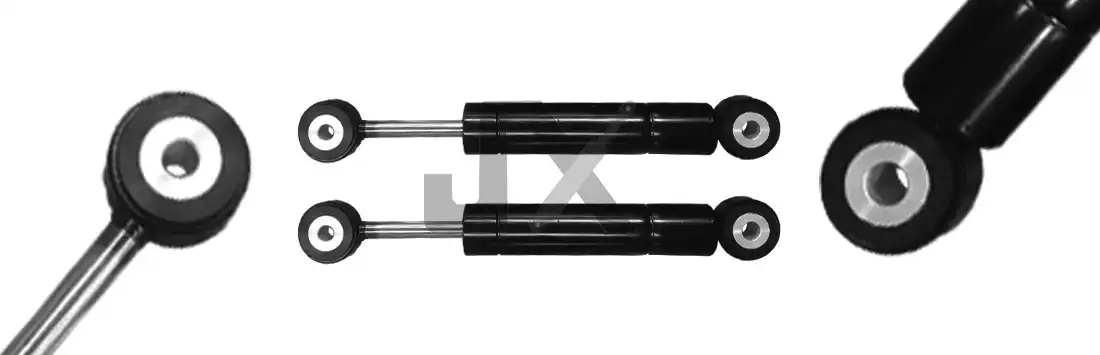
What Materials Are Commonly Used for Damper Gas Springs and Hydraulic Dampers?
Scope and Definitions Buyers Should Confirm First
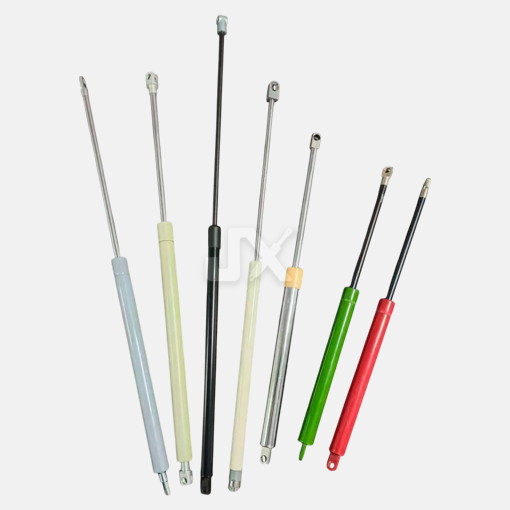
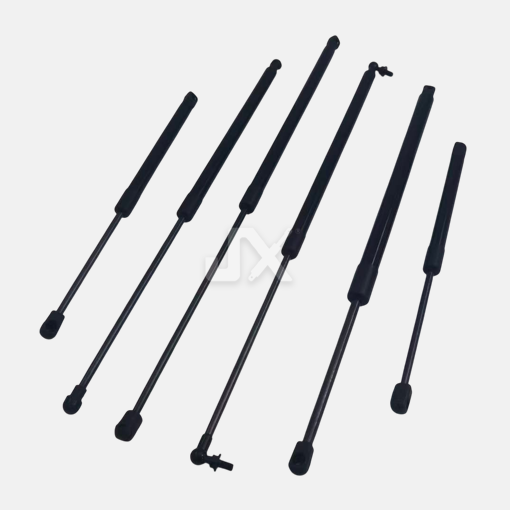
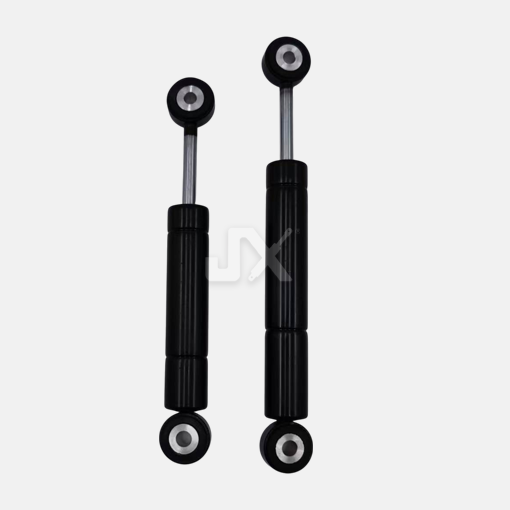
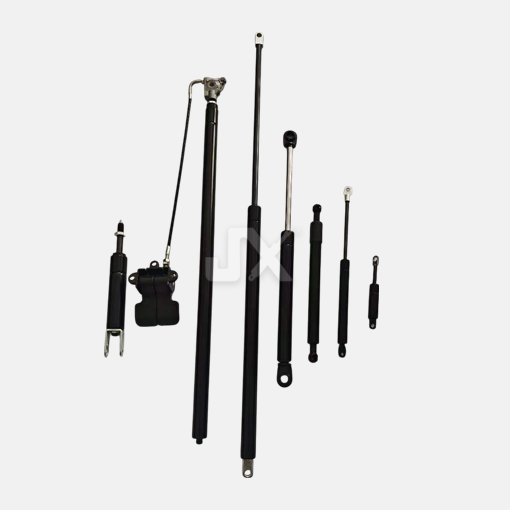
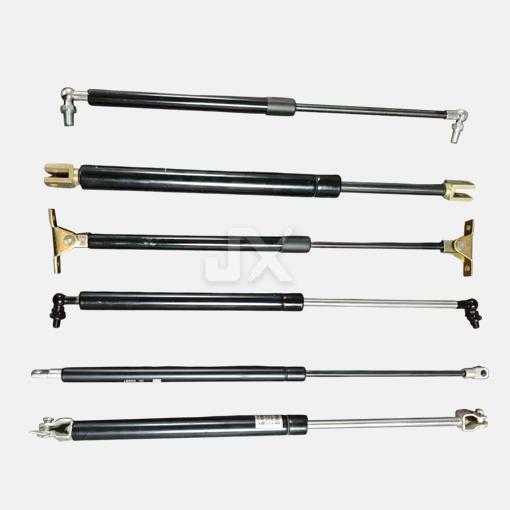
A gas spring is a gas-filled component that pushes or supports a load. Some add oil to adjust the speed. A hydraulic damper does this differently, pushing fluid through a small opening to reduce the motion with little or no push-back force. In sourcing, these phrases are often confused and result in misquotes. For example, a sanitaryware business requesting a "soft-close spring" may really want a one-way damper for a toilet seat, not a two-way gas strut for a lid that must remain open.
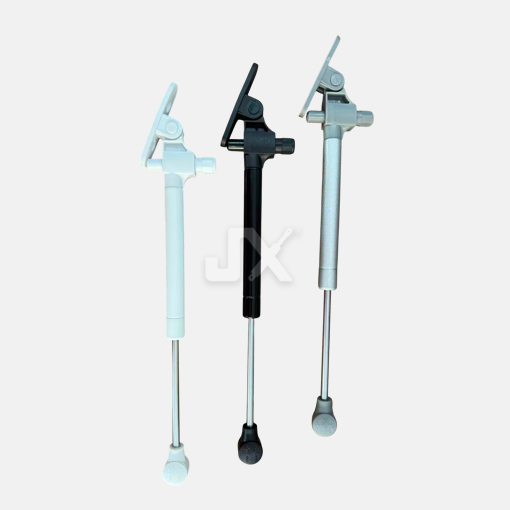
Pure damping units are used for cabinet-door hinges, appliance lids and car glove boxes, rather than force-assist springs. Early knowledge of this discrepancy saves weeks of sample rework.
Common Materials by Component
The table below sets out what each part of a typical hydraulic damper is made from, and why.
| Component | Common materials | Main selection factors |
|---|---|---|
| Cylinder (pressure tube) | Carbon steel, stainless steel, aluminum alloy | Burst pressure, weight, corrosion exposure |
| Piston rod | Hardened alloy steel, stainless steel | Surface hardness, buckling resistance, rust risk |
| Piston | Steel, aluminum, engineering polymer (POM, PA) | Strength, friction, weight |
| Valve / orifice | Stainless steel, brass, hardened steel | Flow stability, long-term wear |
| Seals | NBR, FKM, EPDM, PU, PTFE | Oil compatibility, temperature range |
| End fittings | Carbon steel, stainless steel, aluminum, nylon | Mounting load, snap-fit or bolt-on need |
Material Choices by Target Application
Distinct groups of buyers need distinct material rationale. Here's how it breaks down across the most prevalent applications in our order book:
- Cabinet doors and furniture covers: Most retail-ready kitchen and wardrobe lines are covered with carbon steel cylinders, zinc-plated, since the interior exposure is light and piece pricing drives the deal.
- Appliance lids (washing machines, ovens): stainless rod with NBR seal manages frequent steam and detergent contact without rust spots on the aesthetic surface.
- Automotive glove box and console seals: FKM or PU seals can withstand heat spikes in the cabin beyond 80°C and provide a constant dampening force for 10 years of vehicle life.
- Toilet seat and sanitaryware mechanisms: Compact one-way hydraulic dampers with PTFE-lined seals provide silent, slow-close action certified for 50,000+ open-close cycles.
Window and door hardware: Aluminum or coated-steel bodies withstand outside UV and moisture without adding weight to the sash.
These selections directly affect warranty cost. A supplier changing grades without notification results in returns long after the first excellent batch delivered.
How Does Material Choice Affect Hydraulic Damper Performance?
Properties That Control Damping Behavior
The rod steel grade, the seal compound, and the oil viscosity determine the real “feel” a buyer checks by hand. The yield strength and fatigue strength determine how many open-close cycles a rod will endure before it bends or fractures. The elastic modulus determines how much the rod will bend when a side load is applied, which is important for grab-handle and glove-box installations that experience off-axis forces. As the temperature varies, the oil viscosity changes, and the seals may fit differently. This is why a damper calibrated for 20C showroom testing may feel stiff or loose when sent to Siberia or the Gulf.
Factors That Decide Damping Stability
Buyers want to know why two hydraulic dampers with the same catalog number feel different six months later. The answer is fivefold:
- Pressure retention is determined by seal compression set and rod surface polish. A rough rod will wear the seal lip out faster and enable pressure to bleed out.
- The stability of operating speed is decided by the accuracy of orifice machining. A 0.02mm variation in valve bore might vary closing time by 20% or more.
- Rougher rods demand more energy to begin moving, which feels jerky to the end user, and friction and breakaway force depend on rod roughness (Ra value) and seal material.
- With rapid repeating cycles, the quantity of heat build-up is a function of oil viscosity grade and cylinder wall thickness. Thin-wall aluminum cylinders dissipate heat quicker than thick steel.
- The fluids dictate whether the seal will expand or shrink throughout a service life of many years depending on the compatibility of the hydraulic oil and seal compound.
These five locations are where most of the complaint tickets come from for purchasers who switch providers mid-contract.
Decision Checklist Before You Spec a Damper
Before locking a drawing for a hydraulic damper, examine load or damping force, stroke length, cycle frequency, ambient temperature range, exposure to salt, humidity, or dust, and whether loading is static, dynamic, or impact-driven. Also examine the service-life target and the documentation your market demands — EAC for Russia and Central Asia, REACH/RoHS for Europe, or simple conformity declarations for Africa and South America. Skip this step, and you’ll understand why it’s the #1 reason trial orders fail to validate.
Which Materials Provide Better Corrosion Resistance for Hydraulic Dampers?
Comparing Corrosion-Resistant Options
Rust on a visible rod kills a sale faster than almost any other defect, since buyers judge quality by what they can see and touch. The table below compares common protective options.
| Option | Advantages | Limitations | Best fit |
|---|---|---|---|
| Zinc-plated carbon steel | Low cost, decent indoor protection | Coating wears through at contact points | Indoor cabinet and furniture use |
| Stainless steel | Strong rust resistance, clean look | Higher material and machining cost | Washdown, marine, humid climates |
| Zinc-nickel plating | Better salt-spray rating than zinc alone | Needs tighter plating process control | Coastal and tropical export markets |
| Hard chrome plating | Wear resistance plus corrosion protection | Environmental rules limit some processes | High-cycle rods, automotive use |
| Aluminum alloy | Lightweight, naturally corrosion-resistant | Lower hardness than steel | Weight-sensitive appliance lids |
Coating Requirements and Compliance Notes
Coating thickness, adhesion, and salt-spray hours must have a defined test technique, not just a vague assertion. The most often referenced salt-spray standards are ISO 9227 and ASTM B117 (ASTM International, 2019). However, a 96-hour rating does not guarantee precise field life; it merely compares coatings against each other under lab settings. European customers also demand to see REACH and RoHS statements that no banned compounds are present in the plating bath (European Chemicals Agency, 2024).
Corrosion Risks and How Factories Control Them
Three hazards are popping up again and again in our warranty review calls. We also limit the possibility of pitting on the piston rod that might damage the seal lip and cause premature leakage in a hydraulic damper by using chromium or zinc-nickel coating and a final surface check under magnification. A steel rod with an aluminum end cap may corrode galvanically in a humid environment, and the contact points can be eaten through in the course of a year. We employ coated washers or compatible alloys to isolate dissimilar metals. The finish will be protected throughout transit using individual rod sleeves and foam separators. Coating loss is common on long sea journeys to South America and Africa, caused by container loading or rough handling at port.
How Are Hydraulic Damper Rods Processed for Durability?
The Rod Manufacturing Sequence
Rod quality is the most crucial thing in seal life. Here’s the sequence we run: Material grade verification; bar straightening & cutting; CNC turning; threading or end feature machining; heat treatment where the standard calls for it; plating or coating; precision polishing; dimensional inspection; and final cleaning before seal installation
Rod Characteristics That Must Be Checked
These numbers may seem flawless to the eye, yet nevertheless fail early. The straightness and the diameter dictate how evenly the seal grabs around the whole circle. The drag on the seal and the possibility of leakage depend on the roundness and surface roughness, often given as Ra in micrometers. For most cabinet and appliance hydraulic dampers, a sealing zone of 0.2 to 0.4 μm Ra is required. Surface hardness after plating or heat treatment resists scratches during assembly and in use. The thread size and runout are crucial for any damper that has a threaded end fitting instead of a snap clip.
Processing Risks Worth Flagging to Your Supplier
Even if the Ra value seems OK on paper, grinding marks in the wrong direction might form a leak channel along the rod axis. Poor cleaning prior to seal installation might cause metal particulates to score the seal lip during the first few hundred cycles. If the plating thickness is not regulated, the rod will have its final diameter changed enough to either loosen or over-compress the seal fit and reduce service life.
What Surface Treatments Improve Hydraulic Damper Service Life?
Common Treatment Options
Several surface treatments show up across catalogs, and each solves a different problem.
| Treatment | Primary benefit | What to verify |
|---|---|---|
| Zinc / zinc-nickel plating | General and coastal corrosion resistance | Thickness, adhesion, salt-spray hours |
| Hard chrome plating | Wear resistance, low friction | Hardness, thickness, crack-free finish |
| Electroless nickel | Even coating on complex shapes | Phosphorus content, adhesion |
| Nitriding | Hard surface without heavy distortion | Case depth, hardness profile |
| Phosphate conversion | Paint base and light protection | Coverage, follow-up corrosion test |
Matching Treatment to Market Needs
A deal-breaker on winter fleet contracts, Russia & Central Asia purchasers want cold-rated seals and coatings for hydraulic damper units that won’t fracture at -40°C start-up. Buyers in Southeast Asia and South America need UV and humidity protection since the units are typically sitting in open warehouses before they hit the shelves. The sealing system that JX uses is based on a rubber formula that works from -40°C to +85°C, with a pressure loss of less than 5% after one year of storage and usage – numbers we monitor on every manufacturing batch, not only at the sample stage.
How Do Seals Affect Hydraulic Damper Performance?
Seal Material Options and Trade-Offs
The seal is the smallest part by cost but the biggest factor in warranty claims. Here's how the common options stack up.
| Seal material | Advantages | Limitations |
|---|---|---|
| NBR | Low cost, good with mineral hydraulic oil | Limited high-heat and chemical range |
| FKM | High-temperature and chemical resistance | Higher cost, limited low-temp flexibility |
| EPDM | Strong water and weather resistance | Poor fit with petroleum-based oils |
| PU | High abrasion resistance | Needs correct compound for oil type |
| PTFE | Low friction, wide chemical resistance | Often needs a spring energizer to seal fully |
Why Seals Fail and How to Trace It
External leakage often comes from the rod polish, seal nicks during assembly, or pressure spikes from an incorrect oil viscosity selection. Over-squeezed seals, rod misalignment, or a roughness value out of spec typically results in high friction or jerky movement. We see earlier seal aging in areas with high UV or ozone exposure, which is why Southeast Asia customers expressly ask for UV-stable chemicals before authorizing a line.
What Manufacturing Tolerances Are Critical for Hydraulic Dampers?
Dimensions That Cannot Drift
The most crucial are rod diameter, cylinder bore, piston-to-cylinder clearance, valve orifice size, and seal groove dimensions, all of which must be strictly regulated. A 0.05mm bore size variation might mean a large change in damping force on a small cabinet hydraulic damper — the type of drift that results in rejected shipments under an annual framework contract.
Setting Tolerance Levels Without Overspending
Tight tolerances are more expensive to retain and check and thus should be applied only to dimensions that affect sealing, force output, or safe installation. Cosmetic things like length of exterior housing may be relaxed without compromising function. Most designs start with a general tolerance class based on ISO 2768 (International Organization for Standardization, 2016). Stricter custom restrictions are only applied if test data suggests the need for stricter custom limitations.
The Cost Trade-Off Buyers Should Expect
The piece price depends on the machining time, inspection load, and rejection rate. All rise with too tight tolerances. Loose tolerances lead to inconsistent force feel for initial savings. This is the #1 reason wholesale distributors jump ship mid-contract from a supplier. In many cases, a simple design review with your supplier’s technical staff, prior to tooling, may show two or three dimensions that can be opened up with no effect on hydraulic damper performance.
How Does Heat Treatment Affect Hydraulic Damper Components?
Methods in Common Use
Quench and temper for increased rod strength for high-pressure service. Case hardening and induction hardening only harden the wear surface, leaving the core robust. Nitriding results in surface hardness with reduced chance of deformation compared to complete hardening. This is important for long thin rods used in tall cabinet door applications.
Benefits Set Against Risks
Heat treatment improves fatigue life and wear resistance, directly increasing the number of cycles before play or leakage occurs in a rod. Equal care is needed on the risk side. Uneven heating may cause distortion and impact straightness. Too much hardness can make a rod brittle under side load. Skipping stress relief after machining can cause modest dimensional drift in the initial weeks of field operation. \"We need hardness tests, case depth inspections, and batch records on each heat-treated lot before it is sent for plating.”
Which Processing Methods Improve Hydraulic Damper Reliability?
Steps That Separate Stable Suppliers from the Rest
For wholesale buyers, the CNC machining ability to repeatedly produce the same critical dimensions, batch after batch, is more important than almost any other manufacturing capability. The rod is surface polished by centerless grinding to a finish acceptable to the seals. The oil fill is controlled and filtered using air-bleed stages, eliminating the trapped-air “soft spot” feel that bothers buyers during hand testing. That’s why we test 100% of units, not a sample draw, using force and leak tests to find problems before they end up in a container.
A Field Case: Vietnam Cabinet-Hardware Distributor
A cabinet hardware importer in Vietnam ran a six-month test on a series of kitchen doors using one-way hydraulic dampers from a prior supplier against JX’s two-way adjustable equivalents. The return rate on the prior supplier’s lot was around 3.2%, mostly due to the variation in closure speed from lot to lot. During the review call, the same distributor had opened up their internal warranty record, and after switching to the oil-filled cylinders with precise sealing and batch testing of damping curves, they were seeing 0.6% returns throughout the next four shipping lots. Stored stock pressure loss was 4.3% (12 months) in a humid warehouse average 85% relative humidity, well within our stated under-5% aim.
Use-Case Differences Across Buyer Types
OEM clients developing automobile glove-box or medical device projects require consistent damping curves, drawing control, and advance notice of any modifications to production. Distributors want good part numbers, packaging, and datasheets that are retail-ready and match what’s in the box. Easy export packing and compliance paperwork are a must for Africa and South America fleet and government channel buyers to clear customs without delay. This eliminates the mismatch that causes most first-order conflicts. Buyer type matching to the process control.
How Should Material Quality Be Verified Before Production?
Supplier Evaluation Points
Material certifications with heat numbers, written inspection plans, calibrated measurement equipment, and a defined nonconformance procedure differentiate a dependable long-term partner from a one-off trading house for hydraulic damper products. Ask about change-control methods, too – a supplier that can discreetly alter seal compound or steel quality without alerting you is a risk that no price reduction justifies.
Verification Stages Worth Building Into Your Contract
| Stage | Evidence to request |
|---|---|
| Raw material receipt | Mill certificate, grade, heat number |
| Heat treatment | Hardness report, batch record |
| Surface treatment | Coating thickness, salt-spray data |
| Machining | Dimensional report, calibration record |
| Seals and fluid | Material certificate, batch traceability |
| Finished product | Leakage test, force curve, visual check |
| Shipment | Certificate of conformity, packing list |
Procurement Terms to Confirm Before You Order
Please confirm the minimum order quantity, sample policy, lead time, and payment conditions before tooling commences. For most catalog goods, regular manufacturing is 20-30 days with a minimum order quantity of 50PCS. Sea freight is offered via long-term logistics partners; air freight is available for urgent orders. Confirm warranty duration, availability of replacement parts, and whether REACH, RoHS, or EAC paperwork goes with the purchase – each country on your sourcing map has a distinct non-negotiable on this list.
Conclusion
When designing a hydraulic damper, the materials and processes you choose depend on the specific load, climate, and cycle life your product requires – it’s about picking the right steel grade, seal compound, coating, and heat treatment. Price counts, but it counts for nothing if lot-to-lot uniformity slips or if the seal breaks before your warranty window ends. This guide's table and checklist items provide a functional framework for your team to compare vendors on more than just piece pricing. Ask for mill certifications, salt-spray data, and cycle-test records before you commit to a container.
FAQ
1. What is a hydraulic damper?
A hydraulic damper controls motion by pushing hydraulic fluid through an orifice or valve. The fluid resistance turns movement energy into heat, which slows down a cabinet door, lid, or seat mechanism without a hard stop.
2. How does a hydraulic damper work inside a cabinet door?
When the door closes, the piston inside the damper pushes oil through a small passage. This flow restriction creates resistance that matches the closing speed, giving a soft, quiet stop instead of a slam.
3. What materials are used in hydraulic dampers for furniture and appliances?
Common choices include carbon steel or stainless steel cylinders, hardened alloy steel rods, and seals made from NBR, FKM, or PU depending on oil type and temperature range. Aluminum bodies show up in weight-sensitive appliance lid designs.
4. What is the difference between a hydraulic damper and a gas spring?
A hydraulic damper mainly slows motion through fluid resistance, with little or no push force on its own. A gas spring uses compressed gas to hold or push a load, and some models add oil inside to control closing speed as well.
5. How do I pick a hydraulic damper for a toilet seat or appliance lid?
Start with required closing speed, stroke length, mounting space, and expected cycle count. Then compare one-way versus two-way action, seal material against your climate range, and ask the supplier for salt-spray and leakage test data before approving a sample.
6. What causes hydraulic damper leakage over time?
Leaks usually trace back to a damaged or worn seal, a rough rod surface, wrong oil-to-seal compatibility, or coating damage picked up during shipping. Checking the rod finish and seal lot record usually finds the root cause fast.
7. What documents should a hydraulic damper supplier provide before a bulk order?
Ask for material certificates, dimensional inspection reports, salt-spray or coating test results, force and leakage test records, and a certificate of conformity. Buyers shipping to Europe should also confirm REACH and RoHS declarations, and buyers shipping to Russia or Central Asia should confirm EAC documentation.
Let's Build Your Damping Spec Together
Sourcing a hydraulic damper that holds its feel across a full container, and across a full year in the field, takes more than a catalog PDF. JX has run self-produced gas springs and oil dampers out of Xingtai, Hebei since 2002, with in-house control over cylinder, rod, and oil-fill stages. If you need feel samples, private-label packaging, or a trial order starting at 50PCS, email jx@jxgasspring.com with your stroke, load, and climate target, and our technical team will return a workable spec within days. We work as a direct hydraulic damper manufacturer for buyers across Southeast Asia, Central Asia, Africa, South America, and Russia.
References
1. International Organization for Standardization. ISO 9227:2017 — Corrosion Tests in Artificial Atmospheres — Salt Spray Tests. 2017. https://www.iso.org/standard/61335.html (cited under corrosion resistance comparison)
2. ASTM International. ASTM B117-19 — Standard Practice for Operating Salt Spray Apparatus. 2019. https://www.astm.org/b0117-19.html (cited under coating requirements)
3. European Chemicals Agency. Understanding REACH. 2024. https://echa.europa.eu/regulations/reach/understanding-reach (cited under coating and compliance notes)
4. European Commission. RoHS Directive 2011/65/EU on the Restriction of Hazardous Substances. https://environment.ec.europa.eu/topics/waste-and-recycling/rohs-directive_en (cited under coating and compliance notes)
5. International Organization for Standardization. ISO 2768-1 — General Tolerances for Linear and Angular Dimensions. 2016. https://www.iso.org/standard/68369.html (cited under manufacturing tolerances)
6. International Organization for Standardization. ISO 9001:2015 — Quality Management Systems — Requirements. 2015. https://www.iso.org/standard/62085.html (cited under supplier evaluation criteria)
About the Author
Zhang Wei, Product Specialist at JX (Xingtai Juxiang Machinery Manufacturing Factory), has spent over eight years working directly with cabinet-hardware importers, appliance makers, and automotive-interior suppliers on damping force selection, seal compound matching, and export compliance across Russia, Central Asia, and Southeast Asia markets. He works closely with the factory's 20-person technical team on material certification and batch testing records.